| Author |
 Replies: 14 / Views: 2,300 Replies: 14 / Views: 2,300 |
|
|
Valued Member
Canada
363 Posts |
I'm sure this subject has been covered in the past and if so, point me towards the old posts if you can...
So, I'm keeping my eye on tokens a lot lately and have been referring to several sources of information, but for the basics I mostly just grab my Charlton colonial token catalogue which usually answers the simple questions...
Within the reference numbers there's catalogue numbers of the "fathers" of the original catlogue's, they used rarity numbers ( different scales for the mostpart)
As always, any and all information can be useful, the low R numbers reflect pieces that are perhaps readily available and most often traded etc. and the higher numbers are reserved for examples that have a known population of a handful or some that have done well in the high dollar auctions.
I guess where I'm going with this is, do these numbers still have relavence and does anyone pay attention to them...I've always seen them there but now I want to get my head around them a bit more.
Any thoughts welcome!
|
|
|
|
Pillar of the Community
Canada
5287 Posts |
There was probably an explanation of the meaning of the rarity numbers in the original catalogue. It has nothing to do with price specifically. In another area I collect, a rarity level 10 means less than 10 pieces known. Level 1 might have been 100,000 or more.
Remember that rarity can change over time.
|
|
Bedrock of the Community
Canada
21864 Posts |
|
|
Valued Member
Canada
289 Posts |
The numbers may or may not change over time. They are usually helpful for providing some sense of availability, or at least relative availability.
|
|
Valued Member
 Canada
363 Posts |
Oriole, JimmyD and NumisCat thanks for the points you added
I like the idea of the URS. ...but as everyone mentioned, every discovery will alter the scale
If for some reason the market became flooded...it could put everything you thought you knew out the window
Although I often see and hear about how "rare" something may be there is still something to give us a sense of what can be found
Its just that I never seem to hear of anyone using or referring to them, or ever have
|
|
Pillar of the Community
Canada
5287 Posts |
Well, I learned something today-the Universal rarity scale. Its use is not universal, as the ones I have seen haqve used higher numbers for the rarer items. However, I like the scale-it is logical and expandable.
|
|
Pillar of the Community
 Canada
5644 Posts |
I've used Jack Griffin's guide (large cents) for many years and found it pretty reliable. Since we once had a small cadre of like-minded variety collectors in the large cents (especially Vicky), we kinda interpreted Jack's rarity numbers as a 10 being less than a handful, 9 less than 25, 8 less than 50, 7 less than 100, 6 less than 500, on down the line until 1 was very common. Fairly hard to find might be a 3. In Jack's book on large cents, he had 5-6 with a rarity 8 and that was as high as he went for any Vicky variety.
Edited by okiecoiner
01/30/2019 6:20 pm
|
|
Valued Member
Canada
363 Posts |
okiecoiner, that's just it, a like minded interpretation. ...that which is understood need not be discussed lol
Deep diving into a specialty and using the hard learned knowledge to determine a scale that everyone agrees with seems impossible but I'd rather let someone else do the thinking there
Which ever helps you keep it all straight whether an ascending or descending scale, it's nice to have some at either end, as long as it's the good end!
|
|
Valued Member
Canada
56 Posts |
When collecting Canadian colonial tokens I follow the works of Eugene G. Courteau and he states the degree of rarity from 1 to 10. Rating of 1 is the most common and 10 being the highest rarity.
Edited by Tlutz
01/30/2019 7:46 pm
|
|
Pillar of the Community
Canada
1928 Posts |
I think of it as a starting point using Griffin books as Okie mentioned to work to or from. You have to follow the auctions, ebay sales, coin shows as some Griffin mentioned as rarity 8 coins have become more common since he wrote those books and notes and some have stayed a rarity 8 or even better in Victoria large cents. I'm sure its the same as any coin some coins have been hidden in private collections I know of 1 coin that has become very popular and plentiful now common in lower-mid grades but still rare in AU or better. I think any coin labeled R is a coin to target meaning its less common |
|
Valued Member
Canada
363 Posts |
to Tlutz...if I had to pick a scale or index to follow, I would have to pick the Courteau as well, simple and relatively straight forward
to papaldog...you raise a good point, rarity numbers can extend to the higher grades, while a rise in population of low grades can fluctuate a rating at that level, but if there are no more entries at the high grades it remains at the assigned level
at the heart of it the fact there are probably some hidden gems out there that could upset some of the balances
|
|
Pillar of the Community
Canada
5341 Posts |
Rare is ok but if there are very little demand, that's the other important part of the equation
|
|
Valued Member
Canada
363 Posts |
to john100
As I delve further into the equation I find there is a bigger multi faceted equation than I realised and all those factor into what something is worth and rarity is only one
it is one tool of the arsenal at our disposal
|
|
Moderator
 Canada
10473 Posts |
My scale of rarity...  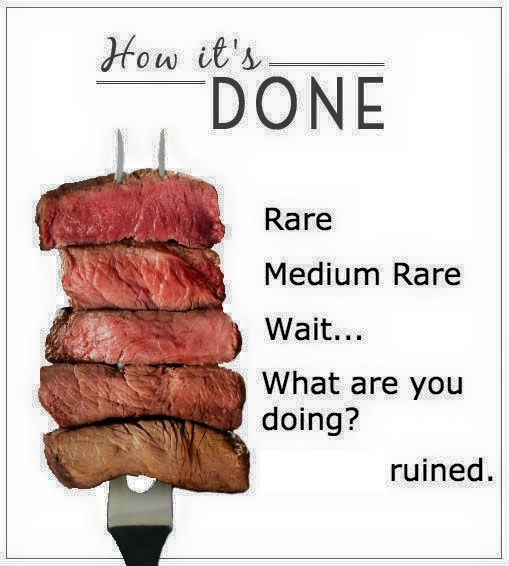 "Discovery follows discovery, each both raising and answering questions, each ending a long search, and each providing the new instruments for a new search." -- J. Robert OppenheimerContent of this post is licensed under a Creative Commons Attribution-NonCommercial 3.0 Unported License. See: http://creativecommons.org/licenses...0/deed.en_USMy eBay store
|
|
Valued Member
Canada
363 Posts |
^^^exactly....I'm a tip of the fork kinda guy
thanks everyone for your input
|
| |
Replies: 14 / Views: 2,300 |
|





 Posted 01/30/2019 3:26 pm





