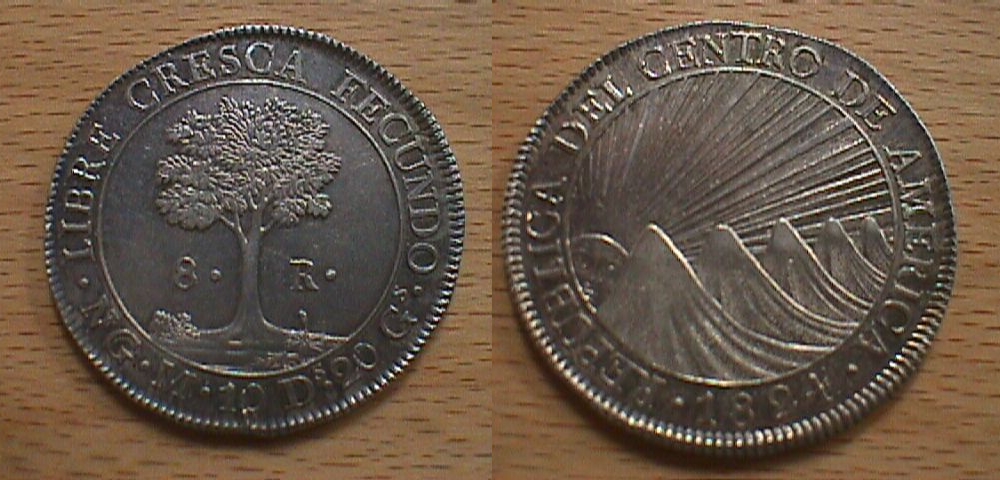
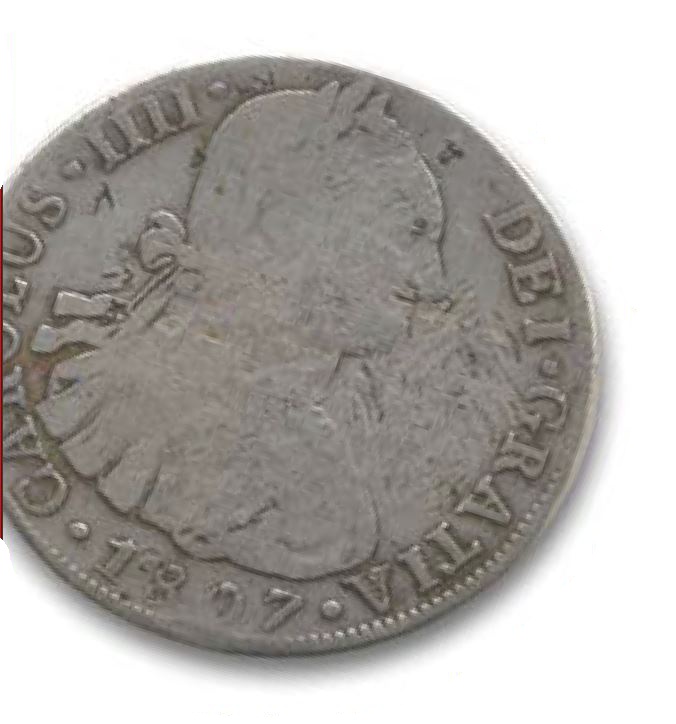
Gallienus The 1807 coin you pictured does not have enough data to form an opinion. The smile that you point out would be incorrect for Mexico City but NOT for Lima. In addition the damage to the field in front of the King's portrait could have caused damage to the smile.
Now regarding your comment -
Quote:
the positioning of the lettering obverse.
You need to understand that the positioning of the letters is not something you can use to identify a counterfeit. The reason is because each letter was punched into the die ONE letter at a time. The punches used to make the dies were single letters. So every die may be different.
This does not mean studying the letters and numbers is not useful. What is critical is the designs of the individual letters. For example, some numbers vary mint to mint. So all Mexico City dies that use a 6 have to use a Mexico City 6. Lima uses a slightly different 6.
The best way to decide for yourself is to take the time to create your own alphabet for each mint you are interested in. The best way to do that is to start out with 10-20 different high grade certified coins using each different number. Copy the largest pictures of each coin that you can and then excise the numbers from each of the coins and rotate them to an upright position for comparison. It is my presumption that if I can find 10 identical number 1's on different coins dated in any given year - I have found the "standard" for that year.
Doing this year by year for each letter and number can be tedious, but you will learn to see what is the right shape and more easily identify the wrong shape.
The punch shapes were only changed when an entire matrix punch block (master block) was changed. This did not happen that often. Branch mints (in the case of Mexico) often manufactured their own punches at first before they received a standard block.
An exception in shape could occur in the event of a chipped die - but the difference must make sense. If however, the shape of a particular 6 was NEVER used at a given mint - and no possible break could account for the difference - you have a likely counterfeit.
Chips can be very helpful to confirm genuine standard shapes and to identify chips and splits associated with counterfeiters.
The differences are often very subtile so keep an open mind until you have become totally familiar with the range o shapes.
The numbers tend to show the most variation in basic shape.
Another thing to consider is that in some cases the same letter is used more than once on the same die. On a Carolus coin the ordinal I appears on the obverse die 5 or 6 times, the A appears 3 times and the R appears twice. Each of these letters should be the same on all dies.
Note that the S in CAROLUS at Mexico City is often slightly shorter in height than looks correct.
The reason I no longer post copies of my matrix design solutions is that everyone really needs to learn for him/her self. Using my results could be misleading since the subtilties are often not at first apparent and I never included a detailed description of the tiny differences.










 Posted 02/03/2019 1:51 pm