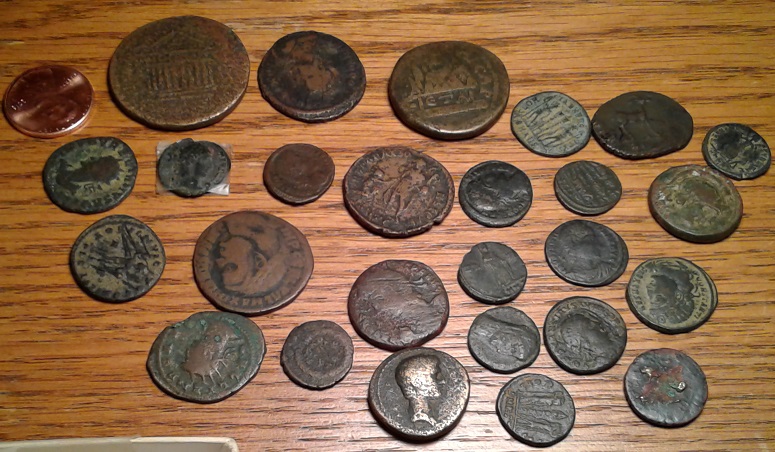
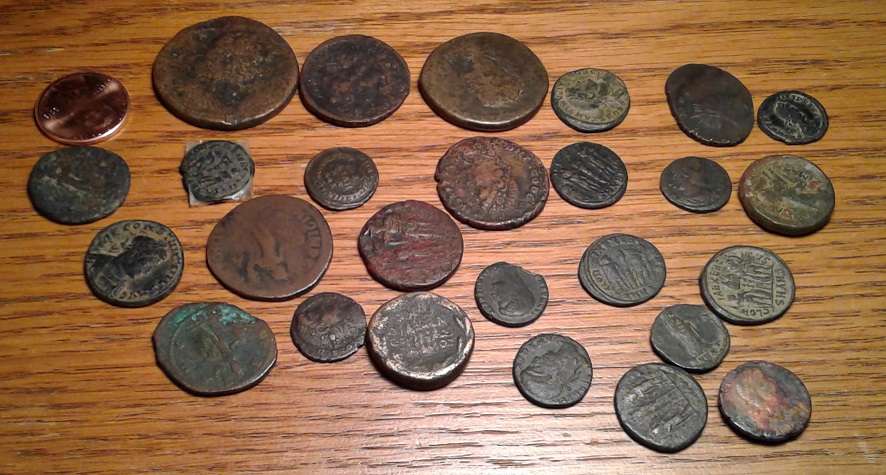
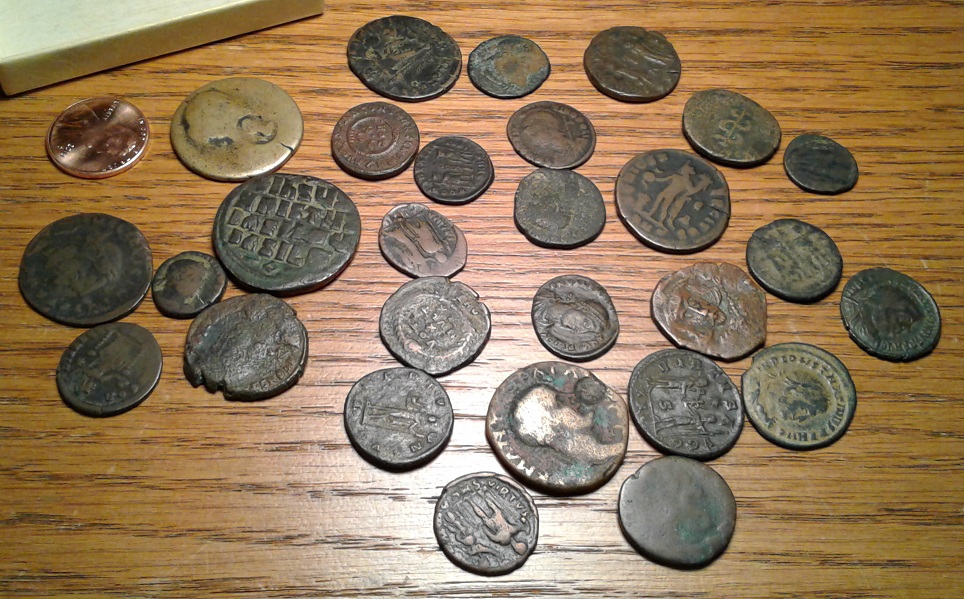
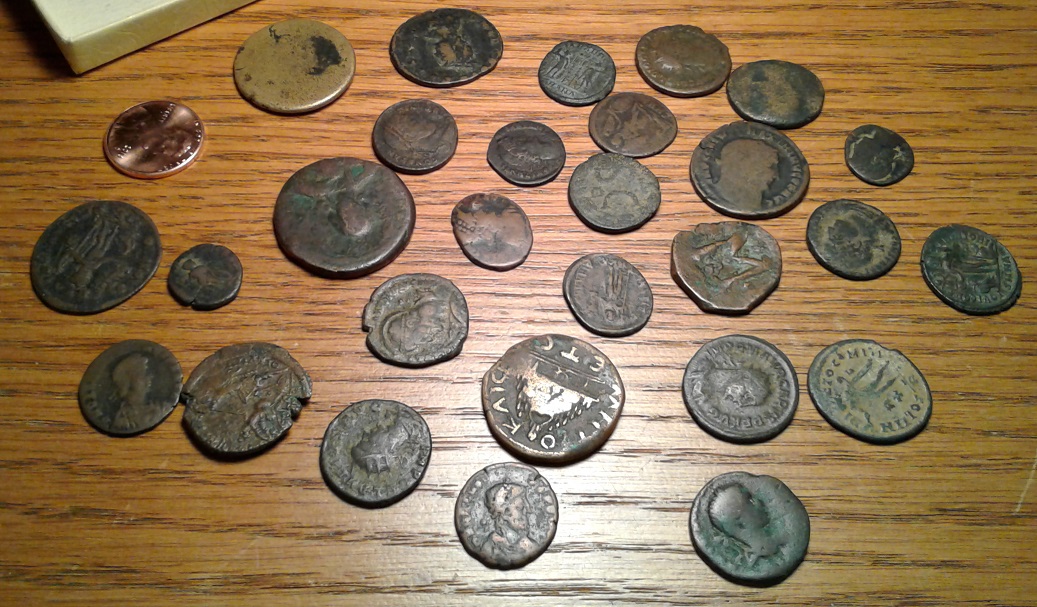
We can certainly help you identify stuff, but don't expect huge amounts of money - roman coins are really numerous, so each one won't be worth too much, especially late roman coins, which are well represented here. Earlier, bigger and rarer coins will get you more money - I see some provincial issues in there too, which tend to do well. I do see a few interesting coins in the picture that could warrant a closer look:
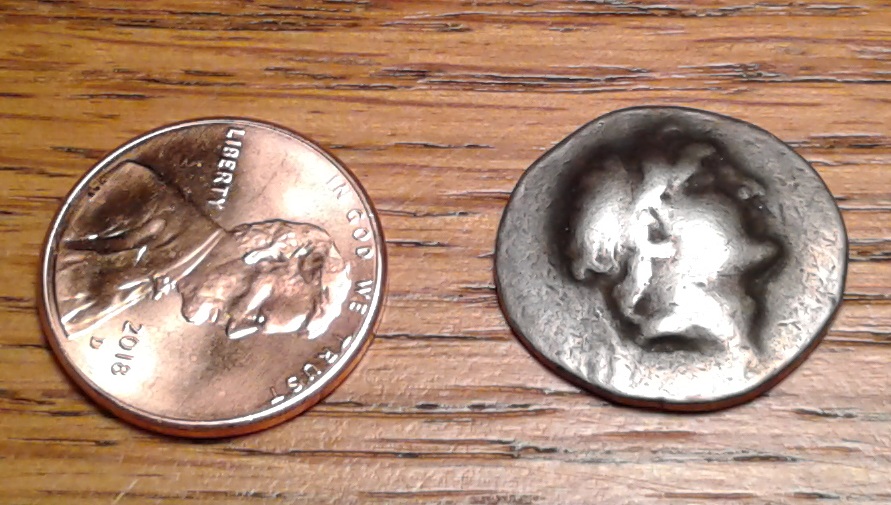
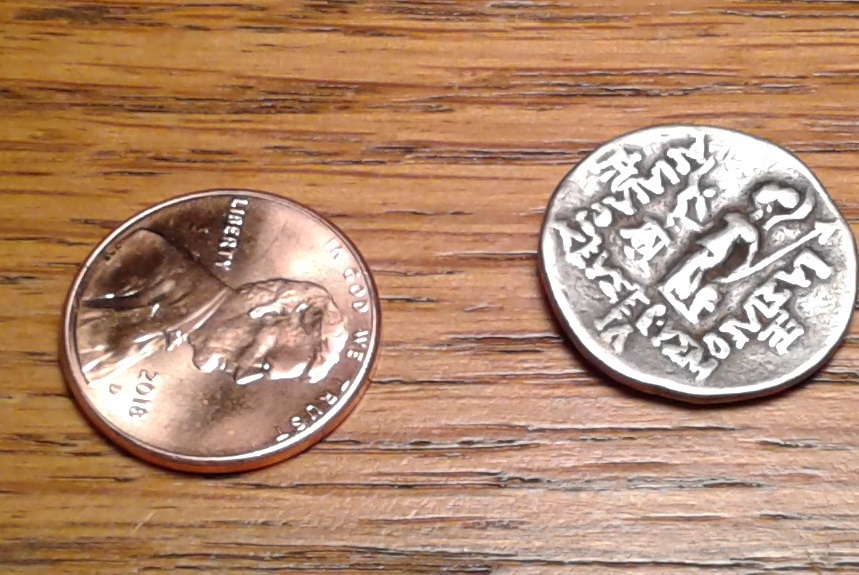
2nd lot, immediately to the right of the penny (a nice big one, has a temple on it, quite interesting)
2nd lot, 1st picture, 2nd row from the top, far right - looks like a greek coin in quite good condition
2nd lot, middle in the bottom row of 5 (looks to be Augustus)
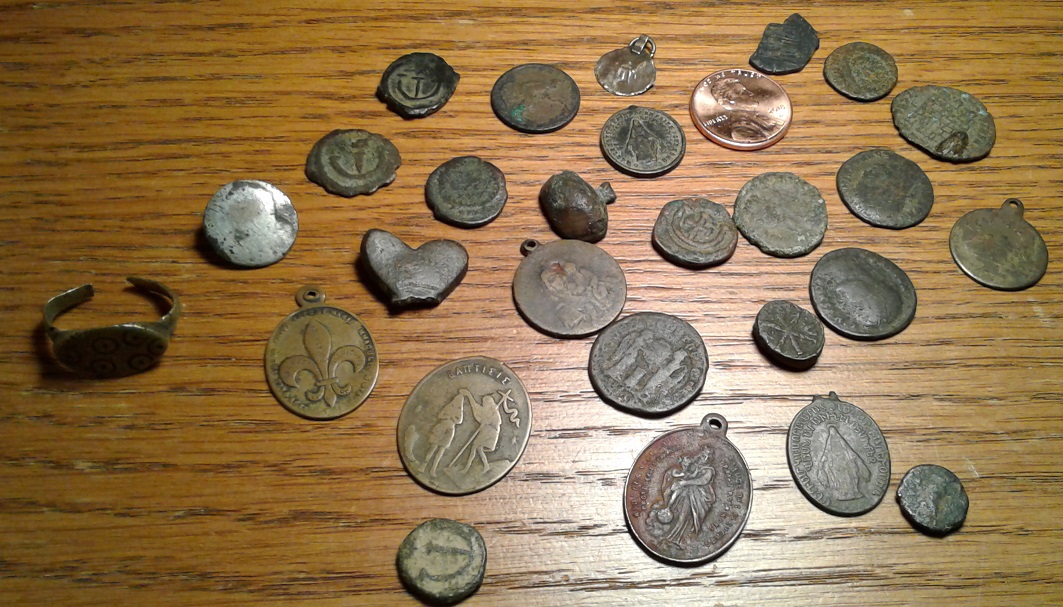
3rd lot, immediately right of the penny - a very worn sestertius (Faustina?) with a counterstamp (Julia Domna?) - might be interesting
3rd lot, top right corner - serpent entwined on a staff, a popular image in the modern day in the US and featuring a snake
3rd lot, second row from the bottom, a big counterstamped provincial issue (would be interested to know who it is - the design itself is common, but easily worth more than any of the late roman coins I can see) and the 2 either side (these are probably billon, a mix of silver and bronze).
3rd lot, 2 more provincials worth separating out, one directly below the big counterstamped provincial issue, and one a couple of coins up, both read S C on the back (though one is worn down).
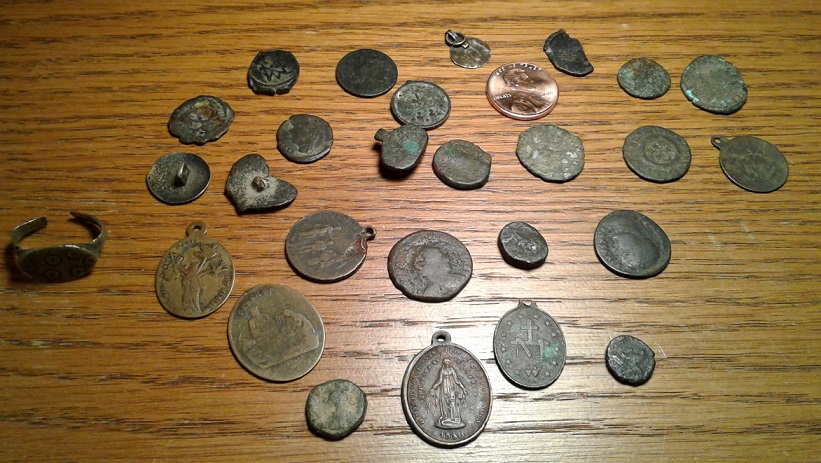
I see a Britannia in the 4th lot - looks like Victoria, I wonder how it got there?
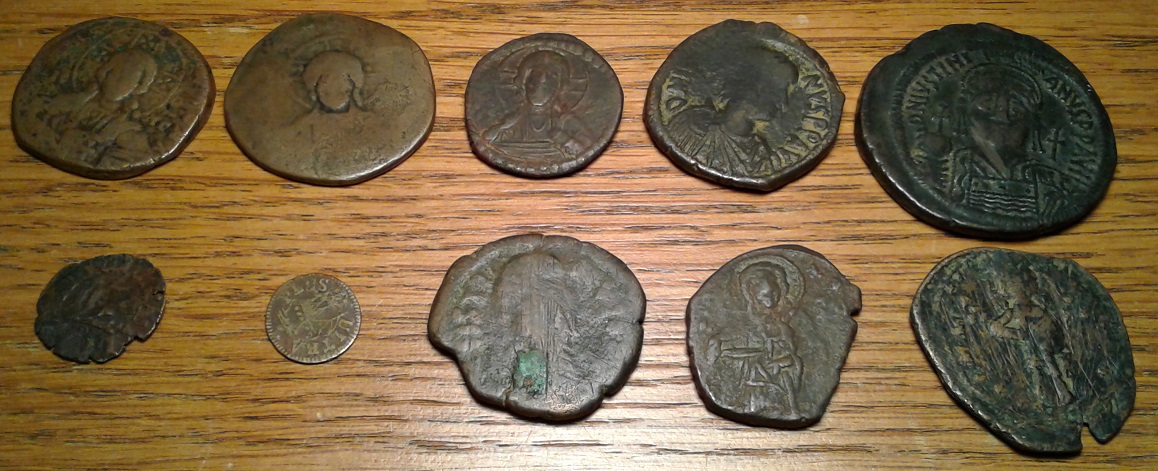
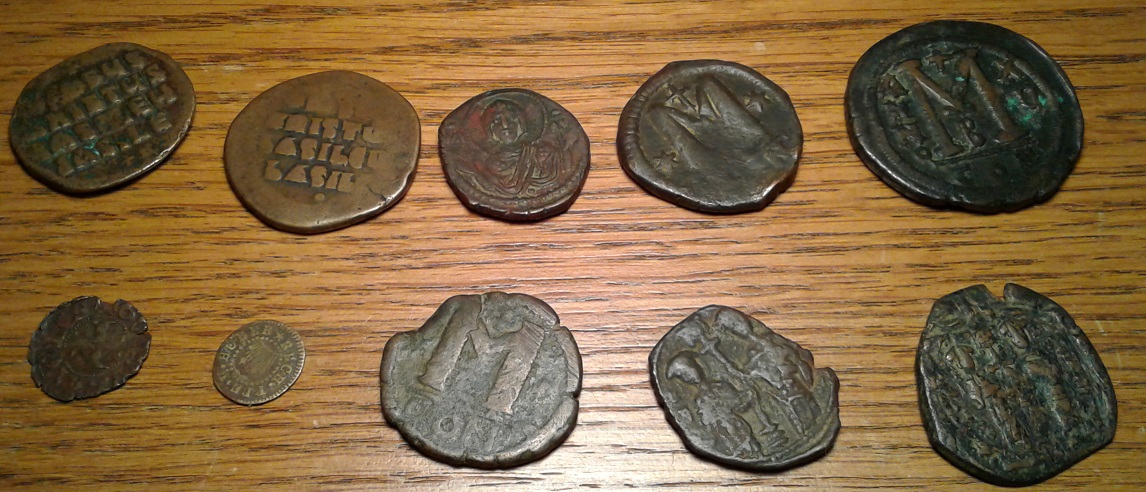
5th lot, top row, far left - this is a coin with a monogram on. Definitely wants a better picture - they are usually someone common (I am 95% pretty sure this Justin II, a common ruler, but monograms in good condition are hard to come by for any ruler), but there are some very rare monogram issues that get overlooked. If you have any other coins like this (they can be all sorts of odd designs, see this link:
http://www.catbikes.ch/coinstuff/monograms.htm), definitely post them here.
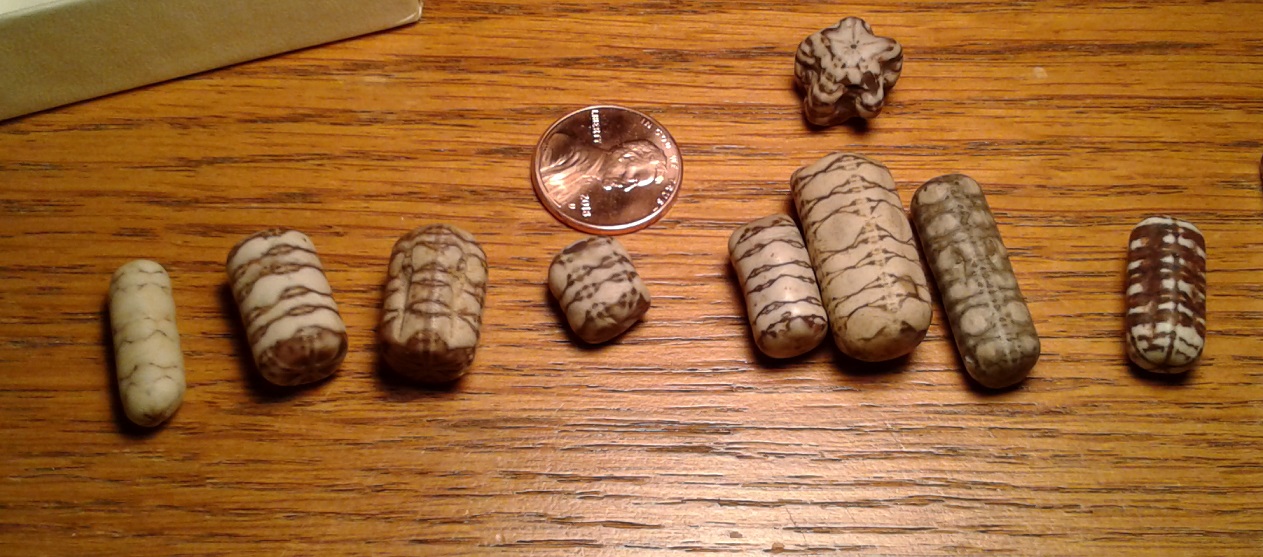
Those rocks are fossil crinoid stems - these creatures are still around today and are commonly called Sea lillies. Spooky creatures they are, too - they look like plants, but they walk about on the sea floor, a fact that was much disputed until it was first videoed a couple of decades ago.












 Posted 02/18/2019 11:42 am


