| Author |
 Replies: 15 / Views: 2,330 Replies: 15 / Views: 2,330 |
|
|
Pillar of the Community
United States
3360 Posts |
What do you think about my reasoning on this attribution? I notice that "ONE" on the reverse is lightly struck - especially in the area closer to the rim, which is directly opposite the indentation within the missing clad on the obverse. I take that to signify that the indented area was present before the strike. If it had been struck through an object, then weakness would not show on ONE. This weakness on ONE also leads me to reject the possibility that this is simply a damaged coin. I think that the indentation on the obverse happened as a rolling mill error with the rolling of the copper core. This is a "Rolling Indentation". http://www.error-ref.com/rolling-mi...dentation/)" target="_blank" rel="nofollow"> http://www.error-ref.com/rolling-mi...ndentation/)When the copper core strip went into the bonding process with the clad strips, the bond failed around this indentation...ultimately contributing to the clamshell separation of this section of cladding. "...clamshell separations are the exclusive province of clad-composition coins. A clamshell separation is a bonding error — a failure of one clad layer to bond to the core. In the bonding process used for contemporary, circulation-quality dimes, quarter dollars and half dollars, two coils of thin copper-nickel clad strip are bonded to a thicker coil of pure copper strip. Bonding occurs well above the melting point of both copper and nickel, as the three strips are forced together under enormous pressure between two rollers. If pressure is inadequate, or if the facing surfaces of adjacent strips are not meticulously cleaned, a secure bond may not form. Once the blank is punched out, the poorly bonded clad layer can separate before or after the strike. A partial separation is the same thing as a clamshell separation." (CW 1/19/13 By Mike Diamond). https://www.coinworld.com/news/us-c...-un.all.html )" target="_blank" rel="nofollow">( https://www.coinworld.com/news/us-c...-un.all.html ) For this coin, the facing surfaces of the copper and clad strips were not bonded in the area of the rolling indentation because of the gap produced by the indentation. This created bonding weakness in the nearby area. The result was a separation of this section of cladding - a Bonding Mill Error. Another possibility is that the indentation is a lamination on the copper core coil before bonding with the clad layer. Weight of the coin is 2.25 g which is still within tolerance. Details in the copper area are not mushy which suggests partial loss of clad layer before the strike. 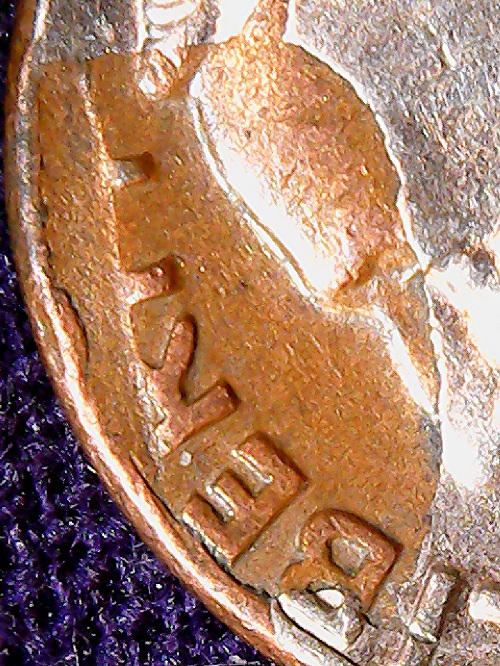 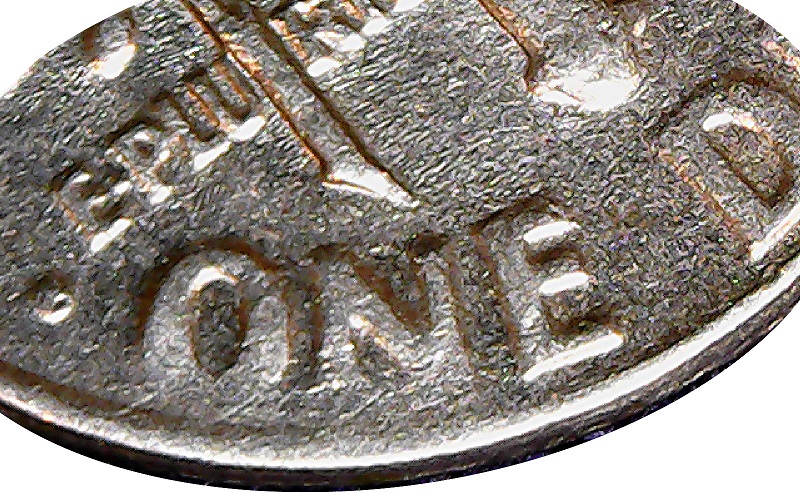 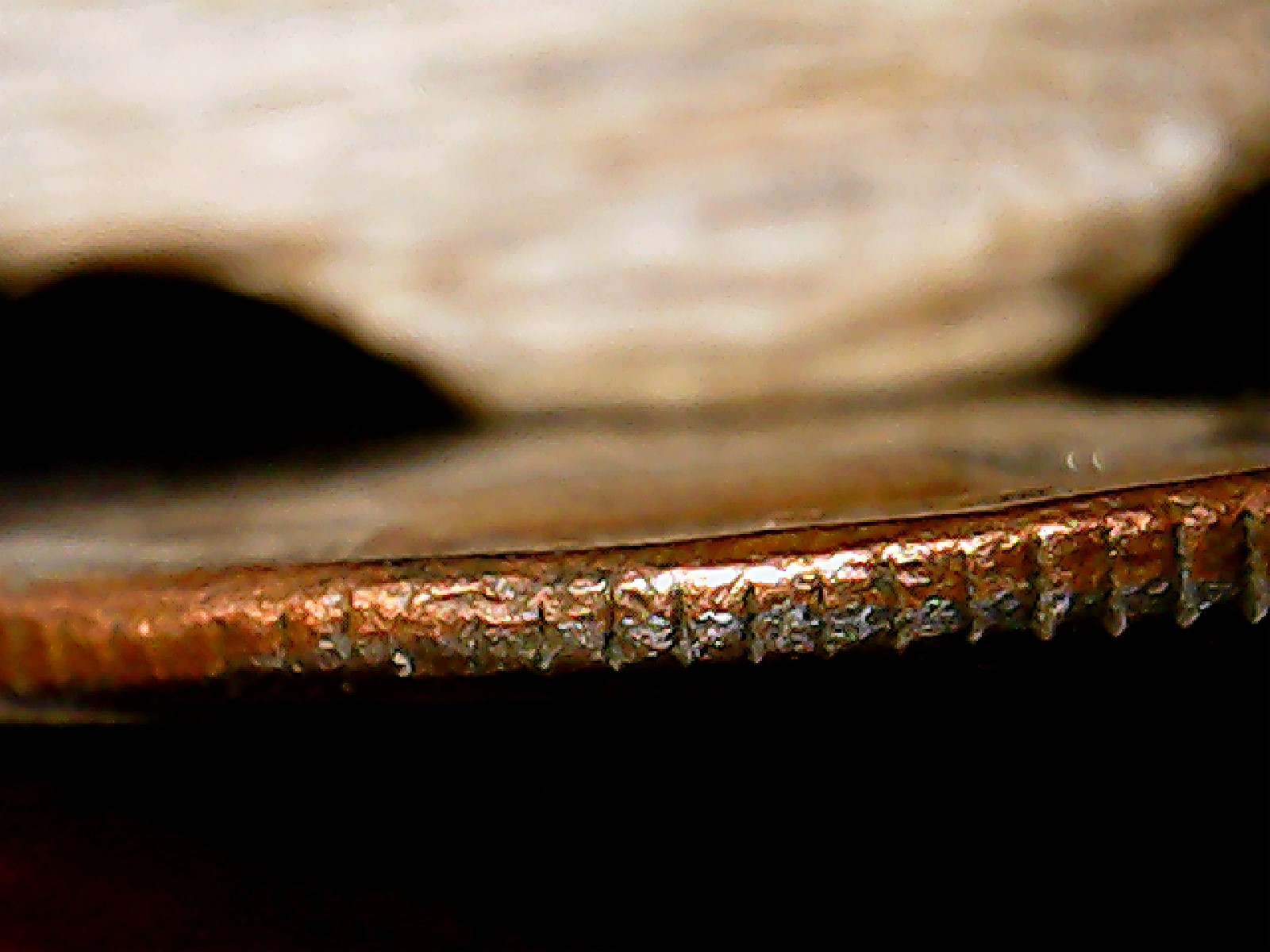 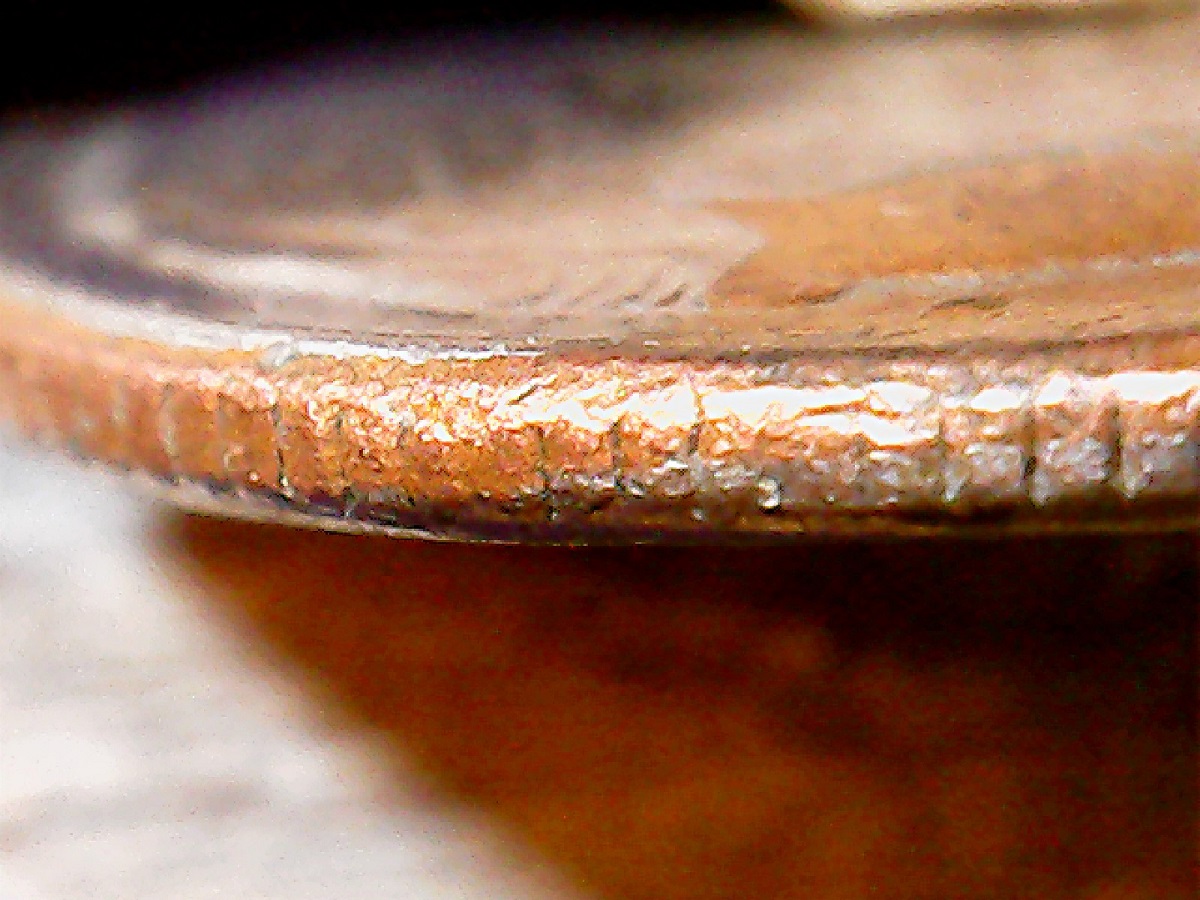 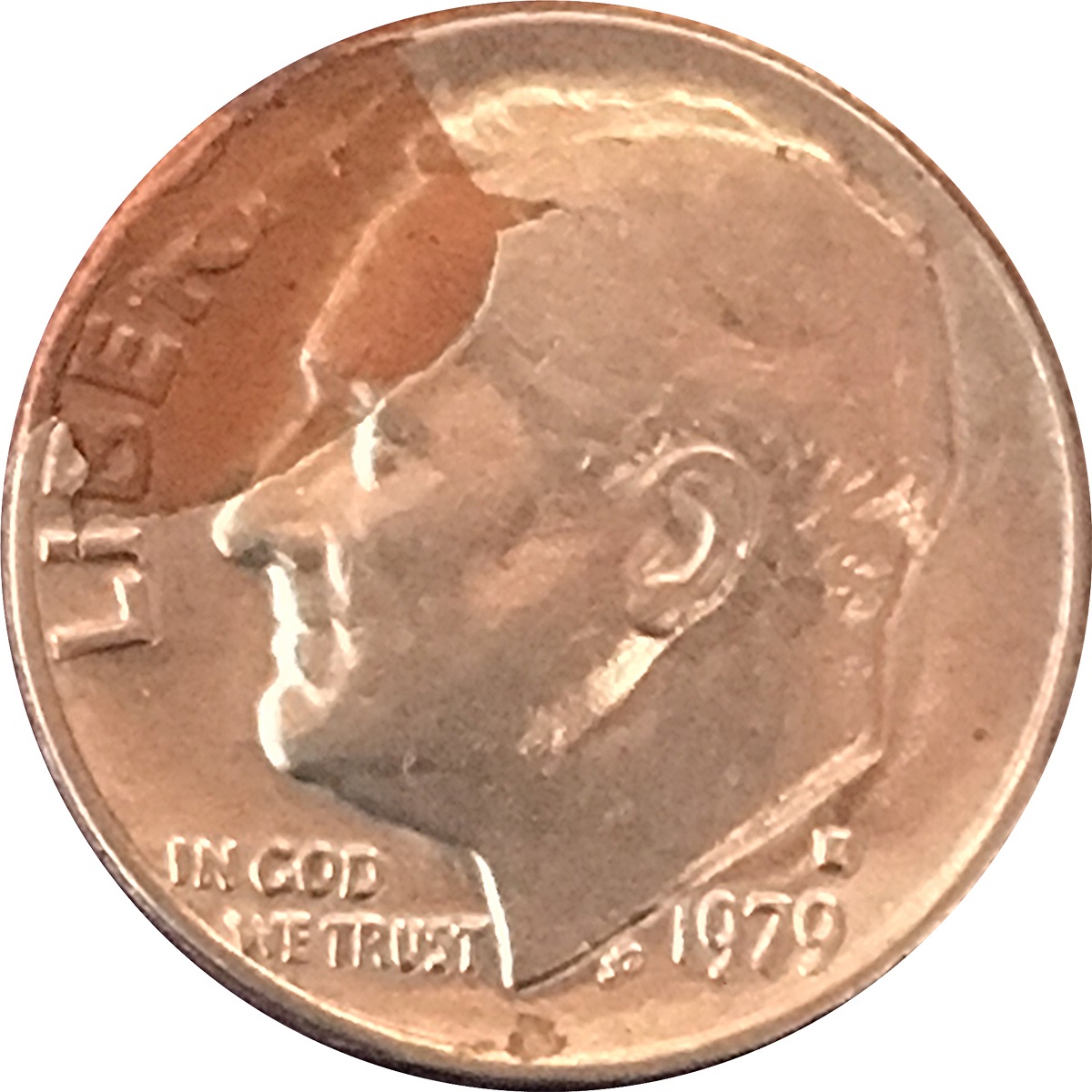 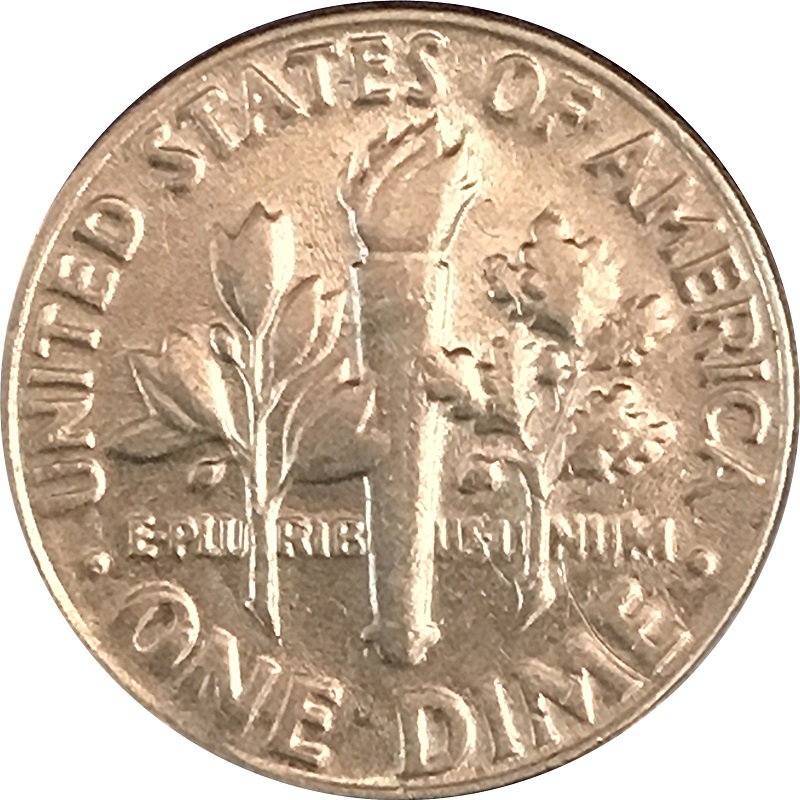 |
|
|
|
Bedrock of the Community
United States
78969 Posts |
Looks like a genuine error coin to me.
Errers and Varietys.
|
|
Bedrock of the Community
United States
17884 Posts |
There is a partial missing clad layer (pre strike) and I also suspect a strike through tha caused the missing tops of RTY. Whatever it was struck through probably extended out over the collar and trasfered part of the force to it resulting in the weak area below the strikethrough on the reverse.
|
|
Valued Member
United States
59 Posts |
Quote:
There is a partial missing clad layer (pre strike) and I also suspect a strike through tha caused the missing tops of RTY. Whatever it was struck through probably extended out over the collar and trasfered part of the force to it resulting in the weak area below the strikethrough on the reverse. I am going to respectfully disagree with the strike through, as the lettering on the reverse opposite that area is also weakly struck. My feeling is that absent the clad layer, the planchet was simply too thin to receive a proper strike. It is also possible that a thin layer of clad was present in that place during the strike and subsequently separated from the coin. Sean |
|
Pillar of the Community
United States
751 Posts |
I think the coin took a hit PSD at the RTY area, and subsequently the clad separated and was taken off or simple caught on something and ripped off. Dan |
|
Pillar of the Community
 United States
3360 Posts |
Quote:
There is a partial missing clad layer (pre strike) and I also suspect a strike through tha caused the missing tops of RTY. Whatever it was struck through probably extended out over the collar and trasfered part of the force to it resulting in the weak area below the strikethrough on the reverse. Conder101 - that is certainly an interesting idea. It sounds possible...I will add this to my explanation in future presentations. I do not see a clear diagnostic feature, however to account for your explanation vs the one I offered. I thought I had it with the weak strike at the top of ONE. One possibility for a diagnostic to support your idea may be that the clear demarcation of the design rim disappears at the point where the indentation meets the design rim. Of course that could also support my idea of a Rolling Indentation which extended a bit beyond the outer circumference of the blank when it was punched. (Just doing a bit of thinking out loud! Would welcome any additional thoughts!  ) |
|
Pillar of the Community
United States
3360 Posts |
Okay...doing some more thinking about this. Between these two explanations (mine and that from Conder101), I think the weight of the evidence favors a Rolling Indentation for the primary reason that a clamshell separation such as this arises because of a bonding error. A Strike Through does not explain the poor bonding of clad to copper layer and a Rolling Indentation does explain. (See my reference to the Coin World article by Mike Diamond.) I would welcome any additional insights. |
|
Moderator
 United States
56855 Posts |
Pete, You should PM Mike and get his view on it. John1  |
|
Bedrock of the Community
United States
17884 Posts |
The strength of the struck letters on the obv argue that the clad layer was missing pre-strike. I think the sharp transition from strong letters to nothing argues for the strikethrough. If there had been and indentation from something being on the strip as it went through the rollers the transition would not be that sharp and it most likely would not have remained that straight. The force of the strike would have pushed the non-indented area out into the indention.
|
|
Pillar of the Community
United States
3360 Posts |
Quote:
The force of the strike would have pushed the non-indented area out into the indention. Conder101...I appreciate the opportunity to participate in these kinds of discussions. It seems that I am always pushed to learn and understand more! I think that, while "pushing the non-indented area out into the indentation" may be intuitive, supporting evidence is lacking. It assigns too much liquidity to the metal of the coin during the strike. There is evidence to the contrary, however, that only minor distortion of an indented area results from the strike.  Consider the example of a Rockwell Test Mark in planchet (link following). "Although there is no metal flow in the design bordering the crater, there is also no trace of a pressure ridge, indicating that the defect was present before the strike. The pit is oval, rather than circular, but this can be attributed to distortion produced by the strike." (I think that this particular example cannot be a Rockwell Test Mark because it is the size of a Rockwell B scale indenter and the mint only used Rockwell 15-T size indenters with the exception of the Silver Clad Kennedy half dollars. But that is another discussion). Link: http://www.error-ref.com/rockwell-t...in-planchet/Consider a Ragged Perforation. Metal flow during the strike does not appear to affect the area as can be seen from sharp and distinct edges. http://www.error-ref.com/ragged-perforations/Consider Rolling-Induced Fissures. Distinct edges are also maintained. http://www.error-ref.com/rolling-induced-fissures/ |
|
Pillar of the Community
United States
2752 Posts |
It's clear that the cladding was missing prior to the strike. It's equally clear that the unstruck area within the exposed copper core is thinner than the well-struck portion of the exposed copper core. There are several possibilities: 1) a rolling indentation, likely from some cladding that had lifted up and been folded over, 2) an area of copper core that was carried off with the cladding, 3) the beginning of a planchet taper. While I think scenario no.l is a bit more likely than the others, the available evidence precludes a definitive determination. One thing that might help is a precise weight. If the coin is just shy of normal weight, scenario 3 would be favored.
Error coin writer and researcher.
|
|
Pillar of the Community
United States
3360 Posts |
Thank you Mike Diamond! I included the weight in the last sentence of the OP: 2.25 g. I was thinking that, since the weight is within tolerance, being a bit on the light side would be simply attributable to the missing copper and clad.
Edited by Pete2226
03/02/2019 08:51 am
|
|
Pillar of the Community
United States
2752 Posts |
Since the coin is only 2/100 of a gram shy of normal weight (2.27g), and since the coin should be lighter if the cladding fell off after blanking, I suspect the missing clad was never there to begin with and that this is a tapered planchet error. As far as I'm aware, all tapered planchet errors on clad coins are also full or partial missing clad errors.
Error coin writer and researcher.
|
|
Pillar of the Community
United States
3360 Posts |
Mike Diamond...Thank you! The thickness of the dime at the R in LIBERTY is 1.17 mm and the thickness at the mint mark is 1.38 mm. It is actually visibly a tapered planchet (now that I know what to look for!) Seems like the thickness specification is 1.35 mm, but I do not know the allowed tolerance.
So how does the indentation showing on the copper core factor in? How might it have been created? I am assuming it would still be identified as a rolling indentation.
Edited by Pete2226
03/02/2019 2:09 pm
|
|
Pillar of the Community
United States
2752 Posts |
The "indentation" would presumably be the thinnest part of the taper -- too thin for the dies to make contact.
Error coin writer and researcher.
|
|
Pillar of the Community
United States
3360 Posts |
I have rewritten my description of this coin. Any comments welcomed. 1979-D Dime TAPERED PLANCHET with Missing Partial Clad and Rolling Indentation. This Coin weighs 2.25 g which is a normal weight within tolerance. (Normal weight = 2.268 g +/- 0.091 g). The planchet is tapered: The thickness of the dime at the R in LIBERTY is 1.17 mm and the thickness at the mint mark is 1.38 mm. The thickness specification is 1.35 mm. Most cases of Missing Clad are Bonding Mill Errors: from a loss of the clad layer due to a failure for this portion of the clad layer to fuse with the core in the bonding mill. The missing clad on this coin is a rare Rolling Mill Error. "The rarest form of missing clad error is not caused by an insecure bond at all. It is a rolling error that traces back to the bonding mill. Three potential scenarios are involved: 1. The leading end of one clad strip lags behind the leading end of the core strip and the other clad strip. 2. The trailing end of one clad strip ends prematurely. 3. A large gap is present in one clad strip. In each case, you end up with a stretch of composite strip composed of only two layers, one of copper and one of copper-nickel. This length of strip is eventually rolled to normal coin thickness during subsequent passes through the rolling mill. Any blank punched from this area will weigh the same as a normal coin. The rarity of such errors may be due, in part, to the habit of trimming the ends of the composite strip before it is sent through the blanking press." - Mike Diamond Coin World 5/19/2012 This Dime also has a Rolling Indentation - likely caused by the scrap of clad which came free. It was embedded in the coil during rolling and fell out after rolling and before blanking. References: http://www.error-ref.com/?s=tapered+planchethttp://www.error-ref.com/?s=missing+cladhttp://www.error-ref.com/?s=rolling...;indentationhttps://www.coinworld.com/news/us-c...SKqZ1SmhK13w br / |
| |
Replies: 15 / Views: 2,330 |
|










 Posted 02/28/2019 1:03 pm


