RPMs versus OMM.
Are they different?Many times on the forum some may call one variety, by a different name that is incorrect. Sometimes RPMs are called doubled dies, and at other times, they maybe called over mint marks. (OMM)
So what is the difference?Let's start at the beginning of the die making process. A doubled die
happens during the dies creation. On the multi-hub process dies, the correct alignment must be the same each time, to prevent a doubled die. If in one step a warped hub is used on one of the steps of the process, then a doubled die is created. (years ago on the multi-hub dies, they may have several different dies during this process of die creation) Sometimes a different hub may be used. A fresher hub will have a stronger design than a worn hub. We know they are using the hub more than once as we can doubled dies, tripled dies and even quad dies. This is on the multi hub dies process.
On the single squeeze dies are only to use the hub only once. But if the operator see something isn't correct, he may stop the process and then start over. When this happens, it creates a very strong doubled die. But most times they are normal. But sometimes during this process, the single squeeze hub process starts off, with the hub not in the correct alignment. When pressure is applied, the hub then snaps into to the correct position. So this movement of the hub will create doubling, usually on the center areas of the dies. (after 1990 most of the dies have the mint mark as part of the design, so no more RPMs after that date)
But now we come to RPMs. What are they? Well after the die creation process has been finished the die is then hardened and then the dies sent to different mints. (on pre 1989 coins), but before this happens, a mint mark must be added to the Denver and San Francisco dies. This is punched into the die by hand, with a heavy hammer, a hand puncheon and a strong pair of glasses, so they are in the target areas.
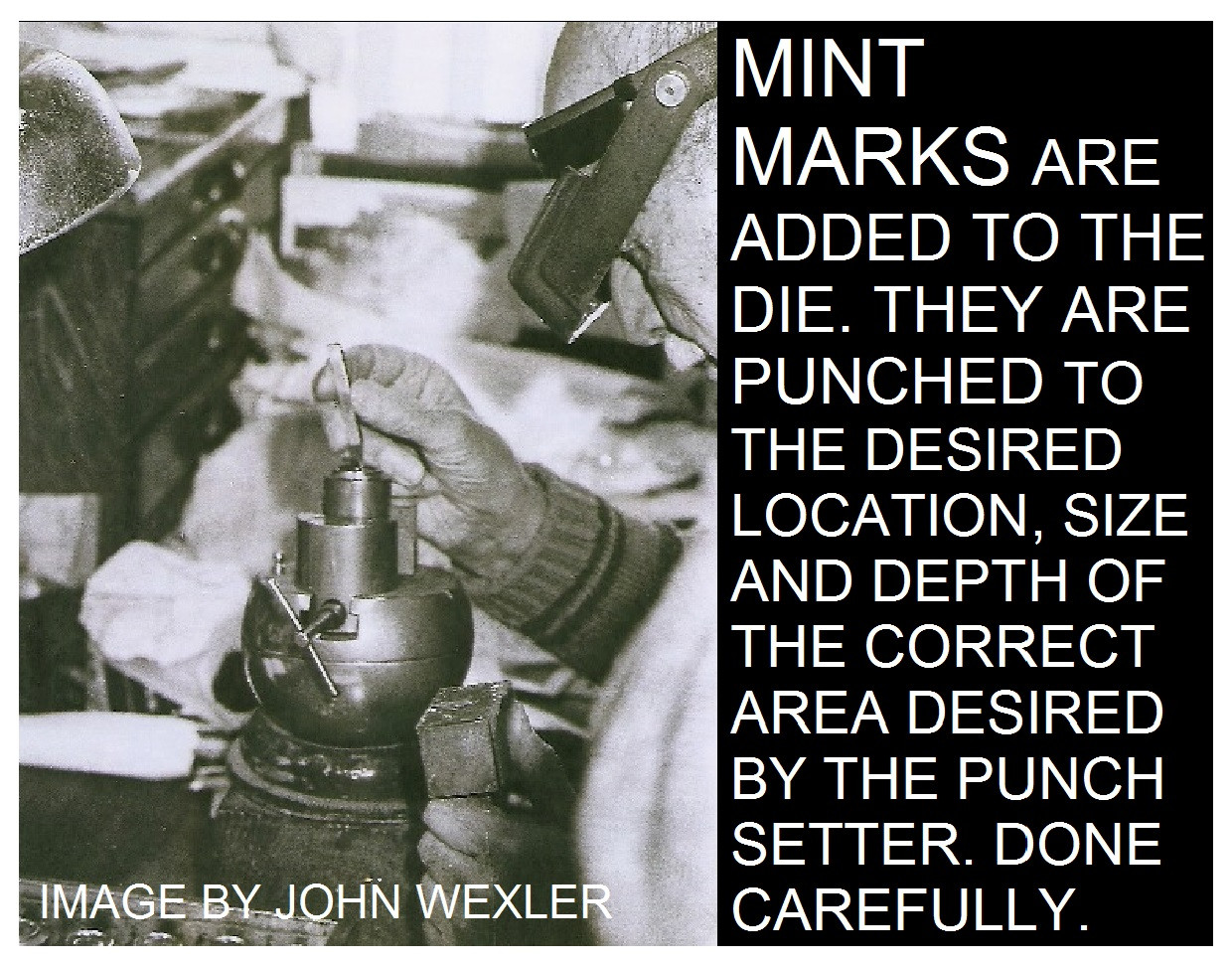
Most of the time the punching will be done several times. But if the puncheon isn't located exactly over a previous punching, there will be two or more punches in error. If all goes well, then the mint mark looks normal. (sometimes the puncheon will get damaged from punching the mint mark into a hardened die) After many dies have been punched, including different denominations as well, the punch can become damaged and will show mint mark distortions. This distortion can be minor at first, and then more distorted as the punch gets used more and more.
So what makes a RPM. When the punching are not exactly over the previous punches location. RPMs are identified by the types of miss punching. The shapes/locations of the mint mark can be identified to a certain die number. (these will be different because they are done by hand and vary from each other).
So where is the punching area for RPMs. These will vary according to the different denominations.
But on cents, it is below the date, and east of the bust. That is the target area.
But what if it is not in this desired target area? What then? Well, after the first tapping or two or three, the puncheon maybe moved to a more desirable location.
What does that mean? The best way to understand this is to see examples, to know, what I'm talking about.
RPM on a digit:
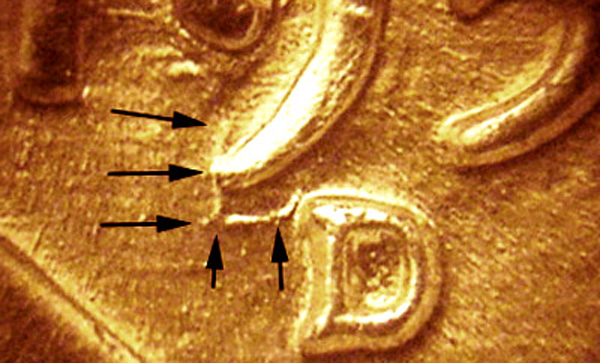
Note these have directions, and types of RPMs)
Note the punching on the first on is over the tail of the '9'? This one is called a D/D (West and Northwest) The punch wasn't damaged by this, as the digits are incuse on the die. The punched area is on the field area and struck incuse into the die (puncheon is raised/mirrored on the puncheon) So this doesn't cause damage to the puncheon when it is punching. It is the continued use of the puncheon, hitting several hardened dies that damages it.
What if the RPM in an undesired spot?:
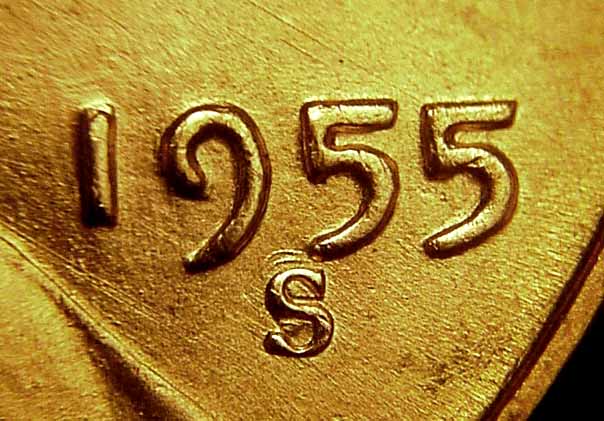 Note the two punches above next to the 5?
 The worker determined he didn't like that first location, and tried moving it more into a more desired target area, where he punched in a third location, but lower. (this location on the third location was probably struck several times to get the right depth) This one is called a S/S/S (North/North/North)
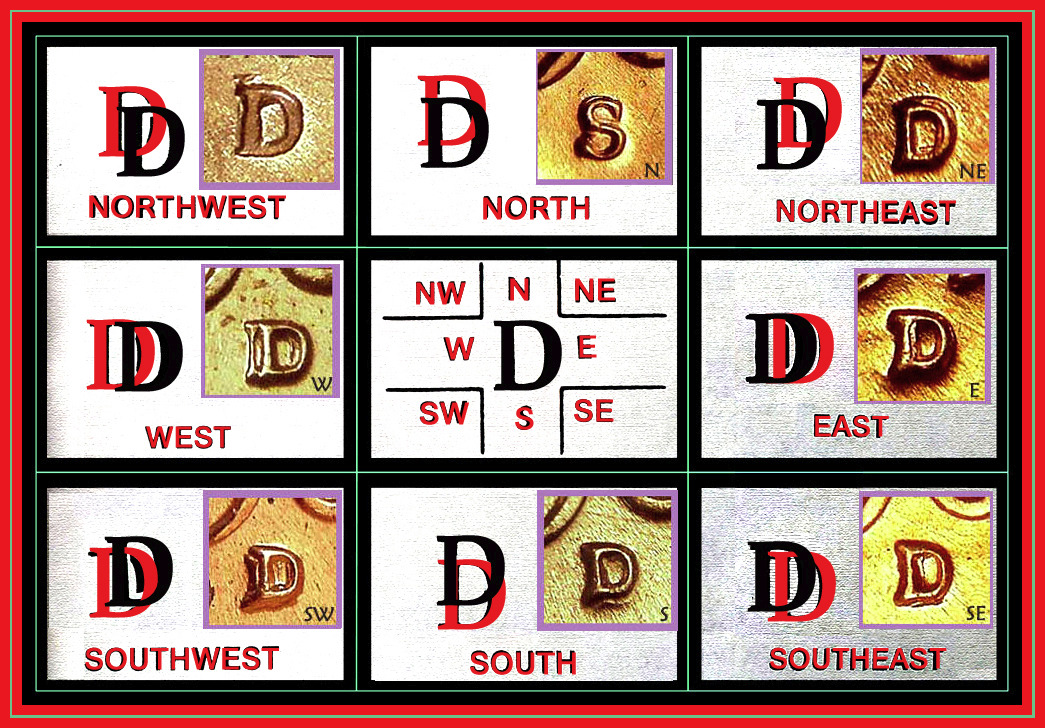
The location of the RPM is identified in the direction from the main mint mark.So what are the directions and types of RPMs?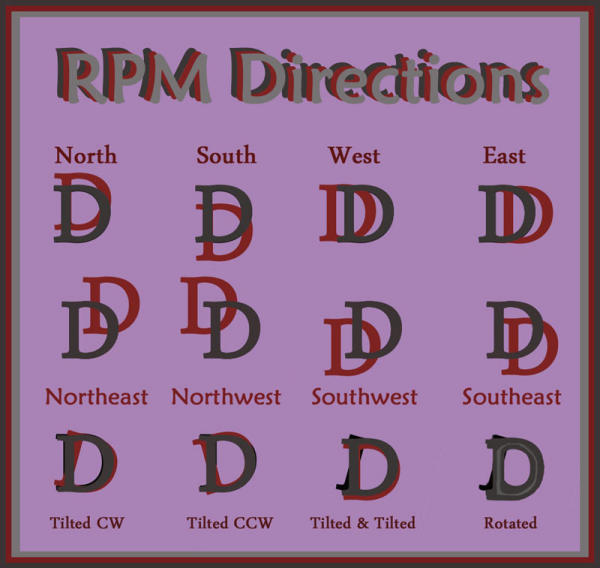
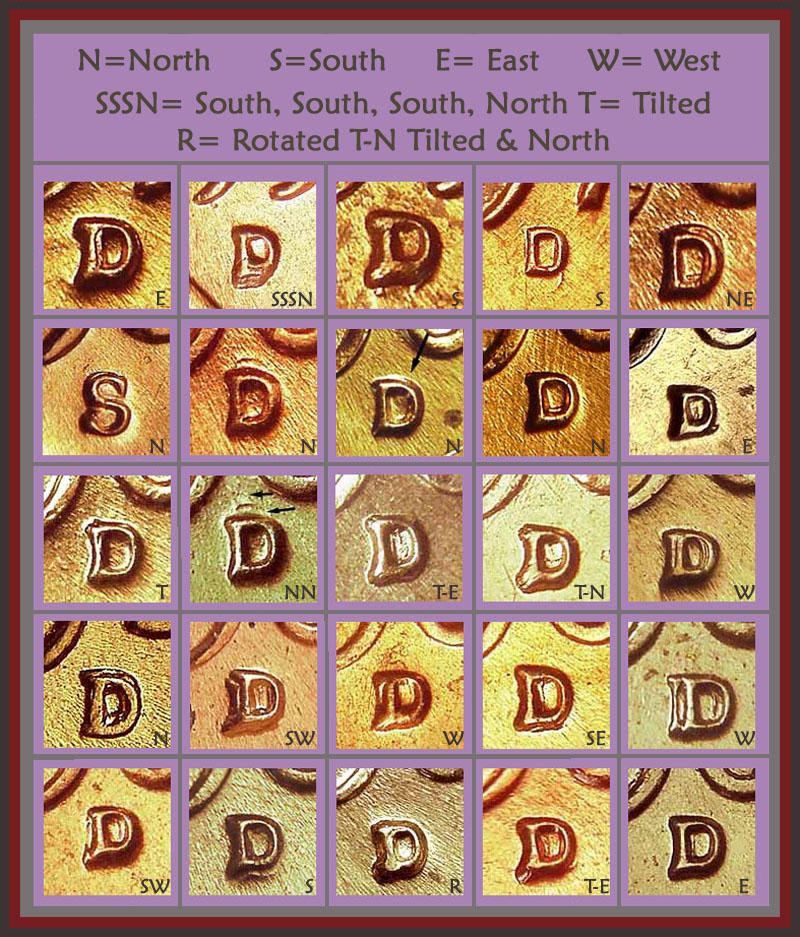 So lets see if we have figured these directions out?
 So what determines a RPM? Is it just an enlarged mint mark?
 On RPMs, they are hand punched, so depth, location and falling right over the mint mark with the puncheon can determine if it is a normal mint mark or a RPM.
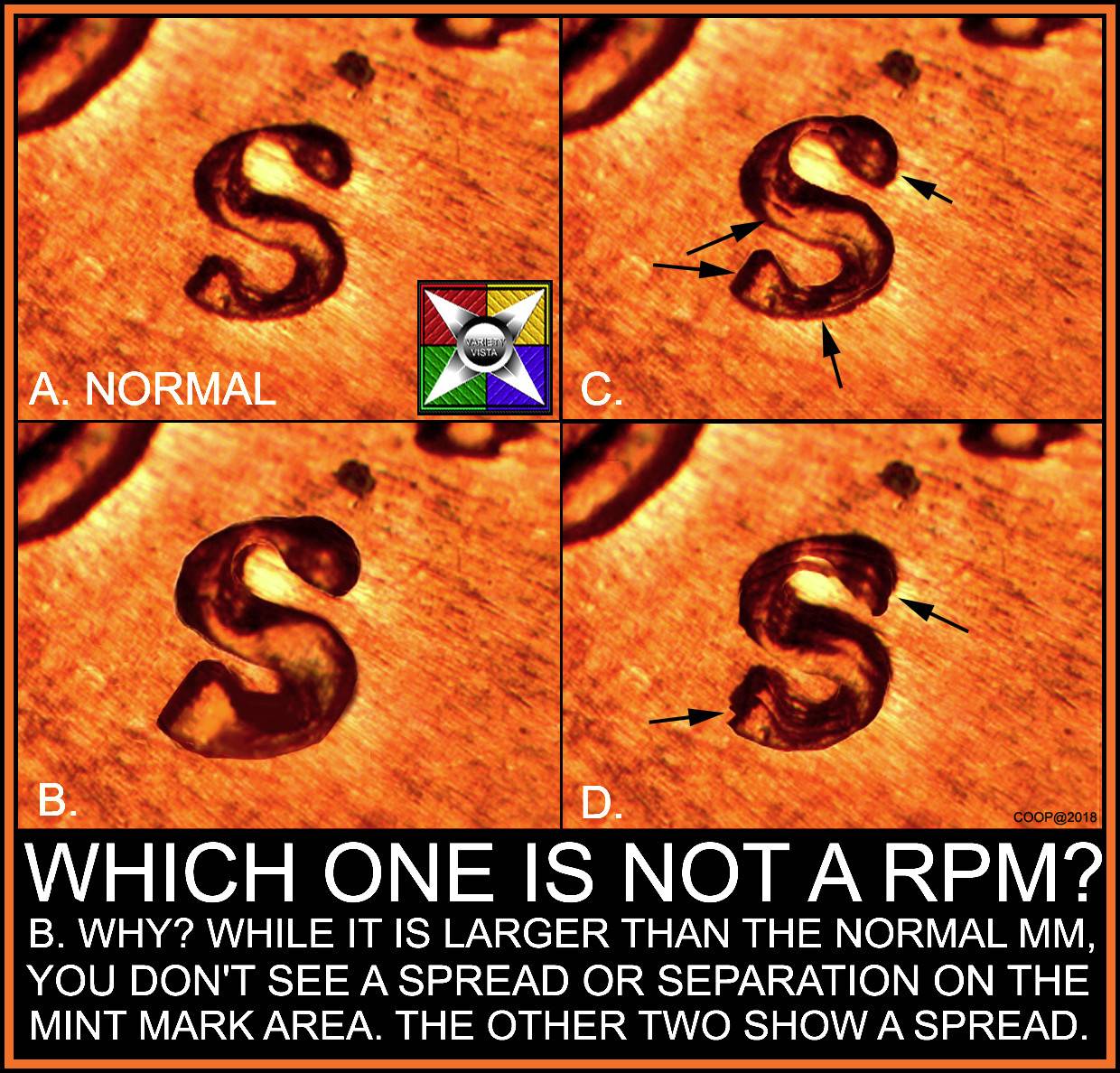
The difference.
Spread. There must be a spread in order to be a RPM. On the Split serifs it could be just one serif that is affected. But a most of the time, these will be a hard ones to match.
But it is still a RPM. Sometimes the RPM is not connected to the mint mark, but below or above.
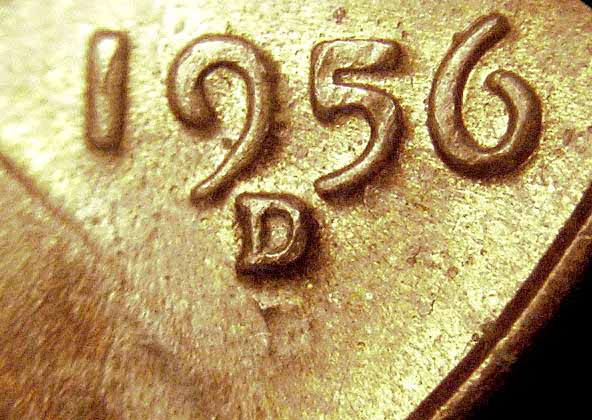
This one is a D/D Southeast, (not touching the mint mark)
Coppercoins calls it: Quote:
"A completely separate D punching shows to the south/southeast of the primary mintmark."
Here is a more obscure one: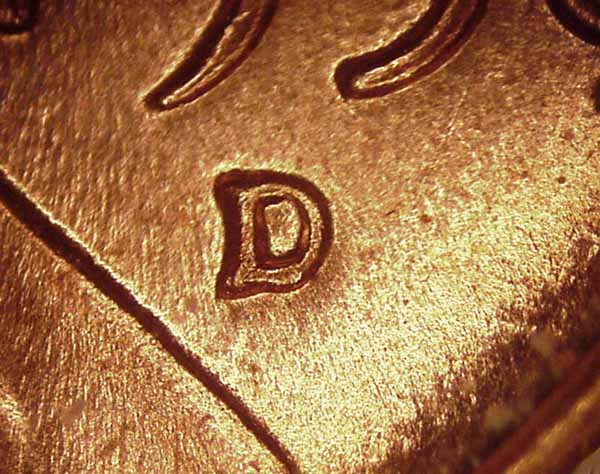
This is one is a bit harder to see on this one. WRPM-018 South.
Some may call these over mint marks (OMM) but they are not.
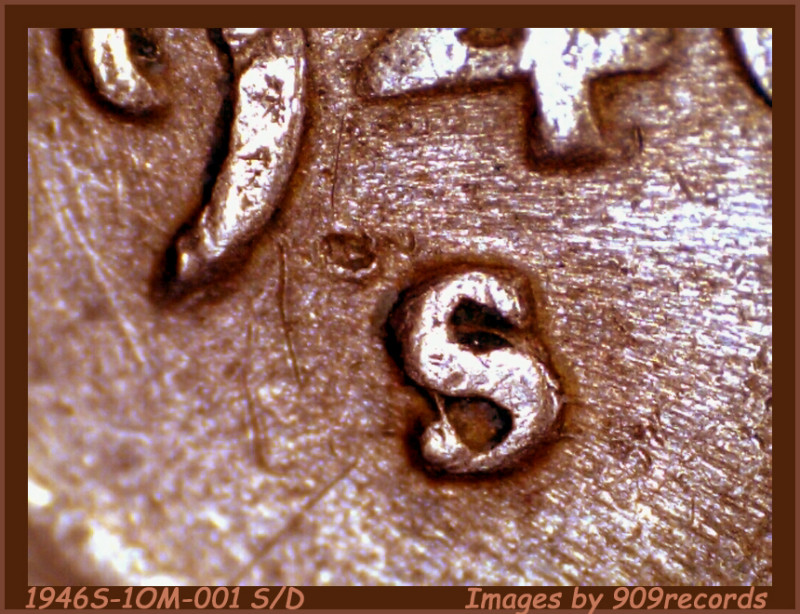
An over mint mark is a mint mark over a different mints mark. What does that mean? D/S or S/D. Different mints are involved having different mint mark puncheons.
1944-D/S die 1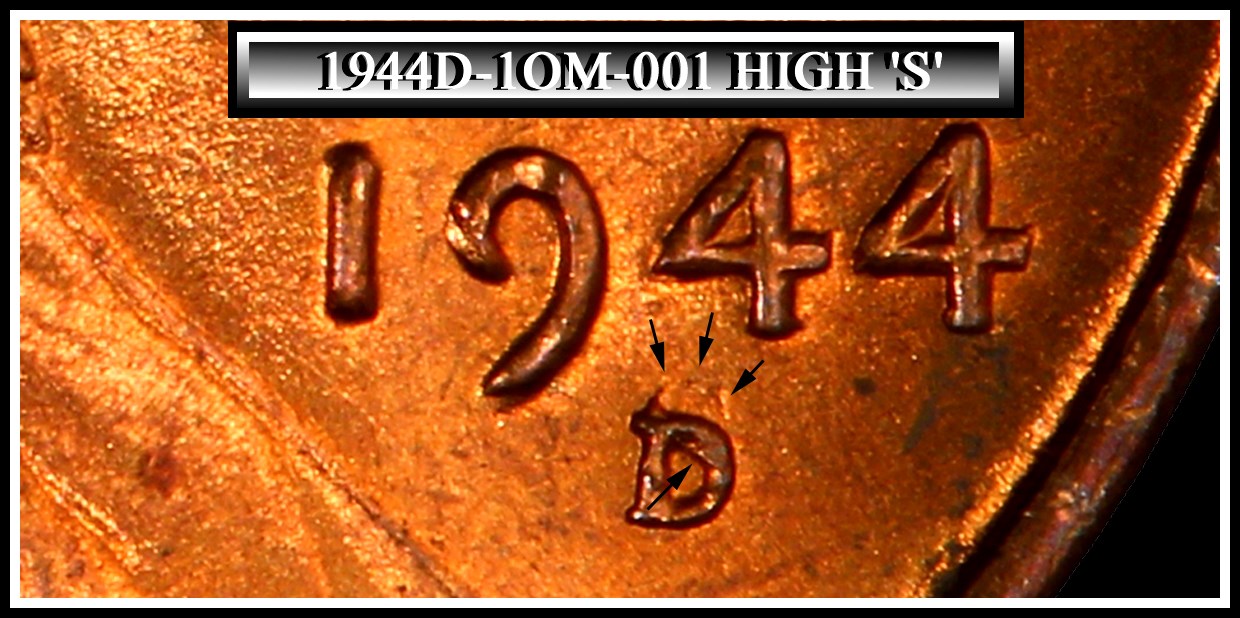 Note you can see the top of the 'S' above the mint mark?
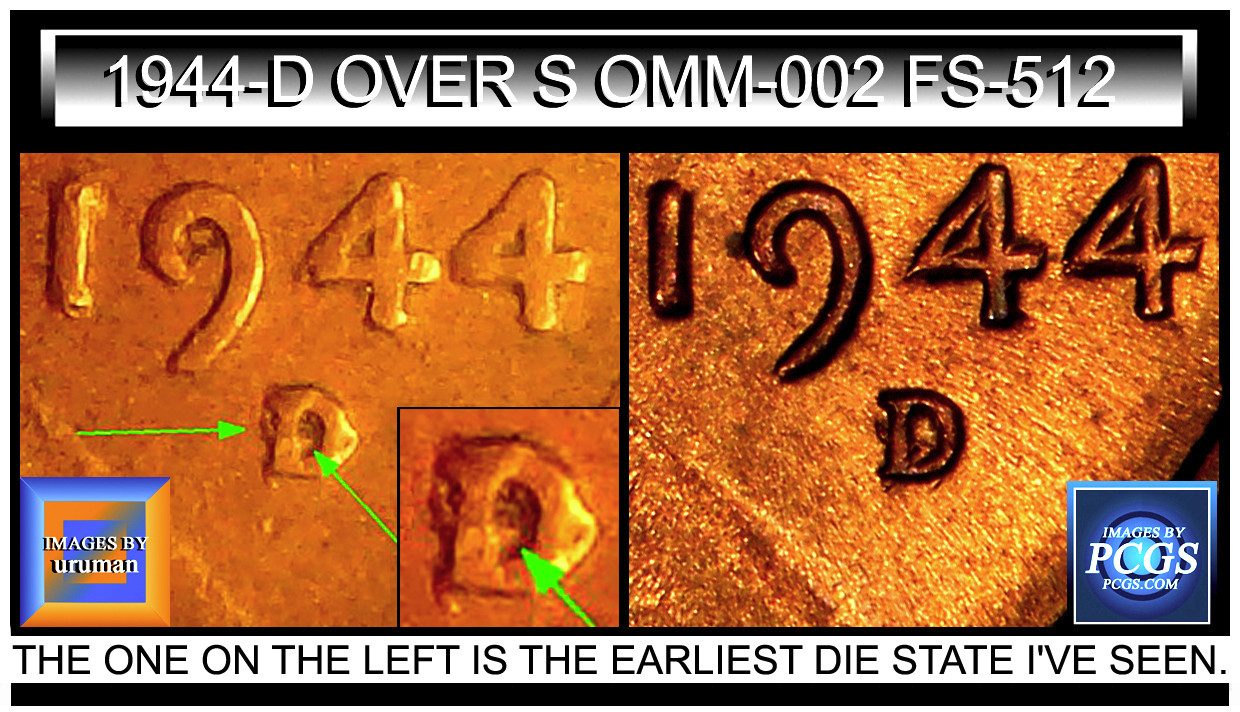
 1944 D/S die 2:
_AAA.jpg)
This one is a slight bit west in the center of the mint mark.
S/D:

So if you see a spread on a mint mark pre 1990,
then it is a RPM. After 1990, the mink mark is part of the dies design, and if you can see a spread,
then it is not a RPM. It could be a doubled die. Again the difference? RPMs are on dies, that had the mint mark punched into the die. (pre 1990 coins) This was because the die was completed, hardened and then the mint mark was added to the die. On these the RPM, is a die variety as it is a separate step when the mint mark was added and has a spread. On the post 1990 coins, the mint mark is just part of the design. So if it is doubled, then the rest of the devices are also doubled, it is a doubled die.
Example:_AAB.jpg) Note the mint mark?
Note the mint mark? It is doubled, and the Date is doubled. So it is
not a doubled die and a RPM. But it is just a doubled die. There are a few more of these showing up now days.
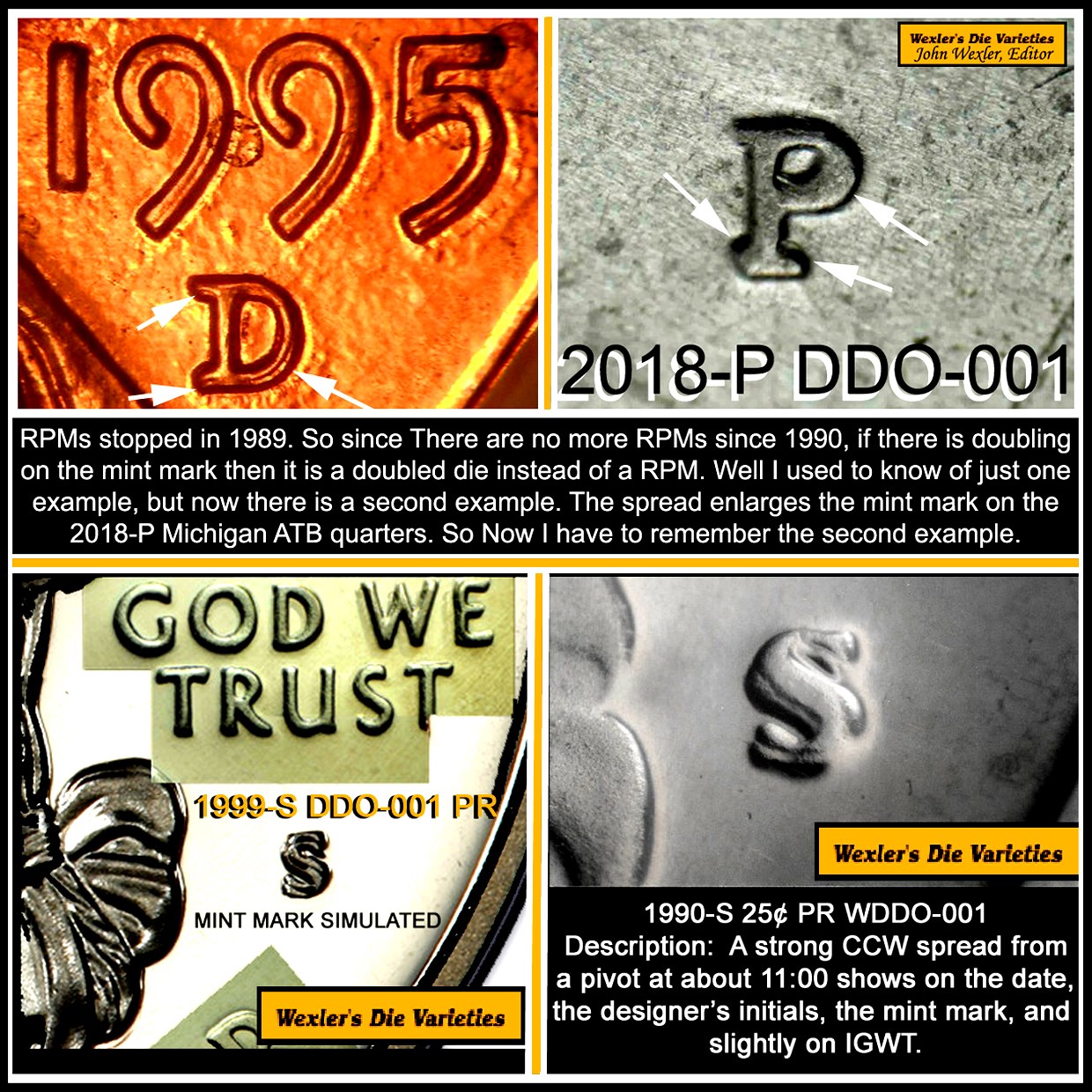
Note the doubled dies on the mint mark areas. (these are not RPMs after 1990)
A lot of information. But seeing images helps to keep it in mind better. I'm sure there is something I forgot. But I can add more to this thread later on.
CoopHome : RPM vs OMM







 Posted 03/04/2019 7:45 pm





