| Author |
 Replies: 14 / Views: 1,958 Replies: 14 / Views: 1,958 |
|
|
Pillar of the Community
United States
1915 Posts |
Two coins stacked. The piece underneath presumed to be counterfeit and the piece on top is presumed to be good. What can explain the sharp jagged points on the letters? My buddy thinks it chisel marks or marks left by the cutting tool if a fake die was made. 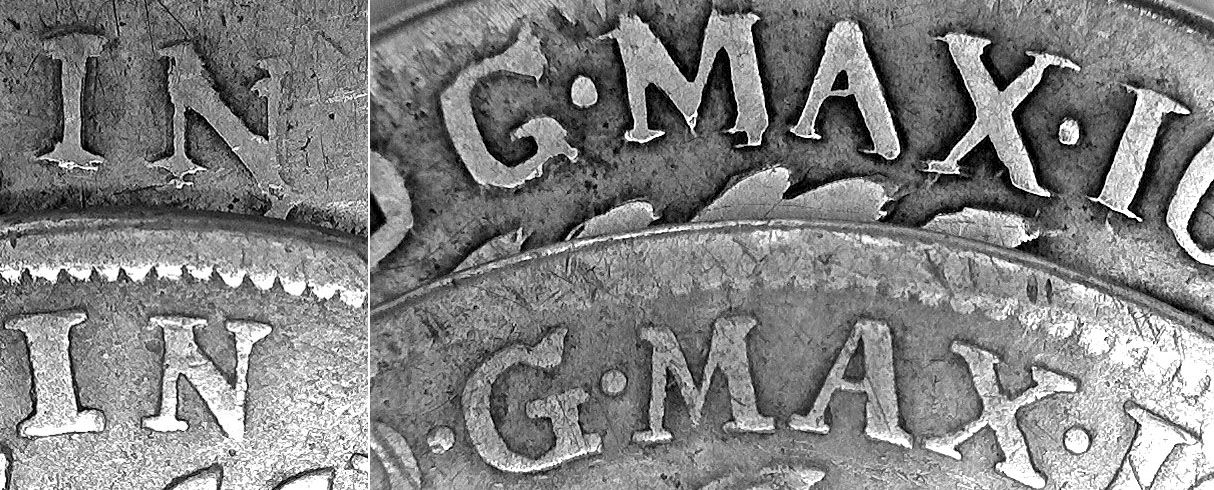 I added the two numbers from the 1773 date. Here again the sharp points compared to the genuine coin. 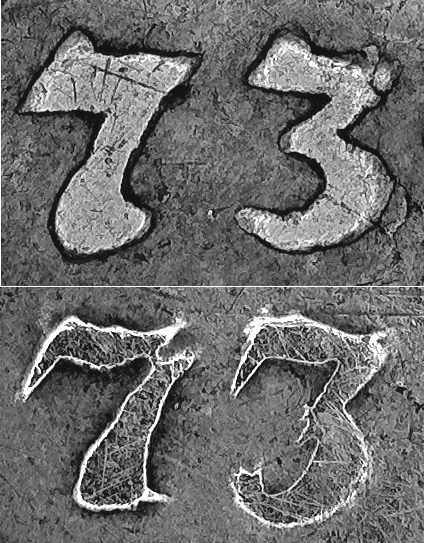 Edited by Albert
03/19/2019 2:59 pm
|
|
|
|
Bedrock of the Community
Canada
24885 Posts |
Please upload a full picture of boths coins ..this will help to determend your thoughts.
(obverse/reverse)
|
|
Pillar of the Community
 United States
1915 Posts |
I can do that, but then the sharp jagged points on the subject coin letters won't be seen very well. And my question is how were they made? They don't look anything like the genuine font. Were they hand cut in the die for the counterfeit coin? This image shows the comparison very well. I can and will followup with the requested full pics. 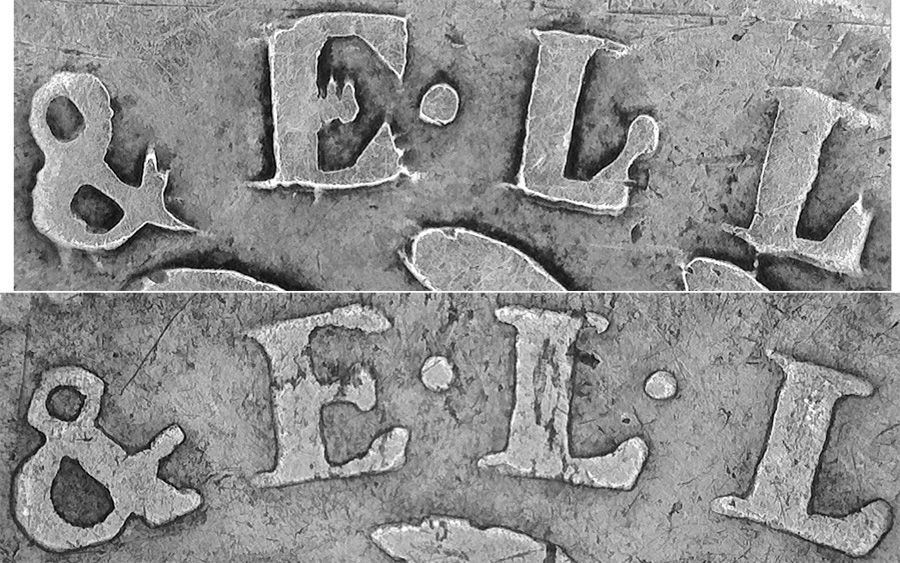 Here are the requested full coin pics. The upper coin is the genuine with the normal letters & numerals and the lower coin is the counterfeit with the oddball letters & numerals: 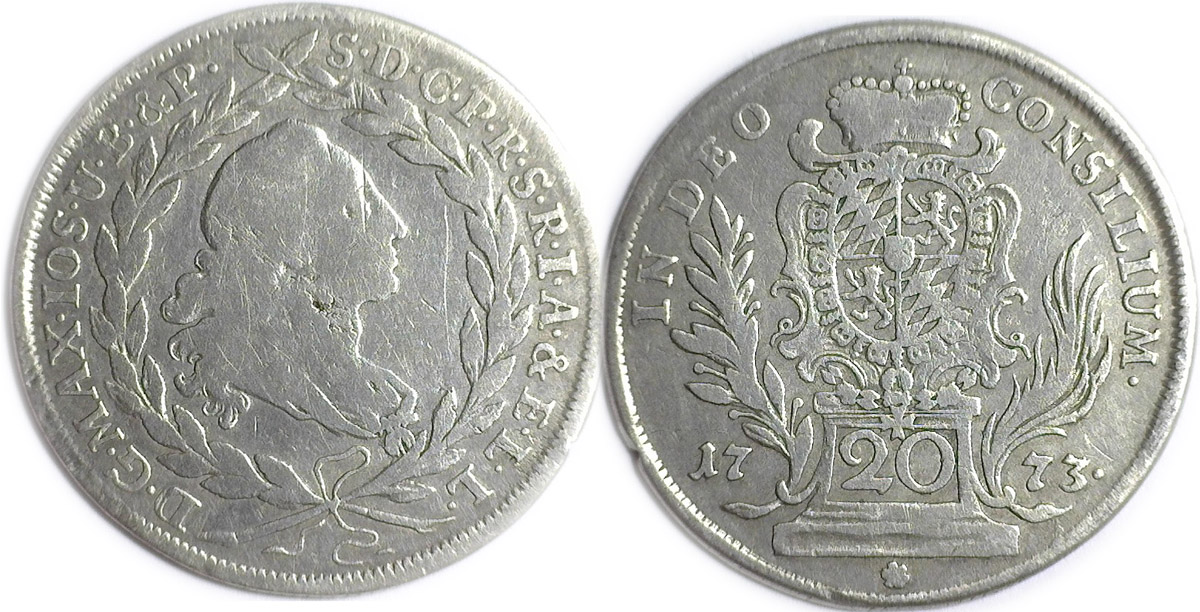 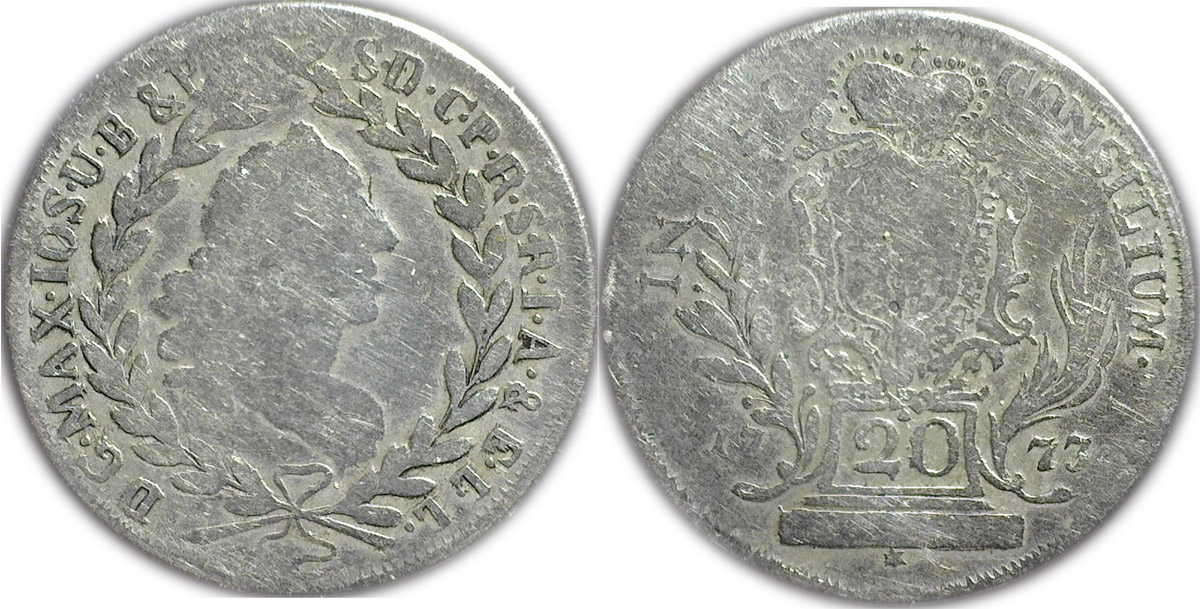 Edited by Albert
03/20/2019 4:34 pm
|
|
Moderator
 Australia
17005 Posts |
So, to clarify: the one on top is supposed to be genuine? Because the top one, with the jagged lettering, looks fake to me.
At this time period, genuine mints were using punches to make the lettering. So all the versions of the same letter (e.g. all the examples of the letter "A") should look the same. That's not what we're seeing in the top coin. All the letters on the top coin look individually carved.
Don't say "infinitely" when you mean "very"; otherwise, you'll have no word left when you want to talk about something really infinite. - C. S. Lewis
|
|
Valued Member
United States
257 Posts |
I agree with Sap. Why do you presume the top coin to be genuine?
|
|
Valued Member
186 Posts |
IMHO the first one is a very obvious,bad fake with the second being a worn genuine piece!
|
|
Pillar of the Community
 United States
5720 Posts |
I think he meant the top coin on the stack, which is the lower coin in the first photo, is genuine.
|
|
Pillar of the Community
United States
1915 Posts |
I swapped the placement of the full coin pictures since it seemed to be confusing.
Zurie had it right in the initial reply but the original question remains.
What method of making produced those sharp jagged points seen on the letters & numbers on the fake coin?
I'm showing them to show the stark difference compared to the genuine coin.
Edited by Albert
03/20/2019 4:38 pm
|
|
Pillar of the Community
United States
1674 Posts |
Very cool piece, looks contemporary. Nice pickup :)
|
|
Moderator
Australia
17005 Posts |
As I and others stated, these letters appear to be individually hand-carved into a die. The forger has done the best he can with the tools he had, which apparently didn't include a set of letter-punches.
By "hand-carved", I mean picking at a hardened piece of steel with a tiny chisel, to carve out the details needed. The "jagged points" are where he's perhaps tapped a bit too hard, or a larger-than-expected piece of the die has broken away as he is chipping at it.
Genuine coin die-engraving of the period was done on softer steel, which was then forge-hardened once the engraving was complete. The counterfeiter either didn't know this, or didn't know how to harden a piece of soft steel, or didn't have the equipment needed to do so.
Don't say "infinitely" when you mean "very"; otherwise, you'll have no word left when you want to talk about something really infinite. - C. S. Lewis
|
|
Pillar of the Community
United States
1915 Posts |
Thanks for the replies. When I add this coin to my binder with photos, I'll add the comments that explain how the letters & numbers were made and why they appear as they do.
|
|
Valued Member
United States
414 Posts |
Quote:
The "jagged points" are where he's perhaps tapped a bit too hard, or a larger-than-expected piece of the die has broken away as he is chipping at it. I believe sap hit the nail exactly on the head. Those were my thoughts exactly. Looks like the engraver of the fake die had a heavy hand (or used a hammer that was too heavy) and would repeatedly hit too hard around corners, causing excess metal to be removed from the die. |
|
Pillar of the Community
United States
1915 Posts |
I have quite a few counterfeits from this time period and Germany as well as other countries. As tonight's project I'll go back and put them under the scope to see if there are more coins found with letters like these. Here is one I quickly spotted, and thanks to the replies here, I now realize the concept of having letter punches and not having them. In this case each letter E should be alike, but look how different each E is on this coin. Also see how difficult is was for the engraver to make a clean curve or nice radius inside the letter C: 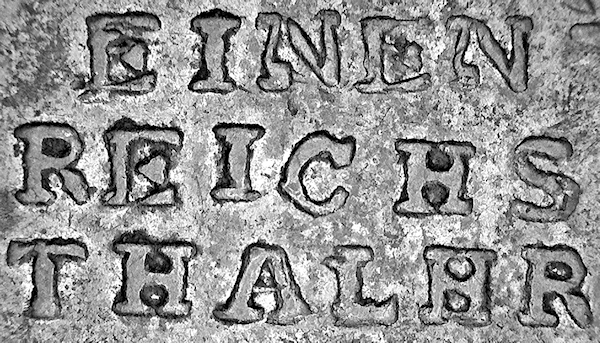 Edited by Albert
03/21/2019 1:43 pm
|
|
Pillar of the Community
United States
5362 Posts |
Nice contemporary counterfeit. I have seen many similar to that but do not collect European types. The few that I own I picked up in odd collections or because I saw a new technique that I wanted to study.
Hand engraving a die is difficult and an inexperienced engraver with a minimal array of tools will always bungle the job. These over-cuts or tool slips are even seen but on a smaller extent on genuine US Bust half dollars. Many such slips were used by Overton as means of die identification. All early coinages suffer from the same issues. This is what makes counterfeit collecting so interesting.
From what I see the counterfeiter did not have access to letter punches and the entire die was hand cut. This was a tiny cellar or attic operation carried on in secret by a small group of forgers at best.
Smaller starting cuts (a pattern really) are made by applying pressure to a wooden knob on the end of a fine sharpened tool (scribe) that looks like it might be used by a dentist. After the design is outlined larger gouges and chisels of several shapes are used to create the completed die which is then hardened for striking.
Today forgers use rotary drills or power tools that tap a graver in a forward and back reciprocating action. Both of these tools leave fine clues inside the details that sometimes are transferred to the finished coin.
In the 1700's the tools would have all been hand held and pressed by hand to make a small gouge or taped with a hammer to make a larger or deeper version of the same. Poor lighting, lack of magnification, poor working conditions and of course fear of being caught would all add
to the crudity of the end product.
The coin pair you have is a perfect way to illustrate what a counterfeit looks like and what to watch for when examing coins of that period.
Nice post.
Edited by swamperbob
03/21/2019 10:23 pm
|
|
Pillar of the Community
United States
1915 Posts |
Thank you for your informative reply which is exactly what I was hoping to get. As a novice I seek to learn more and to understand what I see on some of the coins. I can then add a dialog box with this information on the printed page as the coins go into the binder. I did look through the binder and did find more of these irregular hand cut letters. It seems that E is one of the more difficult letters to make consistently. Here is one of the better examples found: 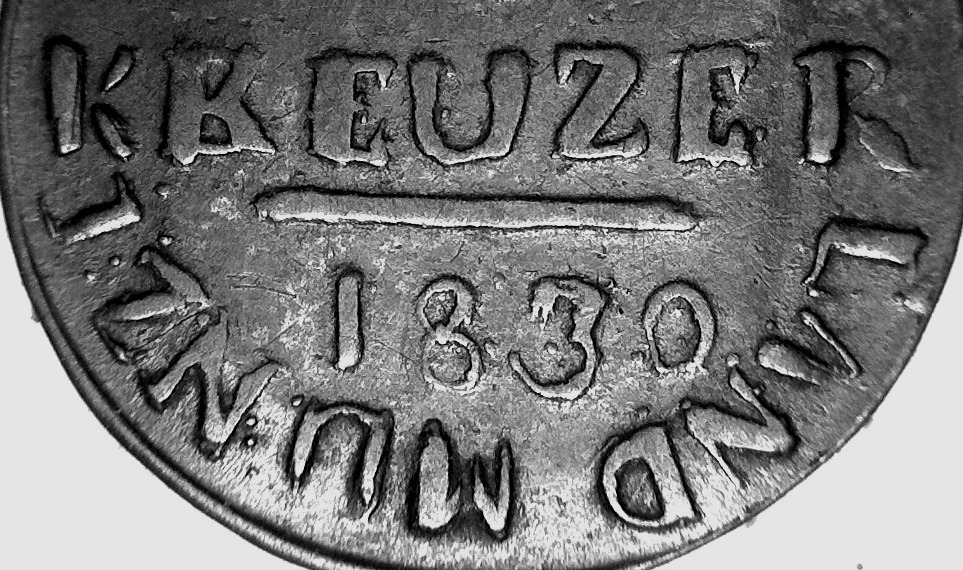 Edited by Albert
03/22/2019 01:44 am
|
| |
Replies: 14 / Views: 1,958 |
|










 Posted 03/19/2019 7:23 pm


