| Author |
 Replies: 6 / Views: 1,436 Replies: 6 / Views: 1,436 |
|
|
Pillar of the Community
 United States
2843 Posts |
Had this coin for a while now. Never paid it too much attention. Then I noticed that it seemed to have a doubled portrait. Now I am curious. Was it struck twice with the same die and the bottom portrait spread out? Or was it struck over a Denarius of a previous issue? Does either of these scenarios make the coin more desirable/valuable? Or is diminishing? Lastly, or maybe firstly, who is it? My photo setup is not available, so I snapped a quick pic with a cell phone and some window light. I think enough to show my point. 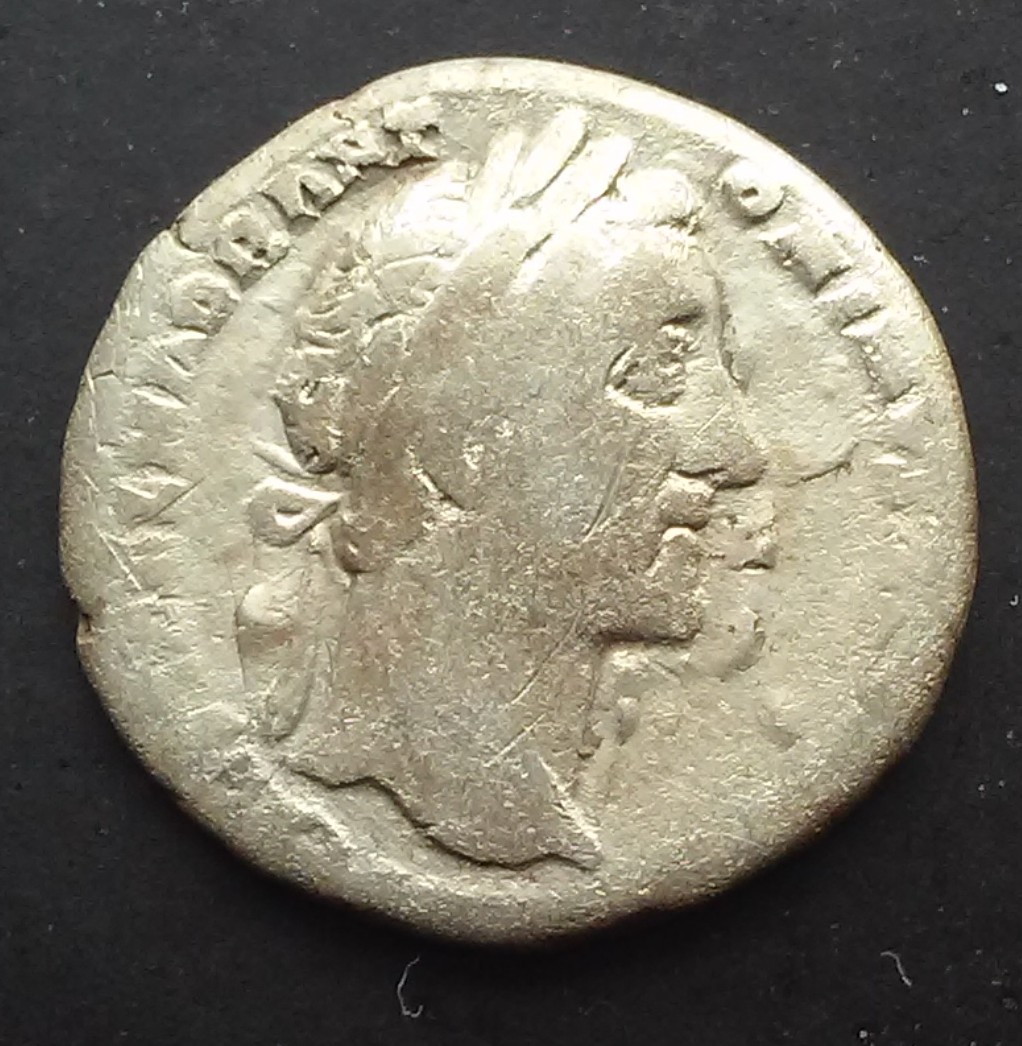 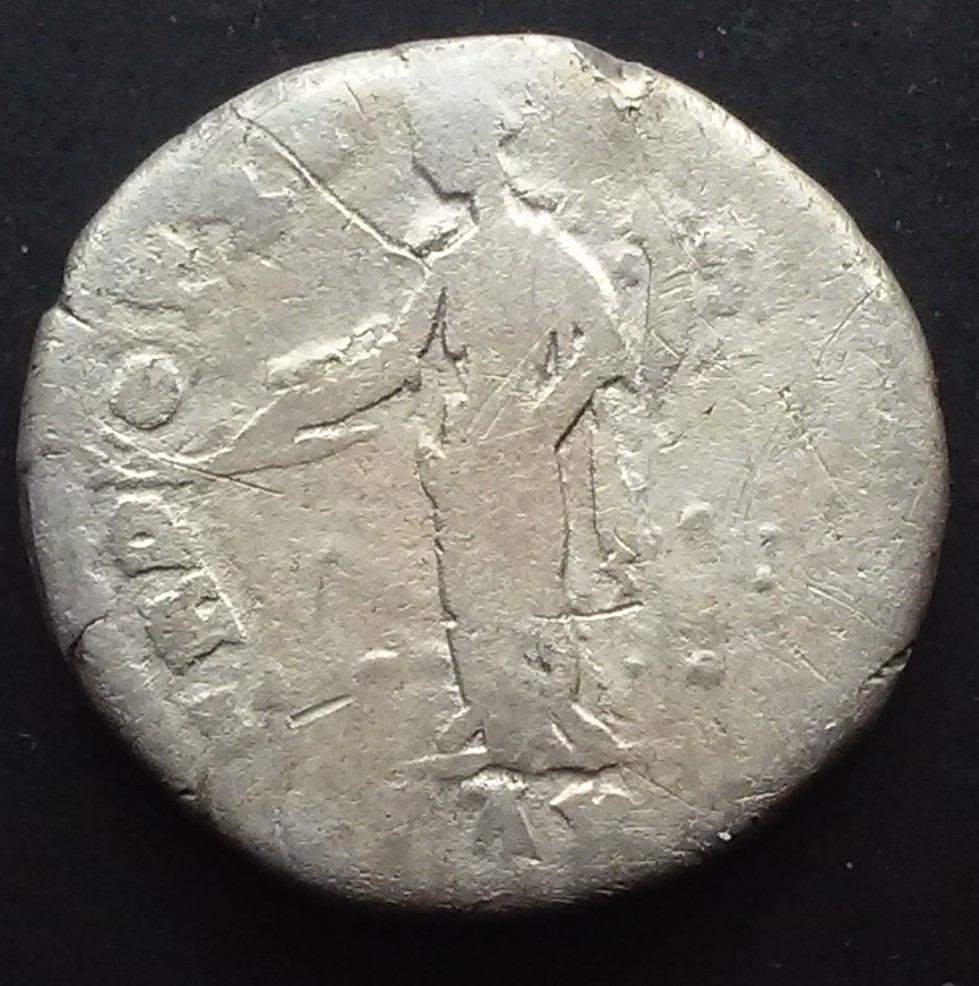 |
|
|
|
Pillar of the Community
United States
7067 Posts |
Quote:
Lastly, or maybe firstly, who is it? Looks like Antoninus Pius, Pax holding branch on reverse, PAX in exergue, I believe. I suspect double-struck. Perhaps with enhancement done to some devices? |
|
Moderator
 United States
23731 Posts |
It does look like Antoninus Pius. IMO it's not a double strike but for lack of a better term ghosting from the strike. The metal flowed in the shape of the bust when struck.
|
|
Pillar of the Community
United States
949 Posts |
I agree with the Antoninus Pius ID, and that it is double struck, not overstruck. However, my take on what happened is different than Ron's suggestion. The problem with the first strike is that it is shallow, that is, it did not make a strong impression on the coin. The most likely cause of that is that the planchet was not heated to the normal "softness" for normal striking. The solution was to heat it up some more and whack it again, which they did. If my scenario is correct, then the lighter secondary image was not the result of metal "flowing" to the fringes. It wasn't hot enough. One indication in support of this is that there is a weak strike of the surrounding obverse inscription positioned in the same relation to the head in both strikes. You can see it just behind (and touching) the head of the stronger strike.
Edited by lrbguy
04/06/2019 11:56 am
|
|
Pillar of the Community
Belgium
1194 Posts |
if it is a double struck , why there are not signs of it on the reverse ?Maybe Echizento is right ? albert
|
|
Pillar of the Community
United States
949 Posts |
I think you know the answer to that already, Albert, although that might be an argument to suggest the planchet was not reheated between strikes, but it was merely struck again in a slightly shifted position.
The obverse die was the anvil and the reverse die the hammer. The force of the hammer on the surface was direct, and the second strike obliterated the first strike. However, the transmitted force on the obverse (under)side did not mash the surface into the anvil with quite the same force, and so a residual of the first strike was left.
Observe too that the smashed details occur in the unengraved parts of the obverse design. They weakened the first impression.
Edited by lrbguy
04/06/2019 6:24 pm
|
|
Pillar of the Community
United States
1122 Posts |
I may have an example of what we are talking about on one of my Domitian Coins. 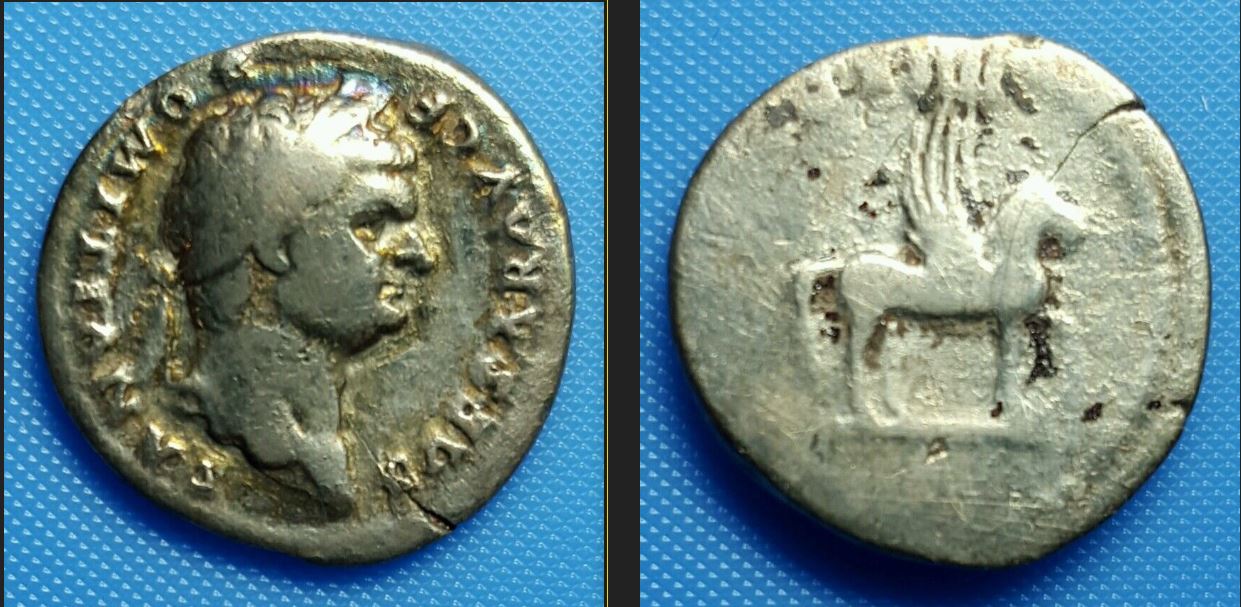 |
| |
Replies: 6 / Views: 1,436 |
|







 Posted 03/31/2019 12:21 pm





