I thought about adding this to the earlier thread on coins of the Kingdom of Poland, but decided otherwise to get a few more eyes on it.
From 1697 to 1763, Poland was ruled by kings who were also princes of the Saxon house of Witten, and electors of Saxony. The former Polish "royal mints" of Krakow and Bydgoszcz (Bromberg) which minted so many trojaks, 6 groschen and 1/4 thaler coins under the 17th century kings (Sigismund III, Jan Casimir and Jan Sobieski) were closed, and the Leipzig and Dresden (Saxony) mints began minting silver coins for use in Poland (distinguished by the Polish coat of arms reverse): hellers, ternars, and fractional/multiple groschen (1/2, 1, 2, 4, 8...) starting in 1697.
In 1749 Augustus III introduced a copper schilling (not a new coin in Poland, as these had been minted 1650-1666 under Jan Casimir), and opened two new mints dedicated to the minting of copper coins: Grunthal near Bohemian copper mines, and Gubin at the Poland-Saxony border. (For a look at solidus/shillings from these mints, see the contributions of Petrus on p.202-203 in the "How Far Back?" thread:
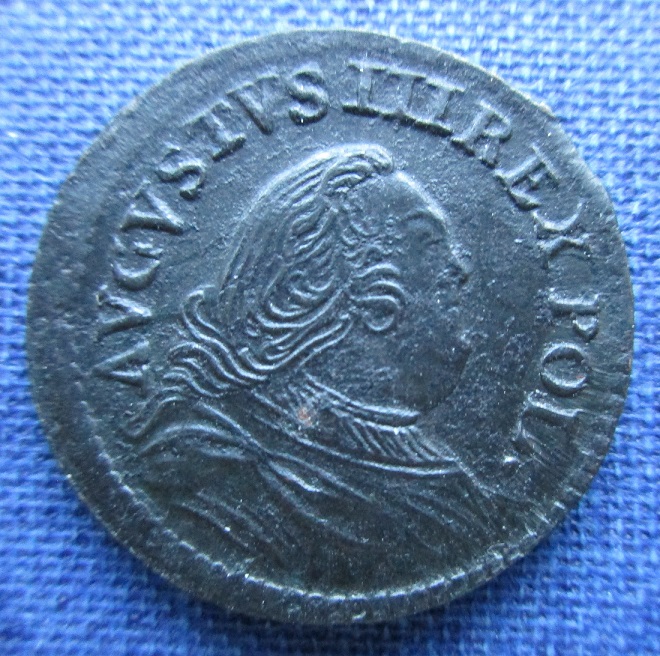
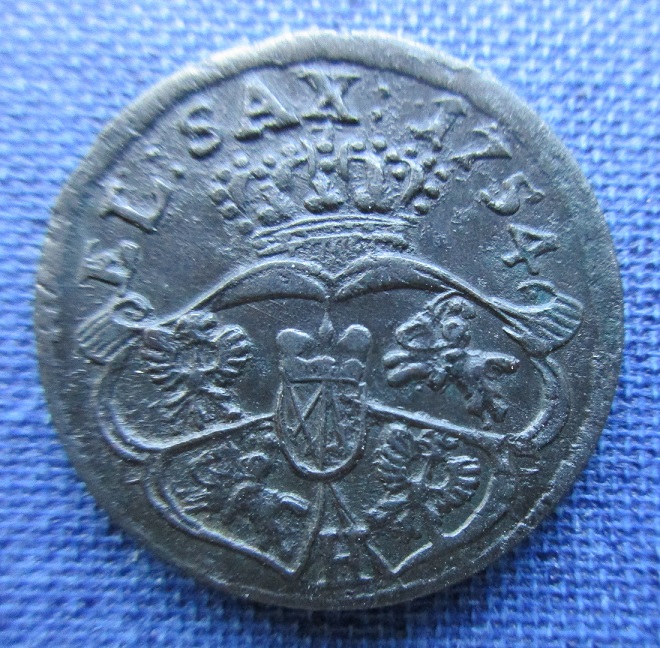
http://goccf.com/t/322163&whichpage=203) In 1752 the first copper Polish groschen was introduced, and large quantities were produced until 1758. Though made at both Grunthal and Gubin, WCN attributes the H mint mark uniquely to Gubin, which makes the copper groschen from this mint a 2 year type (1754-55). Numista, however, attributes this coin to Grunthal (maybe in error, since they give two overlappping entries for the copper groschen of Grunthal).
What I find interesting is that concurrently, silver 1/24 thaler (=groschen) coins were being minted in Leipzig and distributed in Poland. So, there would have been both copper and silver groats floating around, presumably in the same place. This practice continued through most of the reign of the next king. The last silver groschen coins were minted in 1782.
To my 20th/21st century way of thinking, it seems bizarre to have two versions of the same denomination, in different metals in circulation. So I am curious if this was a widespread practice in earlier times?
Poland, 1 Groschen Copper, 1754H (Gubin). Kop.2084, Gum.2138







 Posted 04/16/2019 7:48 pm





