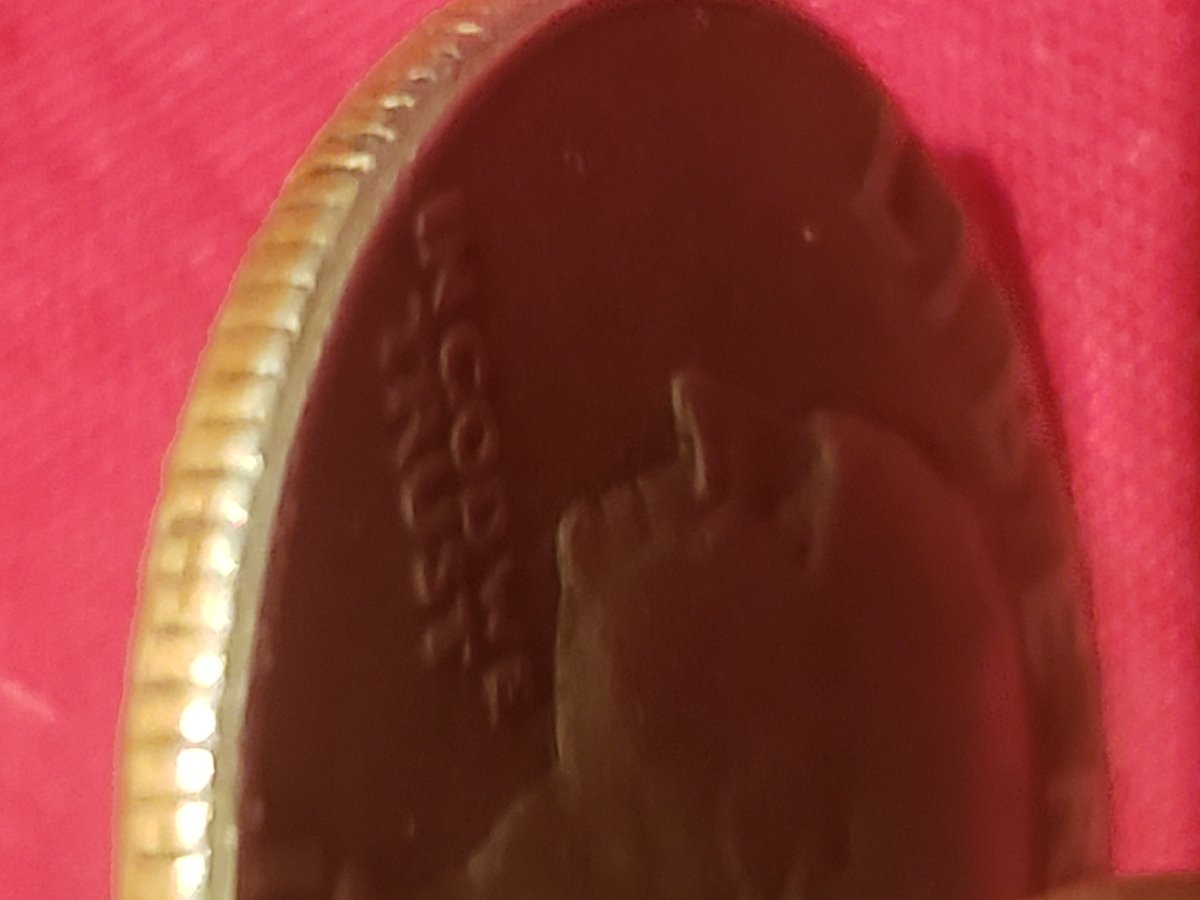
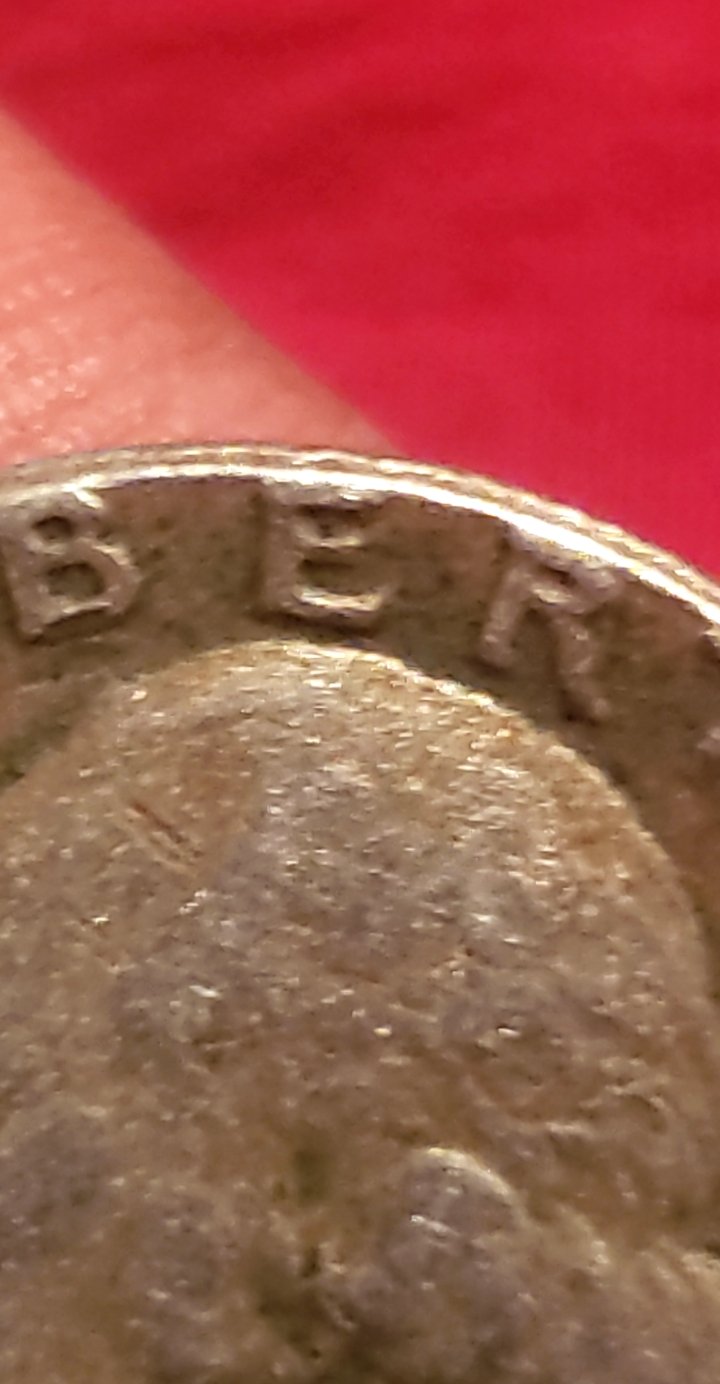
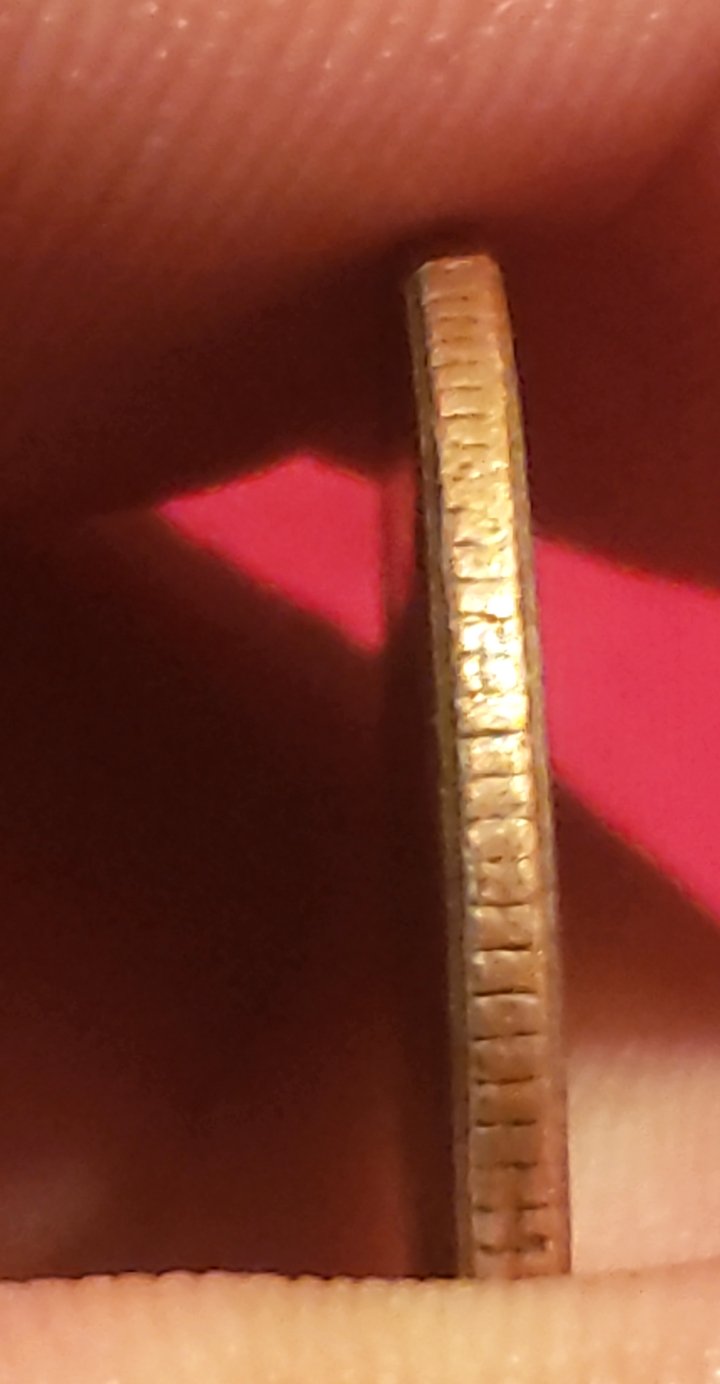
This is a normal quarter and is the result of incomplete filling of the rim.
When the coin is struck it expands outward and the center of the edge is the first part to contact the collar. At this point it has what I call "bevels" from the field to the point where the edge contacts the collar. As the strike continues more of the edge contacts the collar it gets wider with the "bevels" getting smaller. If the strike lasts long enough for the edge and rim to fully form the "bevels" disappear completely. If the pressure is too low or the strike doesn't last long enough for the metal to flow and fill the edge completely you get what you see on your coin. If you look at a lot of coins you will actually find that this is quite common and can be found on all denominations.












 Posted 05/11/2019 4:17 pm


