| Author |
 Replies: 13 / Views: 2,977 Replies: 13 / Views: 2,977 |
|
|
Pillar of the Community
2087 Posts |
I am pretty sure I have posted a picture of this coin before but what I hadn't posted was the story of the Dutch trade coin. I was fascinated to learn the coin was first issued as a war coinage by the province of Holland to finance the war effort ( 80 years war) against Spain. It had( compared to other Thaler sized coins) a low silver content 75% and was circulated with a decree valuing it higher than the ASW. This allowed the Netherlands to exact a 10% profit on each coin. British traders( Britain was an Ally) discovered that it was accepted in the Ottoman Levant tariffed the same as the 8 reales. This was due to the fact that In India and China silver had a higher purchasing power than in Europe. So as Silver moved east it gained value. The British profited by having their silver( usually 8 reales) struck into lion thalers in the Netherlands and then used the coins in trade with the Ottomans. So, of course, the Dutch Lion Thaler became an important Trade coin. The design was adapted from the first Lion Thaler; the Joachimsthal Guldengroschen 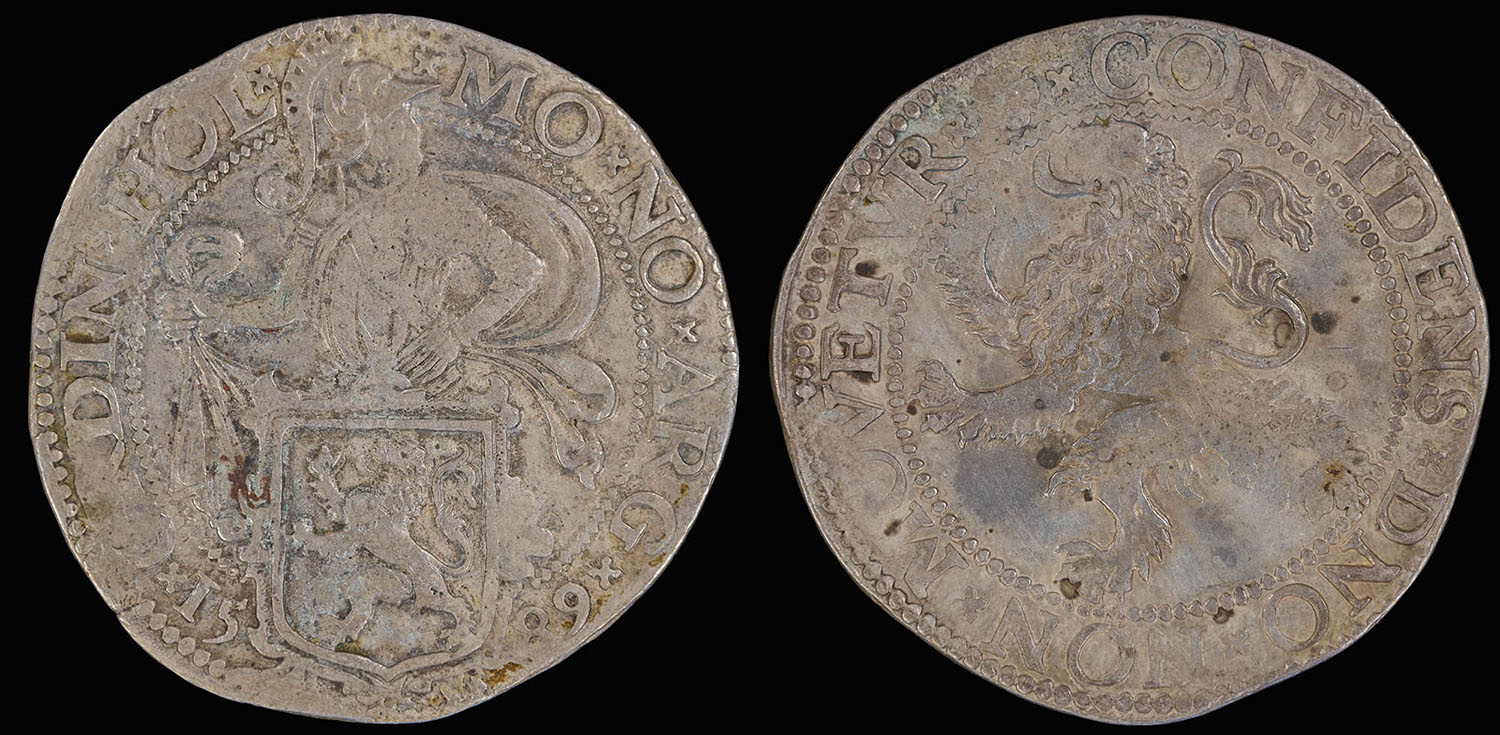 *** Moved by Staff moved to a more appropriate forum. *** *** Moved by Staff moved to a more appropriate forum. *** |
|
|
|
Valued Member
United States
324 Posts |
I was unaware of that. thank you, Austrokiwi.
|
|
Bedrock of the Community
Canada
24885 Posts |
Interesting!  |
|
Pillar of the Community
United States
584 Posts |
|
|
Pillar of the Community
United States
789 Posts |
Some questions: What is ASW? Quote:
The British profited by having their silver( usually 8 reales) struck into lion thalers ... Do you mean the British traders? I assume the 8 reales were melted down then alloyed with base metal to produce 75% silver Lion Thalers? Thanks. |
|
Pillar of the Community
 2087 Posts |
Quote:
Do you mean the British traders? Yes The British Levant company even went so far as to compel their members to only use the Dutch coin Quote:
I assume the 8 reales were melted down then alloyed with the base metal to produce 75% silver Lion Thalers? Yep, that's it. Arbitrage made the process profitable. When Maria Theresa Thaler took over from the Lion Dollar in the 18th century the same thing occurred. Most MTTs were produced using Spanish reales from the new world Edited by austrokiwi
05/25/2019 01:36 am
|
|
Moderator
 Australia
17006 Posts |
Quote:
What is ASW? "Actual silver weight". A 1 ounce coin that's only 75% silver has an ASW of 0.75 ounces of fine silver. Two other interesting footnotes about this coin. The British traders might have been compelled to use them, but folks back home in Britain didn't like them, because of the low fineness. In Britain, the coins earned the nickname "dog dollars" - both because of the low fineness, and because the lion isn't very lion-like. Second, unlike in Britain, the coin found wide circulation and acceptance in Eastern Europe, which was part of the Ottoman Empire at the time. The legacy of the leeuwendaalder in this area can be seen in that there are two national currencies with names derived from it: the Romanian leu and the Bulgarian lev. The Albanian lek is not; it is derived from an abbreviation of the name of Alexander the Great. Don't say "infinitely" when you mean "very"; otherwise, you'll have no word left when you want to talk about something really infinite. - C. S. Lewis
|
|
Pillar of the Community
2087 Posts |
"Dog Dollar" was just not an English thing. The Arabs called them Kalb rial ( doesn't take much to guess what that translates as). Hoards have been found in what was then Palestine. The Dutch Lion Thalers were used to purchase Cotton which at the time was grown around the sea of Galilee.
BTW I thought that I had posted this in World coins. The Dutch lion Thaler is not medieval. It is very much a coin of the Early modern period. Its influence was significant in the early modern period. If someone moved it then move it back to where it belongs. If I was the idiot who put it here I deserve a real telling off!
Edited by austrokiwi
05/25/2019 2:12 pm
|
|
Pillar of the Community
 United States
8056 Posts |
Nice post, and interesting adds from others.
I think 1c5d in Belgium is also a student of this era in the history of the Low Countries (so I hope he has seen this thread)
|
|
Forum Dad
United States
24232 Posts |
Quote:
If I was the idiot who put it here I deserve a real telling off! You're right about one thing, You do deserve a good telling off. Glad you're perfect and never make mistakes. Just FYI, most would just hit the Send Note to Staff link and explain it calmly. But no, you call people names here and in your note to the Staff. When I find out who made this absolutely horrendous mistake that offended you so much you had to lash out in multiple places I will ban them swiftly and without notice. Will that make you happy? |
|
Moderator
United States
23731 Posts |
Bobby, it was me. The coin dated before 1600 so I moved it. So in my defense it went into the right section. I am not thin skinned I've been called worse, but there was no need to be rude and offensive.
|
|
Forum Dad
United States
24232 Posts |
That's it, you're outta here.  |
|
Pillar of the Community
United States
530 Posts |
I have a Lion Dollar and three of it's cousins the Rix Dollar (not posted):  Netherlands Lion dollar (Leeuwendaalder) Utrecht 1608 Silver, 41 mm, 26.98 gm Obverse: Standing knight with shield in front, lion on shield MO ARG PRO CONFOE BELG TRA (Moneta Argentea Provinciarum Confoederatum Belgicarum Traiectum) "Silver money of the Province of the Netherlands Confederation at Traiectum" Belgium was an old Latin name for all Netherlands or Low Countries and Traiectum was an old Latin name for Utrecht. Reverse: Lion facing left CONFIDENS DNO NON MOVETVR (Confidens Domino Non Movetur) "Confidence in the Lord is not moved"  https://www.brianrxm.comThe Mysterious Egyptian Magic Coin Coins in Movies Coins on Television
Edited by willieboyd2
05/26/2019 11:57 am
|
|
New Member
United States
49 Posts |
fascinating history,cool old coins
|
| |
Replies: 13 / Views: 2,977 |
|







 Posted 05/24/2019 5:17 pm





