| Author |
 Replies: 15 / Views: 2,937 Replies: 15 / Views: 2,937 |
|
|
Bedrock of the Community
United States
94367 Posts |
Most collectors of early small size paper money keep an eye out for the so-called "Light Green Seal" (LGS) FRN notes and generally agree that these are more attractive than the "Dark Green Seal" (DGS) versions. The change from dark to light was made during the early 1930s and then back to a pale blue green shade in late 1938. It's a confusing subject because, as described by Schwartz and Lindquist in the 10th Edition of their Standard Guide, the change from dark to light was progressive and "collectors have been able to assemble sets...with many graduations in color" for such notes - some yellowish-green and others less so but still much lighter than the DGS notes. Purists tend to use the LGS designation only for those with a vivid yellow-green color, but sometimes one must rely on High/Low serial number observations for confirmation with often head-scratching results. Older TPG holders can even be wrong. I'll lead off with one of my favorites, a 1928-A $100 LGS note from the St. Louis district. This example is crisp new with deep embossing and reverse margins that, while wide right, are still broad enough to push this toward a 65 grade I think. It's a tough note to value, though - the Friedbergs don't even give the 1928-A LGS issues their own FR numbers, as they do with the 1934 Series, and there hasn't been a CU example at Heritage for almost 4 years.   Edited by Coinfrog
05/27/2019 9:36 pm
|
|
|
|
Pillar of the Community
United States
4637 Posts |
The shade of green assigned to early, small-sized FRN's is lost on me. Some collectors have a good handle on dates, serial numbers and denominations, and I missed the boat altogether. I believe I own one LGS note and it wasn't on purpose.  |
|
Bedrock of the Community
 United States
94367 Posts |
This is definitely a LGS. As I say, a complicated subject, and I fear few members care much about these oddities.
|
|
Bedrock of the Community
 United States
12936 Posts |
Nice notes, both of you! I've always been confused by the subject so hopefully we'll get some clarification here.
|
|
Pillar of the Community
United States
800 Posts |
FWIW  |
|
Pillar of the Community
United States
4637 Posts |
Personally, I probably know more about Quantum Physics than I do about the various stages and variations of the color green used for early small-sized FRN's. I've heard of yellow green seal, vivid yellow green seal, blue green seal, pale blue green seal, vivid yellow green olive seal and don't forget good old dark green seal & light green seal. The standard guide, used by most small sized collectors, makes an attempt of showing the different shades used on the back cover of the book.  |
|
Bedrock of the Community
United States
12936 Posts |
Good luck if you suffer from color blindness.
|
|
Pillar of the Community
United States
1026 Posts |
|
|
Moderator
 United States
198004 Posts |
Looking good!  |
|
Bedrock of the Community
United States
94367 Posts |
LGS notes from the 1828-A/B Series tended to be scarcer than their DGS counterparts, but by the time the l934 Series came out, the situation was reversed. This is a good example:   |
|
Pillar of the Community
United States
4637 Posts |
Does anyone know if color variations were a topic of discussion back when the notes were being issued ?
|
|
Bedrock of the Community
United States
94367 Posts |
There must be further reading on this. I'll contact Scott Lindquist and see if he has any input.
|
|
Pillar of the Community
United States
6020 Posts |
|
|
Moderator
United States
198004 Posts |
Quote:
Here are my contributions: Very nice! |
|
Bedrock of the Community
United States
94367 Posts |
@barryg's notes illustrate the range of colors and interpretation issues very well. Only the 1928-B $10 among these is considered a true Light Green Seal according to the Schwartz/Lindquist cataloging system.
|
|
Pillar of the Community
United States
6020 Posts |
Well, I don't care what the "experts" say. Compared to this seal: 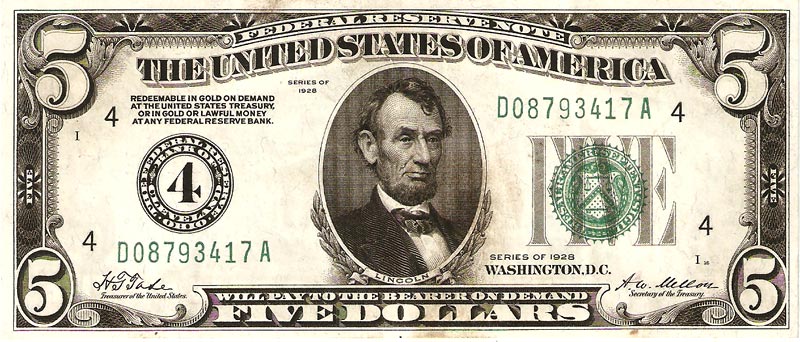 I'm still going to call this one "light green": 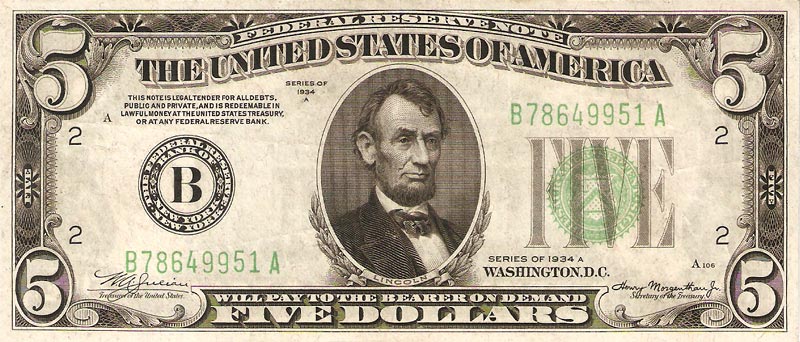 |
| |
Replies: 15 / Views: 2,937 |
|




 Posted 05/27/2019 8:34 pm





