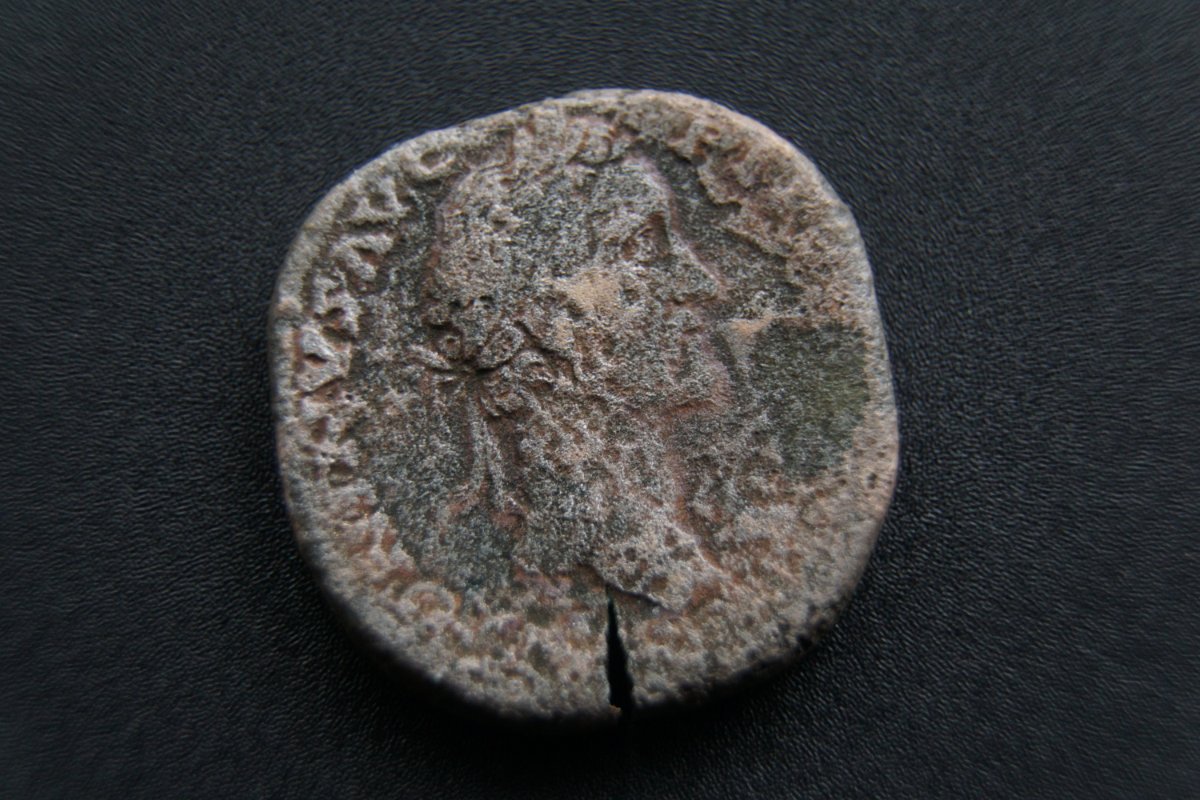
A nice find! Antoninus Pius built the Antonine Wall which separated civilised Roman Britain from the barbarians in Pictish Caledonia and he's also known for a series of coins he issued showing Britannia (sadly, this is not one of those).
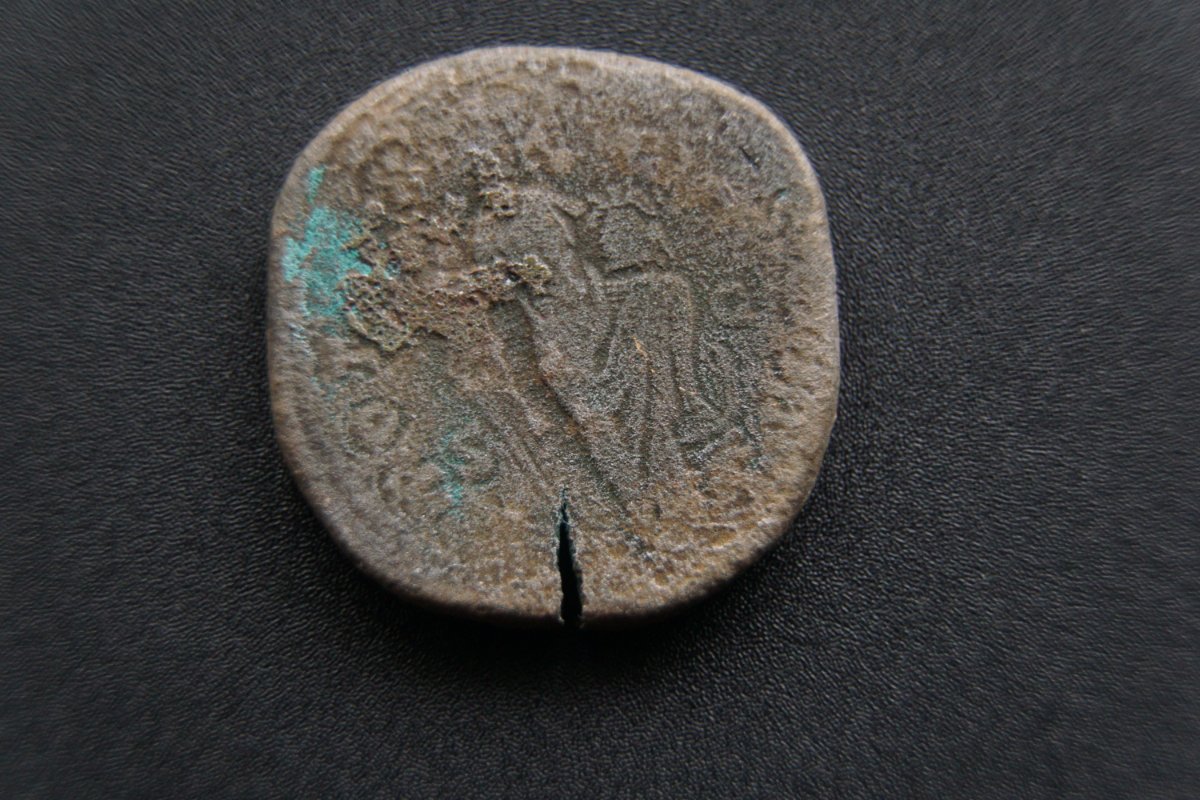
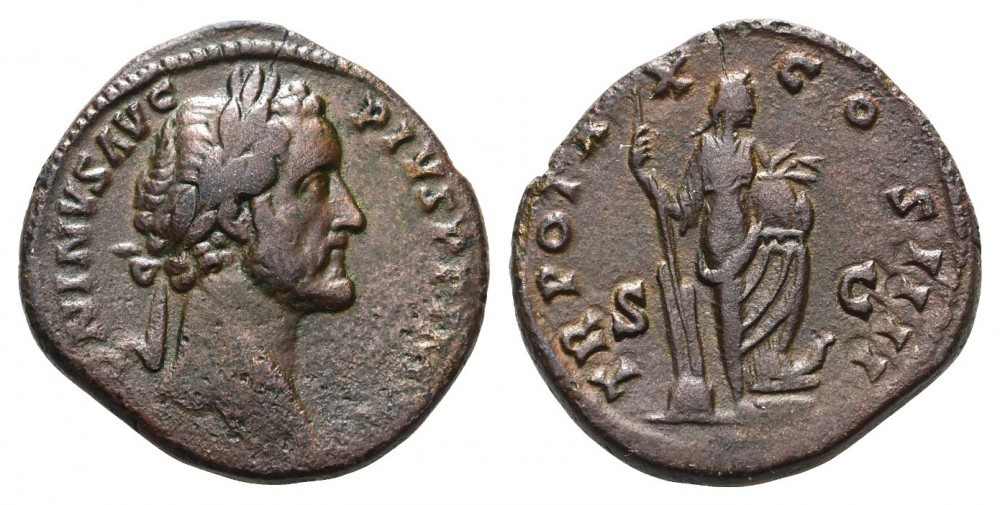
This coin is a Sestertius, the largest circulating coin in the Roman Empire (caveat: the city of Alexandria was permitted to continue issuing its own coinage and they had a larger coin, but these are considered 'provincial' rather than 'imperial' - your coin comes from Rome itself). Its a coppery colour but the metal is actually orichalcum, which is a fancy roman name for brass. The figure is Annona, the goddess of the annual grain harvest who ensured that Rome remained well fed. The scene is an interesting one - she is shown holding a modius (which is a special measure of grain) and a rudder, while standing on the prow of a ship. That suggests that Rome was receiving grain from its provinces via the sea and this coin is celebrating that (or, more accurately, reminding the plebs that not just Annona but also the emperor are responsible for them being well fed).
Note the S-C which stands for 'SENATVS CONSVLTVM' - the senate was consulted! This is a formality that is universal on imperial bronzes of this time period as the emperor had to seek permission from the senate to mint coins in bronze.
The legend (TR POT XX COS IIII) records some of Antoninus' titles - Tribune of the People 20 times and Consul 4 times. The legend around his portrait reads ANTONINVS AVG PIVS PP IMP II (Antoninus Pius Augustus, Father of his Country, Imperator twice). The title Imperator, which comes down to us as the title Emperor, is actually a military honorific at this time, which Antoninus has received twice according to this coin, while the title 'Augustus' is the one that actually means emperor.
You should send an email to the Portable Antiquities Scheme to record the find. The blue/green patch on the reverse is potentially bronze disease, which is an affliction that will turn this coin to powder over the next few decades, but can be treated and the PAS might well be able to give you some guidance. There are some guides on this forum to fix it too.









 to the Community!


 Posted 05/30/2019 12:32 pm






 Welcome - Very nice find - I am jealous.


