It has been said that dipping in E-Z-Est is "numismatic insanity," accompanied by a lot of emojis, but no explanation was given. I will try to provide some explanation.
I would certainly agree that if a coin has significant numismatic value and/or an attractive patina it should not be dipped in E-Z-Est. I would also say that coin cleaning methods have often been misused and have damaged the values of many coins.
However, when used appropriately, in the right circumstances, some conservation methods to remove contaminants can occasionally be helpful.
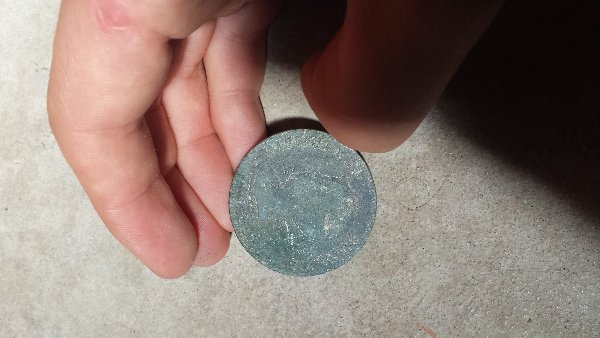
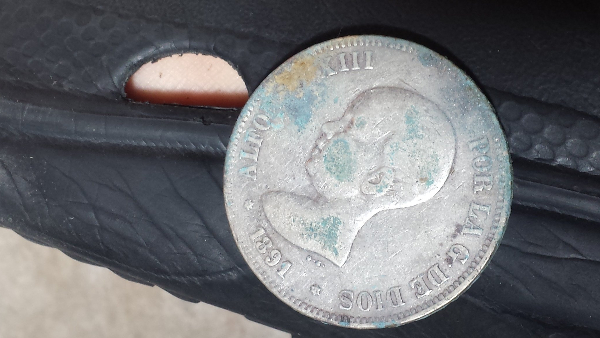
First of all let me say that I have a Ph.D. in chemistry and some experience in removing contaminants from metals, and can say that in my opinion it is unlikely that acetone will remove an appreciable amount of the green encrustation. Acetone is good at removing organic (carbon-containing) contaminants such as PVC or tape residue. The encrustations on your coins are inorganic, possibly copper chlorides based on the color, maybe some sulfides, oxides, and hydroxides, and these types of compounds aren't soluble in acetone.
These coins are worn and the surfaces have already been damaged by the green encrustations. I doubt that they are worth much more than melt value in their present condition.
There are several ways to remove the encrustations, but they might not increase the value of your coins. It may well be best to leave them alone and not spend your time trying any of these.
However, it is my understanding that you'd like to know your options on how to remove the encrustations. So far I have not seen any methods proposed in this thread other than E-Z-Est that have a reasonable chance of removing the encrustations, and I will give some other options below.
For coins that have primarily bullion value, the appearance, but not necessarily the value, can sometimes be improved by several other methods.
1. Soaking for a couple of weeks in a solution of sodium sesquicarbonate (this is a treatment for "bronze disease" consisting of 16.8 grams sodium carbonate plus 8.4 grams sodium bicarbonate in 100 mL of distilled water).
2. Tumbling with a very mild abrasive medium such as crushed walnut shells
3. Mild electrolysis
There are risks to the coin surfaces in all these methods. If you wanted to try any method I would try it out on a single coin of low value. Incidentally, a patina on a silver coin can be regained, though it might take many years.
Edited by Seeker55
08/23/2019 4:29 pm








 Posted 08/22/2019 11:37 am




 ..
..