Further to my previous post, I was a bit rushed and I should have said a bit more.
With that many items, since you said you wanted to learn about them, here is my general advice:
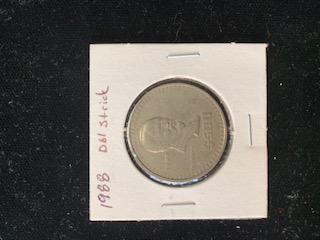
1. You need to learn to determine whether it is a coin or not. A coin in almost all cases has the name of the country, the denomination and the year of issue. Once you have that, you can go to standard catalogues (Krause in paper,
http://www.numista.com online) to find the catalogue number and other details.
http://www.NGC.com has got a section with world coin valuations (prices in the Krause catalogue). To be quite frank, most coins that circulated after 1960 are not worth more than a few dollars, unless they are silver or gold. Well worn common ones are probably not worth more than 10 cents each. If the language is giving you difficulty do a search of the inscription. If it is a non-Latin alphabet, we can help. Using these resources you should be able to identify 95% of your coins, and you can ask us about the rest. You also need to be able to assess the grade of a coin (just minted to just about worn out).
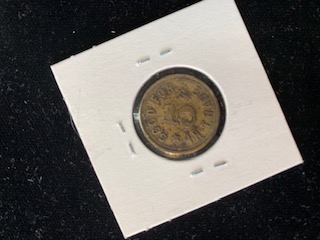
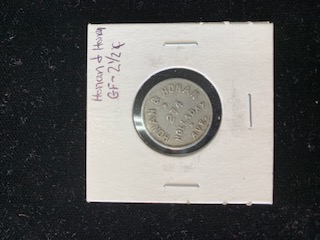
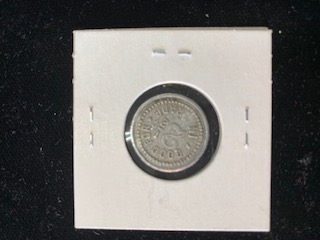
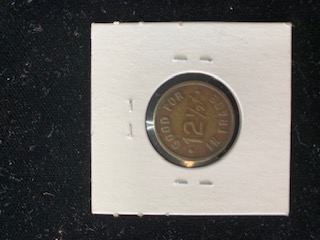
2. "good for" tokens are just what they imply. Thousands of businesses used to issue these. If you have the business name and location then that is pretty much all that can be said about it. None of these were ever issued in large quantities, usually 1000s at most, since a lot were only intended for a small local business. There is an active market for the older ones (you can tell by the style), but it tends to be local and small, as are the catalogues. So their rarity does not mean huge value since the collector demand is low compared to coins. An older one in decent shape is worth at least a few dollars. If you do have a business name, the value is much lower. Modern or generic tokens, like for an arcade, are often quite common and have a small value.
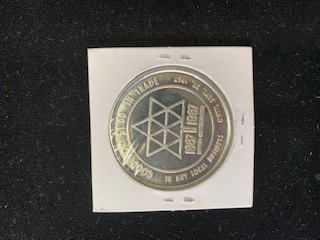
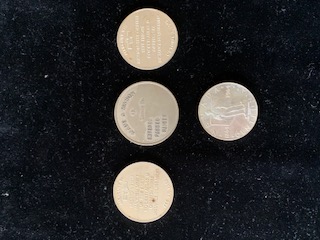
3. A lot of all the other things you might have would be medals. The variety is huge and there are no general purpose catalogues. Like good-for tokens, they may be issued in small numbers and have a very specialized collector demand. Some medals were mass-produced for the public to celebrate an important event. Some military medals are quite valuable and if they are named might be of historical interest.
4. If all this is a bit overwhelming, take the lot to a local coin shop and see what they have to say (but don't sell them). The better ones would be glad to give a quick look and give you some advice.
Good luck with your numismatic adventures.









 Posted 09/19/2019 5:27 pm





