| Author |
 Replies: 9 / Views: 1,245 Replies: 9 / Views: 1,245 |
|
|
New Member
United Kingdom
5 Posts |
hello all.
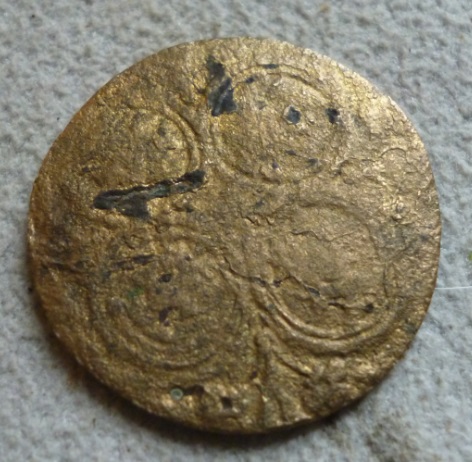
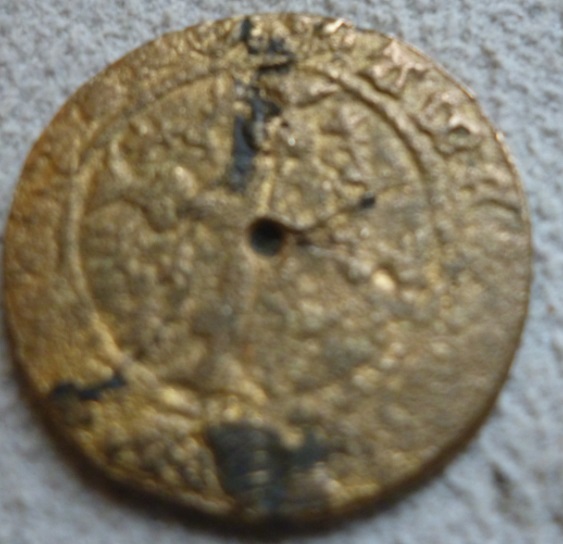
40+ years ago I found this 'gold'? coin in the mud of the Thames,I always thought it was a trade token but looking elsewhere on the net I am now wondering. Except for a water wash it is in exactly the same condition as found. It has been suggested it may be french, can anyone suggest a date and origin please? coin is around 21 mm diameter.
*** Moved by Staff moved to a more appropriate forum. ***
|
|
|
|
New Member
 United Kingdom
5 Posts |
next
Edited by kayben
10/31/2019 10:15 am
|
|
New Member
United Kingdom
5 Posts |
|
|
Pillar of the Community
United States
4883 Posts |
 I'm thinking this may be a button.... Colligo ergo sum
|
|
Rest in Peace
United States
17900 Posts |
Yep. Button with a bit of the plating separation at the attachment points.
|
|
New Member
United Kingdom
5 Posts |
mmmm, not a button I'm sure, that hole does no go all the way through, the dark bits are dried Thames mud and there is no corrosion albeit a fair amount of wear.
I'll find some one to test the metal type.
|
|
Valued Member
United States
324 Posts |
Looks to be a jeton. They were struck in England in the 13th-14th centuries. Probably brass or copper.
|
|
New Member
United Kingdom
5 Posts |
Yes a Jeton was what I thought it was, showed it to a UK specialist who demurred.
Brass or copper would surely have corroded.
|
|
Moderator
 United States
196278 Posts |
 to the Community! |
|
Pillar of the Community
 United States
8056 Posts |
Any chance of an image of the second side that is in focus? Certainly there is some readable lettering ... AME is visible at 12:00-2:00, the style of lettering suggesting 1550 or earlier (or imitating that era). Certainly there were medieval gold coins from northwest Europe with a cross reverse, but it would be wafer thin, and likely weigh about 5 grams or less, so that might also help. I don't recognize that design, but there are others out here with more experience. I agree that the dark areas look like plating flaking off, but you are in a better position to see if this is mud encrustation (raised bits on the surface). Edited by tdziemia
11/02/2019 12:26 pm
|
| |
Replies: 9 / Views: 1,245 |
|










 Posted 10/31/2019 10:14 am