First Page


 Posted 11/01/2019 11:42 am


In reponse to Pete's question:
If I'm understanding #2 & #3 above, they would have required a second strike?
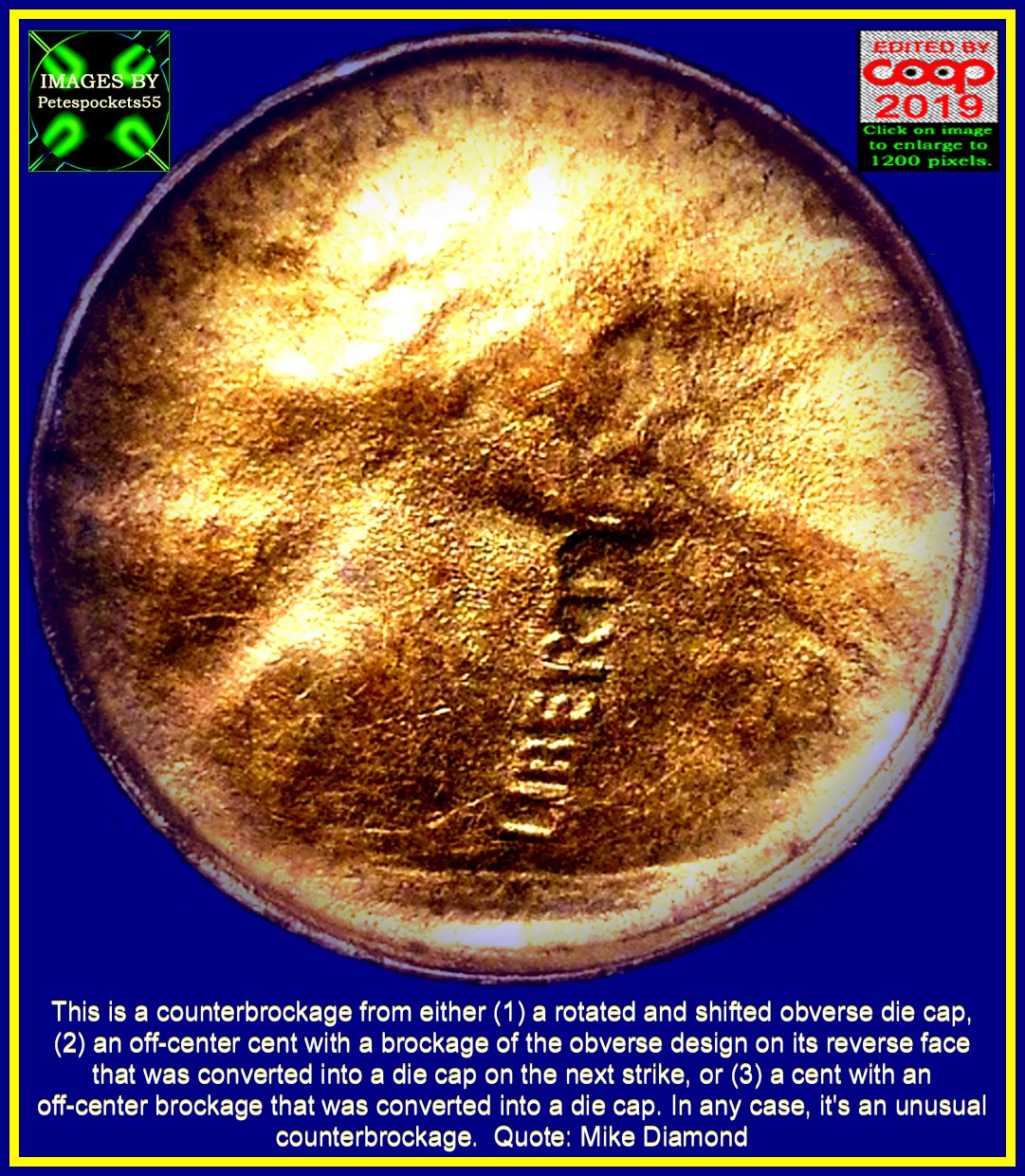
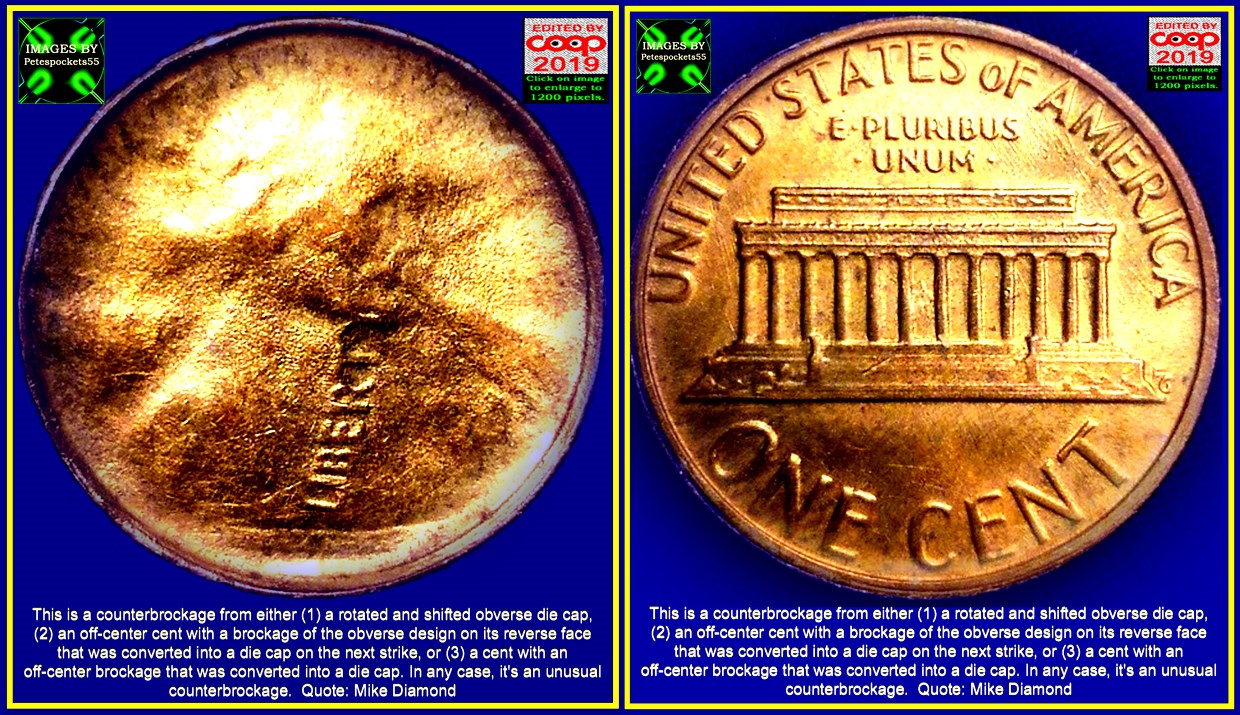
Your coin was struck only once. The die cap responsible for the counterbrockage was struck at least twice before the strike that generated your coin.
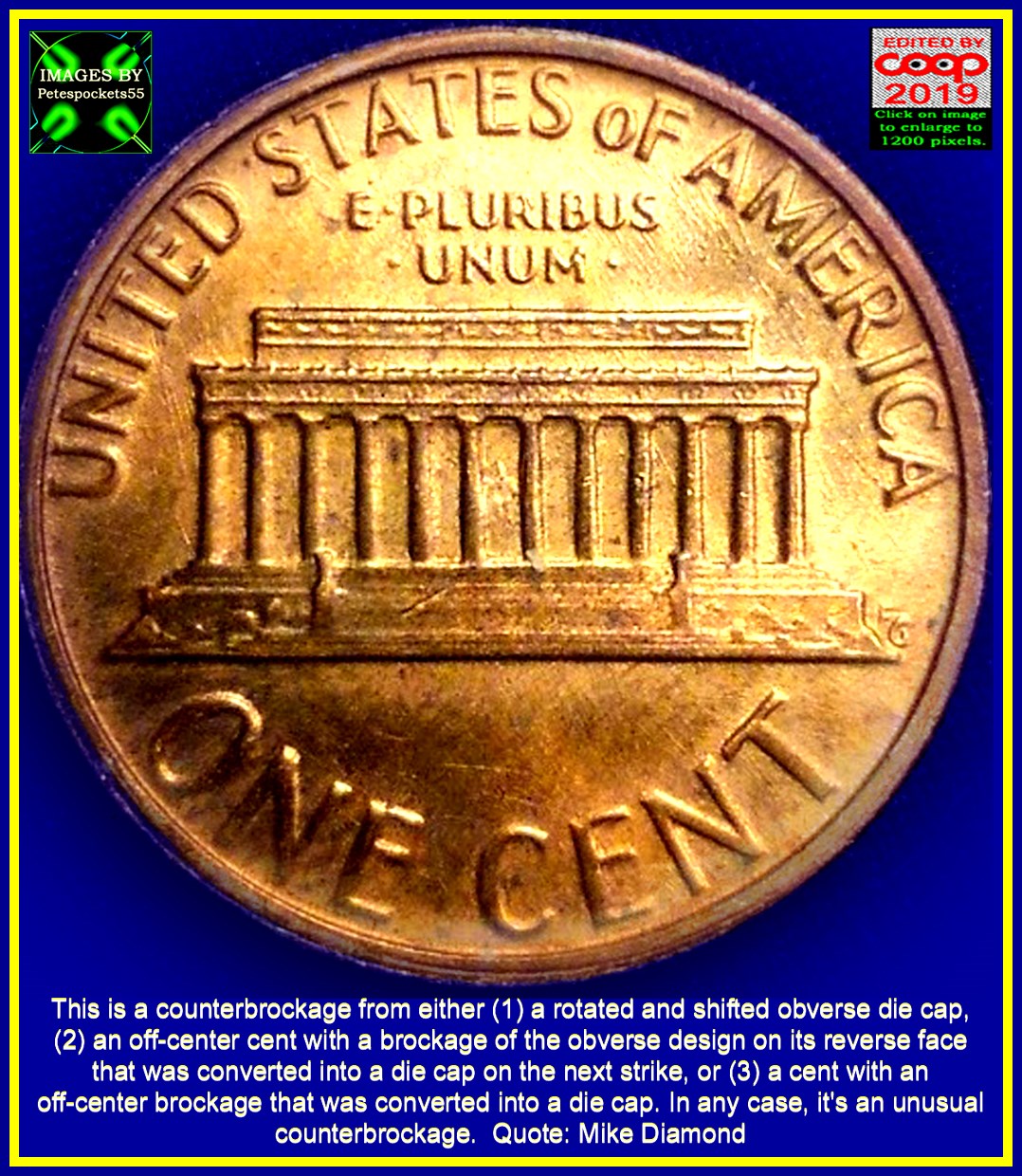
A question on possibility #2 above. Wouldn't an off-center strike be struck out of collar? (This one was in the collar, looking at the finning on the rims and well-centered reverse.)
Once converted into a cupped die cap, its working face would have had no problem squeezing into the collar. And even if it been unable to fit into the collar, the planchet represented by your coin did. It's quite common for the bottom member of a two-coin stack to be surrounded by the collar while the top member is struck out-of-collar. Expansion of the top coin is constrained by the bottom coin, as the two discs are locked together for the duration of the strike.
If I'm understanding #2 & #3 above, they would have required a second strike?
Your coin was struck only once. The die cap responsible for the counterbrockage was struck at least twice before the strike that generated your coin.
A question on possibility #2 above. Wouldn't an off-center strike be struck out of collar? (This one was in the collar, looking at the finning on the rims and well-centered reverse.)
Once converted into a cupped die cap, its working face would have had no problem squeezing into the collar. And even if it been unable to fit into the collar, the planchet represented by your coin did. It's quite common for the bottom member of a two-coin stack to be surrounded by the collar while the top member is struck out-of-collar. Expansion of the top coin is constrained by the bottom coin, as the two discs are locked together for the duration of the strike.
Error coin writer and researcher.