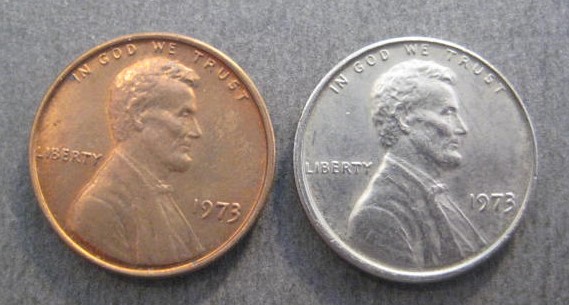
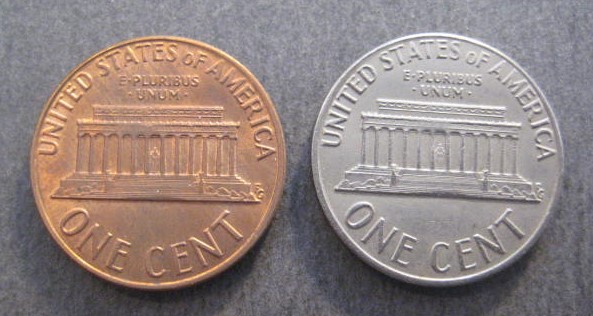
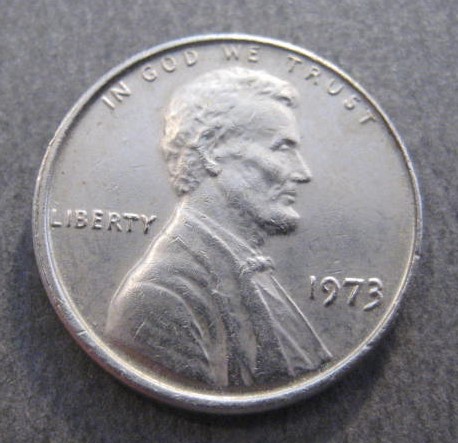
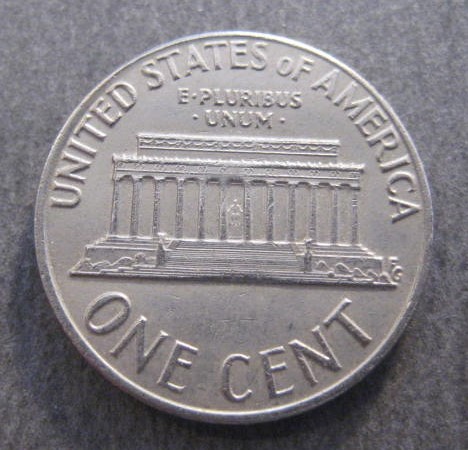
Other than the 1943 or 1944 steel cent there are four ways a cent can come from the mint with a silver color.
1. It can be struck on a dime planchet. If so it will be smaller than a regular cent with some of the cent design "falling off" the edge of the coin, also the weight will be low 2.5 grams for a silver dime planchet, 2.27 for a clad planchet. A clad planchet will also show the clad laying on the edge of the coin.
2. Struck on a cent planchet punched from the wrong strip. In this case If it is punched from nickel, quarter or half dollar strip it will be significantly overweight. Punched form dime strip it will be significantly underweight, and on a clad dime strip planchet again you will have the clad layers on the edge.
3. After 1981 it could be struck on a non-plated zinc planchet. If so the weight will be right and the coin will show the same type cartwheel luster that a normal brand new cent does. Once the luster is lost through wear/oxidation there is no way to prove whether the coin came from the mint without the plating or if it was altered and the plating removed, so any "silver colored" zinc cent that doesn't show cartwheel luster is assumed to have been altered.
4. Struck on a foreign planchet that has a silver color. This takes some research, but I believe there are only a few possibilities that would fit the size and weight of the cent, 1919 and 1920 Argentina 10 centavos, 1920,21,33,35,38 Columbia 2 centavos, 1946 Ecuador 10 centavo, 1940,41 French indo China 10 centime (same size as a dime resulting cent would be smaller in diameter), 1970,72-75 Nepal 25 Pice, 1941,42,45 Netherland East Indies 25 centstukken, and 1918,19,23,26 Peru 5 centavos (even smaller than a dime). #4 is no longer a possibility after 1984 because the mint stopped striking coins for other countries then.
From that list in #4 you might wonder if the OP coin could be struck on a Nepal 25 Pice planchet, nope, the Nepal coins were struck in San Francisco only, no way for a planchet to get from San Francisco to Philadelphia.











 Posted 11/13/2019 1:41 pm


