| Author |
 Replies: 7,432 / Views: 403,283 Replies: 7,432 / Views: 403,283 |
|
|
|
Bedrock of the Community
United States
12057 Posts |
A bit of copper to round out the year. 1856 F - Saxe-Meiningen - Pfennig 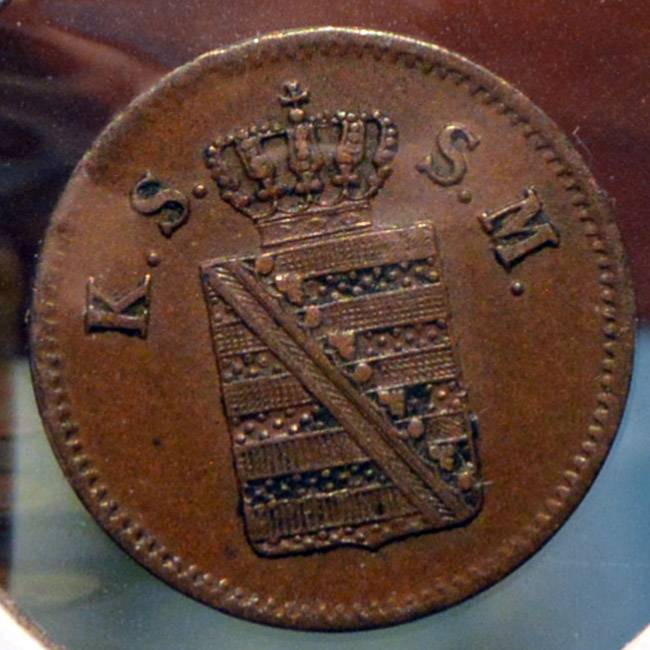 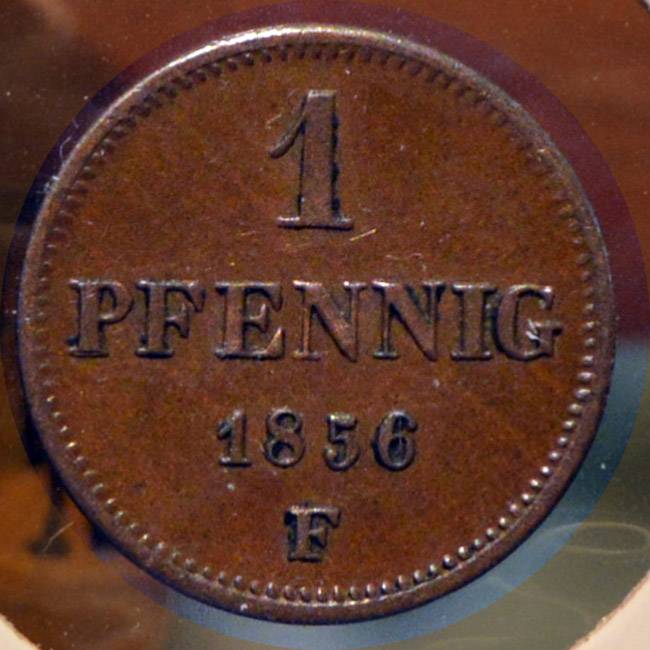 1856 Large Cent, Slanted 5, NGC AU 58  Member ANA - EAC - TNA - SSDC - CCT #890 "Most of the things worth doing in the world had been declared impossible before they were done." -- Louis D. Brandeis |
|
Pillar of the Community
4628 Posts |
We reach 1855! The first year of New Zealand stamps - however this is a coin group so here goes.   An 1855 British Halfpenny, this is an older copper one, these coins were much less durable than the Bronze ones, much larger and thicker, but a beautiful piece in my opinion - condition is VG to Fine. Edited by Princetane
07/04/2020 01:23 am
|
|
Pillar of the Community
United States
7241 Posts |
1855 o Seated half   some good toning on this one  |
|
Bedrock of the Community
United States
12057 Posts |
That one's a winner Muddler :) I didn't know about the difference in the halfpenny composition, either, but that makes sense now.
Member ANA - EAC - TNA - SSDC - CCT #890 "Most of the things worth doing in the world had been declared impossible before they were done." -- Louis D. Brandeis |
|
Pillar of the Community
4628 Posts |
Yes paralyse - In 1860 the British changed to Bronze coinage from copper. The Bronze coins were only 2.5 or 3% tin, but this hardened them considerably. Being an archaeologist, the change from the Copper age to the Bronze age meant considerable upgrades in metal technology. However this was 4 millenia before the coins!
Pure copper smelts at 900c but Bronze is about 1050 to cast (Tin, Arsenic or Lead is a metal added to copper) and much harder (Iron is about 1200c smelting).
Also the old copper coins (1816 - 1860) weighed twice as much as the Bronze ones in the UK. Copper has a habit of becoming pitted and corroded before it wears and often many copper coins wear much quicker than bronze ones.
The change to Bronze, also saved the mint a lot of money as less metal was used and the coins lasted a lot longer. Copper trading tokens disappeared overnight (Except in colonial territories which relied on British coin imports).
Numbers minted went up exponentially. Most copper British coins were minted spasmodically - with sometimes years between issues and the Bronze ones were minted virtually every year in jumbo numbers for pennies and halfpence, although farthings less so, given their low face value and purchasing power.
My 1855 Halfpenny weighs 10 grams, an 1860s halfpenny weighs just over 5 grams.
1853 - 1855 was one period of fairly high mintages - tomorrow I will show my 1854 penny.
Edited by Princetane
07/04/2020 02:38 am
|
|
Bedrock of the Community
United States
12057 Posts |
1855 Large Cent, Upright 5's, Newcomb 8 Scarce variety.   Diagnostic die marker of obverse die lines in hair  1855 late Hard Times token or store card Large Cent sized planchet "Not One Cent / But Just As Good" with massive reverse die break and Retained Cud  Member ANA - EAC - TNA - SSDC - CCT #890 "Most of the things worth doing in the world had been declared impossible before they were done." -- Louis D. Brandeis |
|
Bedrock of the Community
United States
12057 Posts |
1855 Half Dime, arrows at date   1855-O Half Dollar, arrows at date PCGS VF 25 (yeah, I know..)  Member ANA - EAC - TNA - SSDC - CCT #890 "Most of the things worth doing in the world had been declared impossible before they were done." -- Louis D. Brandeis |
|
Bedrock of the Community
United States
12057 Posts |
1855 F - Saxe-Meiningen - 2 Pfennige   1855 - Hamburg - Sechsling (6 Pfenning) Tiny billon (0.250 AR) coin of 14mm and a scant 0.76g   Member ANA - EAC - TNA - SSDC - CCT #890 "Most of the things worth doing in the world had been declared impossible before they were done." -- Louis D. Brandeis |
|
Bedrock of the Community
United States
12057 Posts |
1855 A - Prussia - 1 Silbergroschen (12 Pfennige or 1/30 Prussian Thaler) A good bit heavier than the Sechsling above but struck in even worse quality billon (0.222 AR) since the Prussian thaler passed at 14:1 to the Cologne mark instead of 12:1 (Reichsthaler) or 10:1 (Konventionstaler.)   Member ANA - EAC - TNA - SSDC - CCT #890 "Most of the things worth doing in the world had been declared impossible before they were done." -- Louis D. Brandeis |
|
Pillar of the Community
 Sweden
2124 Posts |
France 1855, 100 francs, Paris (A)  100 francs was about 6 weeks pay for an industrial worker and it would buy 100 kg beef or pay the rent for a whole year, so it is was no small sum. Still, these coins were in circulation - for larger payments obviously - they were not intended just for keeping savings or bank reserves. France was a very conservative country when it came to use of banknotes as a substitute for coins, perhaps as a result of the disastrous experiences from John Law's banks in the early 18th century and the assignats of the revolution in the 1790s, both of which ruined many Frenchmen. Until 1848, regular banknote issues were made only in denominations of 200 francs and upwards. 1848 saw the first 100 francs banknote and the first regular 50 francs banknote appeared in 1864 (see Note 1). Only about 10-20 % of the circulating money consisted of banknotes, the absolutely major part was in coin (see Note 2). So coin was the option for anything less than 100 francs, at least. Note 1: There were emergency issues of smaller denominations before that, in particular in the unrest year of 1848. Note 2: This was very different from Britain, where about 60 % of money in circulation consisted of banknotes, and banknotes in small denominations (£1, at times even less - £1 = 25 francs) had been used for decades. |
|
Bedrock of the Community
United Kingdom
18174 Posts |
Fascinating selection already for 1855! British copper halfpenny with PMD:  Copper penny:  Silver shilling:  1855 was the year that Charlotte Bronte, author of 'Jane Eyre', one of the most famous English novels of all time, died at the age of 38. When pennies and halfpennies are mentioned in books by the Brontës or indeed most novels by Dickens, they would be referring to these big copper coins. (Emily Bronte does perpetrate an anachronism in 'Wuthering Heights', where, in a scene set in 1802, Lockwood gives Joseph a sovereign: a coin not introduced until 1817!) |
|
Pillar of the Community
United States
9395 Posts |
1855 -- French (2nd) Empire, 20 francs:   Edited by pepactonius
07/04/2020 07:52 am
|
|
Pillar of the Community
United States
9395 Posts |
1855 -- Kingdom of Sweden, 2/3 skilling:   |
|
Pillar of the Community
United States
9395 Posts |
1855 -- French (2nd) Empire, 100 francs:   |
|
Pillar of the Community
United States
2637 Posts |
What? No French silver? I guess this could buy a pound of beef, if a franc could buy a kilo.   |
| |
Replies: 7,432 / Views: 403,283 |







 First Page
 Previous Page


 Posted 07/04/2020 01:22 am


