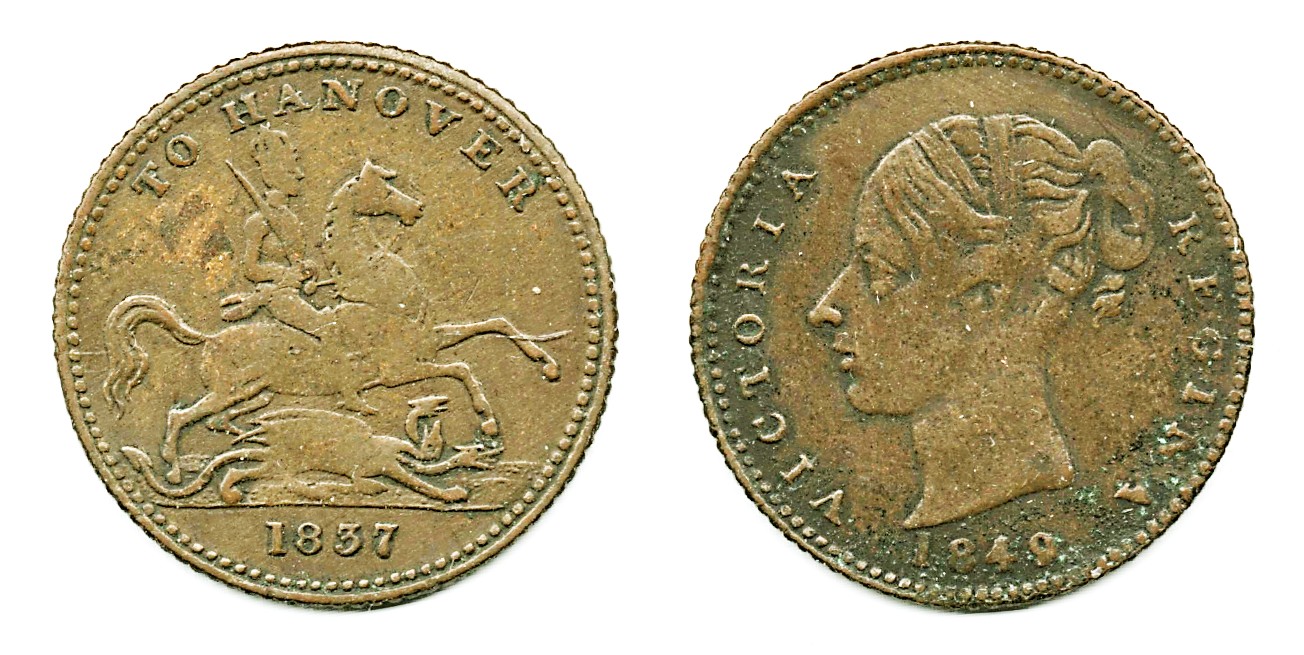
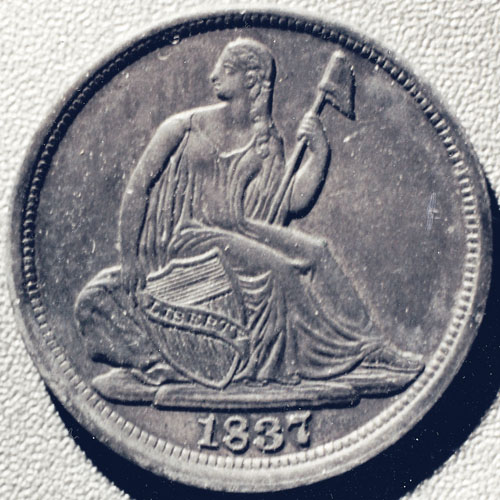
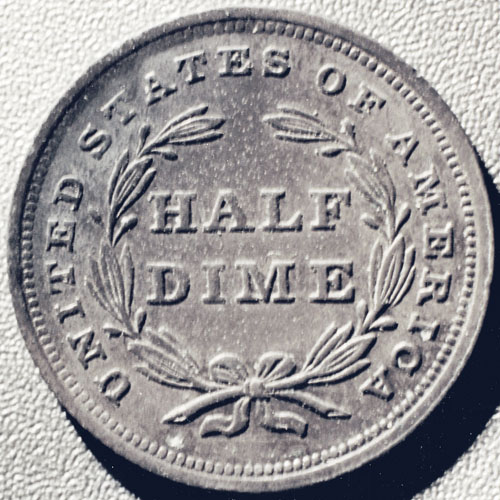
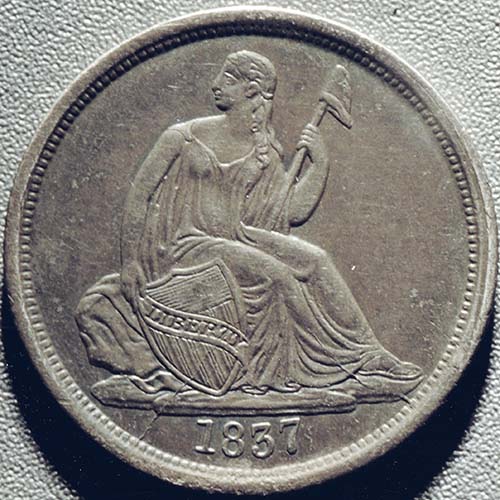
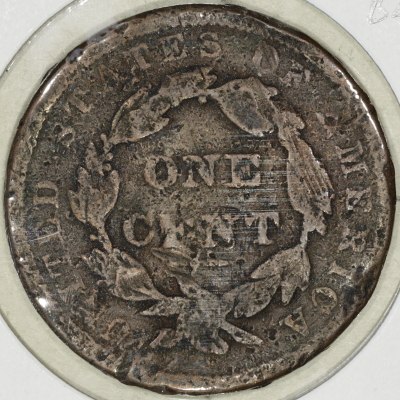
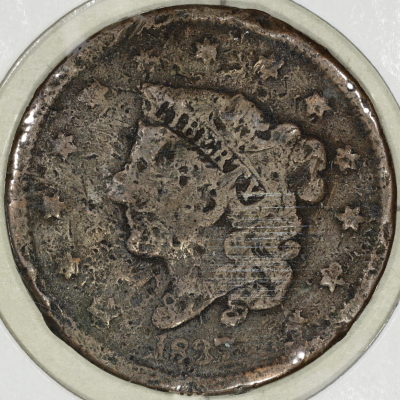
We finally say bye to Queen Victoria unless someone shows an Acession medal!
And hello to the Georgian Era (Although realistically the regency from 1811 and 1837 was much closer to Victorian than Georgian, the long "wigges" and tricorned hats along with Macaronis were long gone and replaced by Trains, stove top hats, Industrial revolutions and no more "Long s" in printed matter.
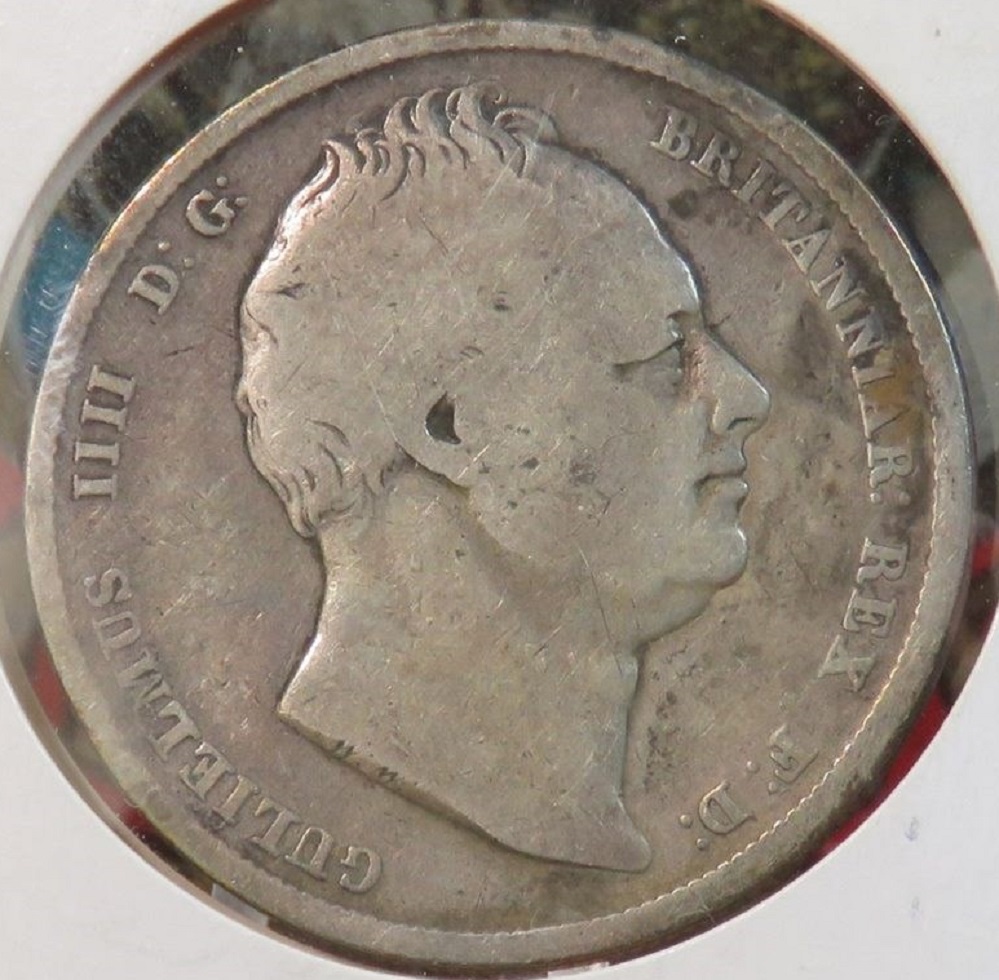
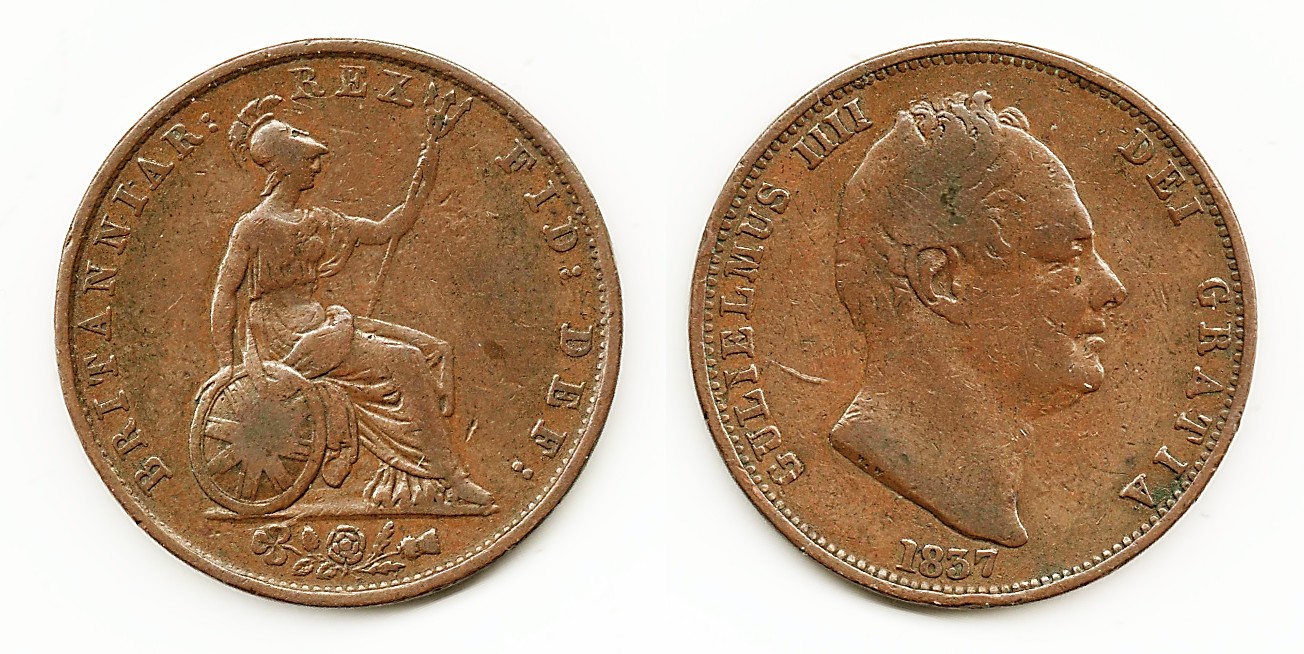
1831 - 1837 In Britain and India was the era of William IV. Just an obverse here I have no 1837 dated coins of him.
William IV was born in early 1765 as the 3rd child and son of King George III (1738 - 1820) and Queen Charlotte (1744 - 1806). Being 3rd he was never in serious contention for the throne after George (1762 - 1830) and Frederick (1763 - 1827), stranger things happened as the 5th child Edward (1767 - 1820) was Victoria's father!
William was Duke of Clarence and embarked on a navla career, but also like his brothers a bit of a fop and a macaroni in his earlier years. He lived openly with a Roman Catholic Actress Dorothea Jordan and had several children with her, as they never married (Officially as he may have Fleet married her like George did with Miss Fitzherbet), none were heirs or even had royal titles.
As he got older, William dropped the silly Billy part and became mroe serious marrying a Princess Adelaide for love, but when they did marry in the late 1810s, she was too old for children and barren anyway. After his father's death, that made him 2nd in line after Frederick for the throne and in February 1827 Frederick died of a sudden chill.
It was believed he died after a speech denouncing Catholic liberation and his funeral saw several other people including Lord Liverpool the Prime minister also die of the chill. The event made William the heir Presumptive and his fat gout ridden brother's days were numbered.
He needn't celebrated as he was also fat and over 60 and a healthy 8 year old girl was waiting in the wings. George died in August 1830 and this made William the new king - although not much of a king, William was at least not extravagant and foolish, he also listened to wise counsel having brilliant Prime minsters such as Earl Grey, the Duke of Wellington and Lord Melbourne, who went on to become Victoria's first favourite.
William's coronation was very low key and shorn of the extravagance of his brother's. He also oversaw the passing of the famous 1832 Reform bill, which softened some of the justice and widened the franchise (Not enough however and Chartism took off, along with Luddites). Still Britain in the 1830s was a model of Liberal democracy at the time.
William's health was never very good and he was close to Princess Victoria and could see through her scheming mother and the evil John Conroy who wanted to become King with Victoria as regent. William made it his duty to remain alive until Victoria turned 18 so she could became Queen in her own right, with no one regenting for her.
It worked William died on June 20 1837 aged 72 and just 5 weeks after Victoria became 18, a great filler reign and he set the stage for the glory that came forth.
Britain in the 1830s was already expanding its empire and was dominating the seas, new colonies were being added (Port Philip, later to become Victoria). William's reign also saw the freeing of slaves in the empire (This happened in Victoria's first year, but had been planned in 1834). Euston, London's first train station opened in the dying seconds of his reign too and Charles Babbage invented his first computer in 1836 - it was a time of progress.
One negative point was William was the last joint king of the UK and Hannover as their sexist laws banned a woman becoming ruler and Ernest the Duke of Cumberland was the next king there with Victoria losing out.
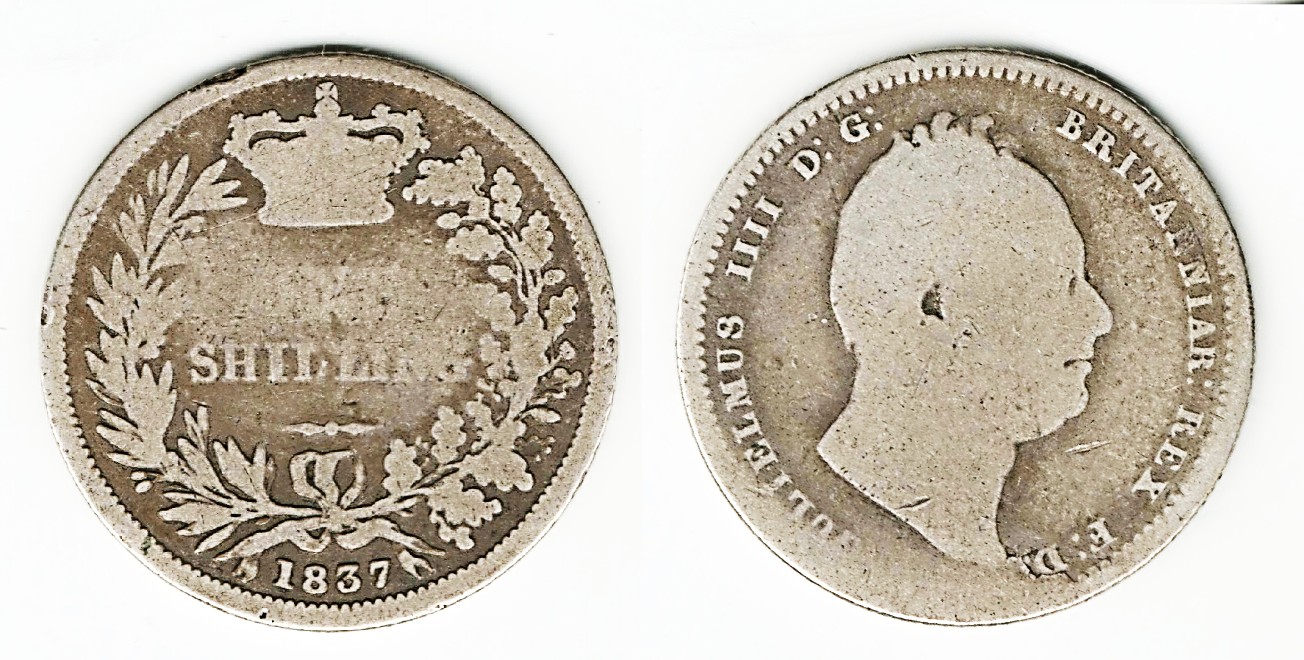
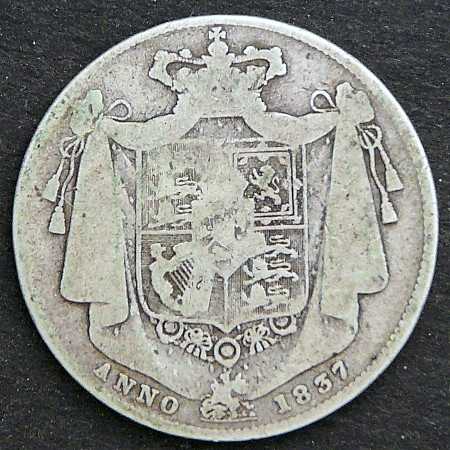
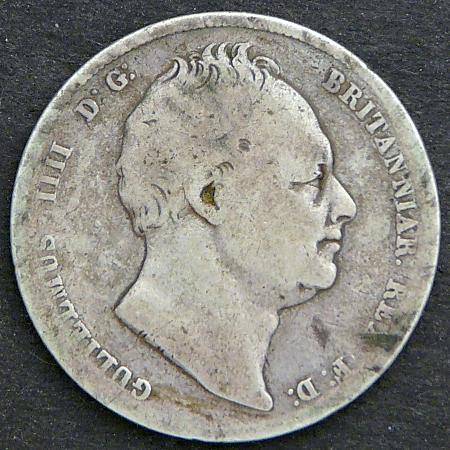
Coins for William stuck with the Shield Obverse for gold. The Halfcrown and Crown had another elaborate draped shield and the "Anno 183-" device was back. The shilling had a new crowned obverse which survived the Victorian era (Although a different crown was used), the same for the Sixpence which lasted through to 1910. The groat and 1½d were briefly revived in his reign and the Crowned design on the 3d used since the 1600s survived for that coin through to 1927.
Copper coins again reused the Britannia effigy that was designed in the late 1810s of the last KG3 coinage. This would survive through to 1860.
The portrait showed a profile shot of William, looking rather jowly and with a tuff of hair on his forehead, it was reasonably accurate but restrained like the last George IV one.
1831 saw proof issues of most coins, but apart from pennies, 1831 is a scarce year. 1834 - 36 are the common years, 1837 less so except Pennies and halfpence. There were no coins minted dated 1832 or 1833 except for Maundy coins. There is only one coinage as it was such a short reign (7 years).
Fractional farthings (1/3, 1/2) were issued from 1834 onwards along with the 1½d in 1836 and 1837 and also groats. Numista is confused listing an 1837 dated groat with Victoria, yet none exist - all 1837 dated coins show William. All the fractional farthings and small silver was mostly for colonial use in Ceylon, Malta and some West Indian colonies.
1831 also had proof issues and a very rare proof set issued from £5 to ¼d. The £5 and £2 were only issued in 1831 as one off proofs, rest of the reign was strictly the sovereign as the top coin.
In 1836 the Half sovereign was increased in size to avoid its confusion with the sixpence, given both had a shield and unscrupulous individuals would blow cigar smoke over them to make it look like a half sovereign. Some people never learn as a "shielded sixpence" in 1887 also had the same issue until changed.
All coins of this era are modern machine made ones and are technically no different to Victorian pieces.
Hope you all liked this introduction to the last Georgian king.








 First Page
 Previous Page


 Posted 07/22/2020 04:49 am