| Author |
 Replies: 55 / Views: 6,100 Replies: 55 / Views: 6,100 |
|
|
|
Pillar of the Community
United States
7067 Posts |
|
|
Pillar of the Community
 United Kingdom
1168 Posts |
Thank you again Bob, the links work fine. I hadn't known about this database before and I'm sure it will prove invaluable. There are other coins in this lot and I'll have fun trying to identify them. One coin that I thought would have been impossible to identify is shown below. The link from that database to "Vasudeva/Kanishka imitation, with Δ under arm." appears to be it. The Δ symbol does not show up so well in the picture, as it does in the hand. https://www.zeno.ru/showphoto.php?photo=221361My coin below. 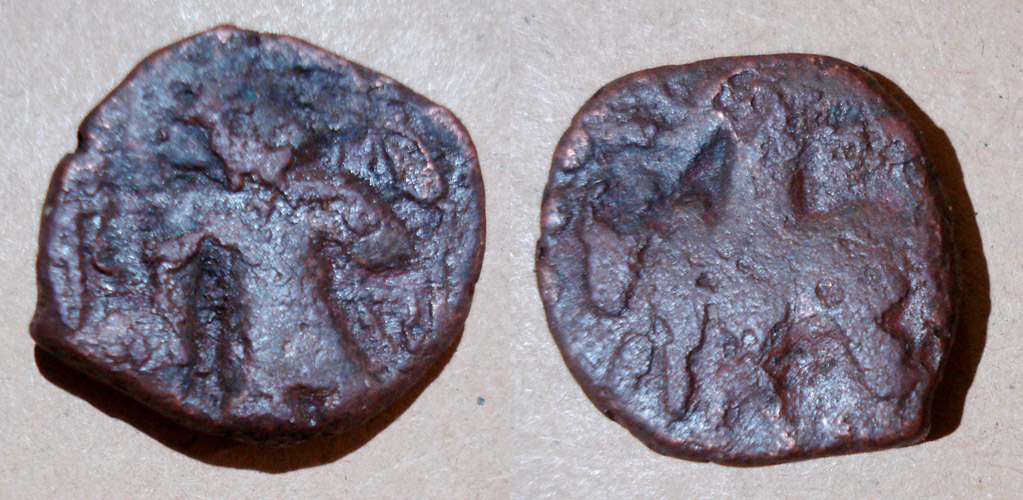 Many thanks, Jim |
|
Pillar of the Community
United Kingdom
1168 Posts |
This coin from the same lot appears to be Vasu Deva I (c192 - 225 AD) with trident on the obverse, Siva and his bull Nandi on the reverse. I can only find the bull facing left on the coins of Vasu Deva. The "CoinIndia" web site also mentions a swastika appearing between the king's legs in later issues, as seen in this one. 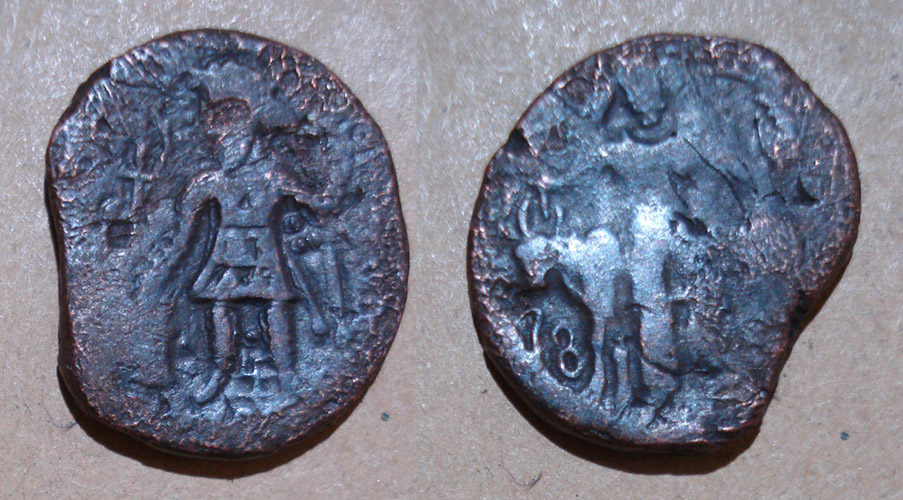 |
|
Pillar of the Community
United States
1554 Posts |
I looked for a useful site explaining Kushano-Sasanian coins but fell short. The best overview in book form is probably Mitchiner's Oriental Coins and Their Values: The Ancient and Classical World. This is one of those cases where a $300 book is required to identify a $5 coin (unfortunately, a fairly common problem!).
The Kushanshahs were Sasanian viceroys who ruled over lands that the Sasanians had captured from the Kushans, which they called Kushanshahr. The Kushano-Sasanian coppers fall broadly into two classes, a "neat copper" class in Bactria and a "dumpy fire altar" class in Gandhara. There are a relatively few rulers named on the coins. When the names are not legible, they can usually be identified by their crowns. If I remember correctly, Shapur II was the only Sasanian king to rule Kushanshahr directly. The others are Kushanshahs, not to be confused with Sasanian Kings of the same name (e.g. Peroz, Hormazd). The northern Indus River separated Gandhara on the west from the Punjab on the east. A much-reduced Kushan kingdom survived in the Punjab, which formed a single currency zone with Gandhara. Late Kushan coins are found mixed with Kushano-Sasanian coins in hoards.
The real expert on this topic is Joe Cribb, formerly Keeper of Coins at the British Museum. A google search combining terms such as "Kushano-Sasanian" with his name may yield some useful articles.
Edited by Kushanshah
01/25/2020 12:56 am
|
|
Pillar of the Community
United States
7067 Posts |
Assuming no snags, I should have Robert Göbl's Münzprägung des Kusanreiches and Sasanian Numismatics on the way via intercampus library loan. I don't know if either covers the Kushano-Sasanian series but, if so, I'll see if anything can be added here.
|
|
Pillar of the Community
United Kingdom
1168 Posts |
Thank you for the reply @Kushanshah. I stumbled into this area and know nothing really about these coins, so all information is gratefully received. Your post does explain why there seemed to be so many "fire altar" coins in this small lot, and that is most helpful. I did not know that there was a difference between the Kushanshahs and Sasanian Kings, and that is also very helpful. The history behind these coins sounds fascinating. Indeed, all decent reference works don't come cheap, and it is off-putting when the coins themselves have little monetary value. I will certainly look for any articles written by Joe Cribb. @Bob L Fingers crossed that there are no hitches with these volumes Bob. I'll keep an eye open for any further additions here. The next two coins were also in the same lot, and I had fun trying to identify them! 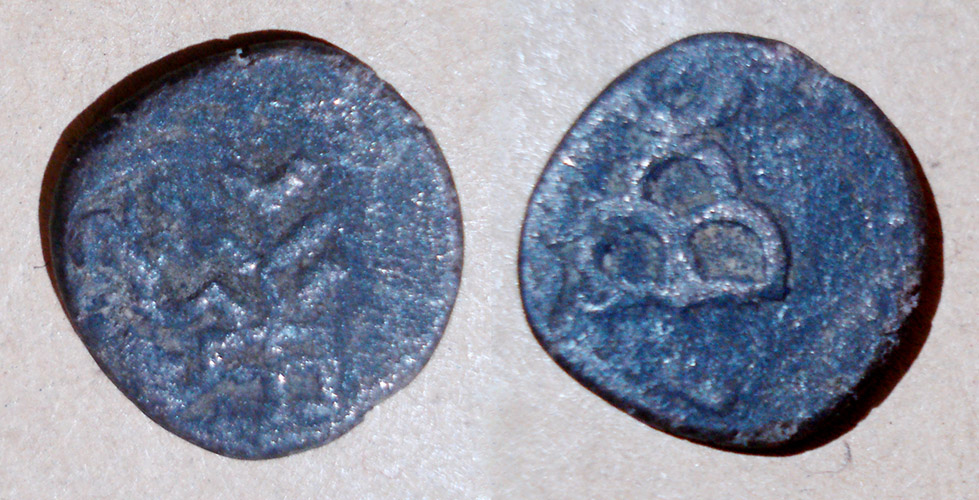 India, Taxila: Tree-in-railing copper coin. Pushkalavati civic coinage. c. 185-165 BC AE coin (14mm, 1.60g) Obverse: Tree-in-railing flanked by inverted taurine symbols. Reverse: Three arched hill surmounted by crescent. 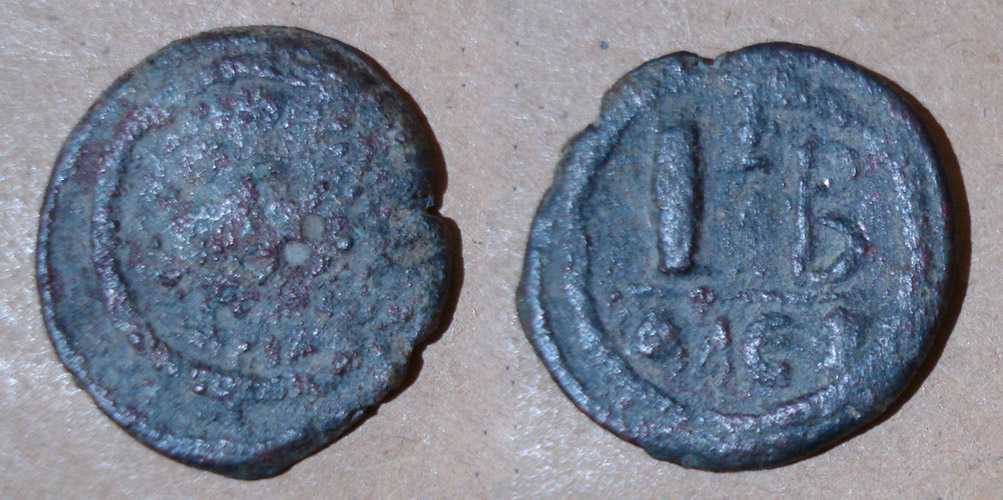 The obverse on this coin is unrecognisable, but going by the reverse could be Justinian I. |
|
Pillar of the Community
United States
7067 Posts |
That lot is full of interesting coins. Good score. Quote:
...could be Justinian I Agreed - among other possibilities. Jim, with the coin in hand can you get a sense of whether the obverse portrait may be front facing or in profile? I recommend some relevant searches at acsearch.info, perhaps like the three below. Keep the quotation marks and the one asterisk intact where they appear below. (In other words, just cut and paste the lines below): "12 nummi" "I+B" dode* alexandria ae "AΛEΞ" ae nummi |
|
Pillar of the Community
United Kingdom
1168 Posts |
Hi Bob, I've tried holding the coin at different angles against the light to try and get even a ghost image, but with no success. The searches do come up with a large number of differing I + B combinations. The rather thick and blocky "I" combined with a small "+ and underline" and a rather thin and unusual "B", all lead me back to Justinian I. Most of the other coins have a rather thin "I" or elongated "+". I don't think we can go any further with this one. Considering how little I paid for the whole lot, I'm really quite pleased with the coins. There were a couple, including a small square one that were devoid of any detail, but mostly they have been pinned down to a region and king/ruler. I have read about Kushanshahs, kings, and regions that I wasn't aware existed before. It has been a journey that has been worthwhile, and I couldn't have even started that journey without the help of yourself and other members of this amazing community. There is another item in this lot that puzzles me. It appears to be a medallion or pendant 22 mm diameter, in the shape of splayed frog, also in bronze. I've turned up nothing in searches, and wonder if it is even from the same region? Of course it may not be a frog, but I have no clue what it could be, or what it's significance is. Jim 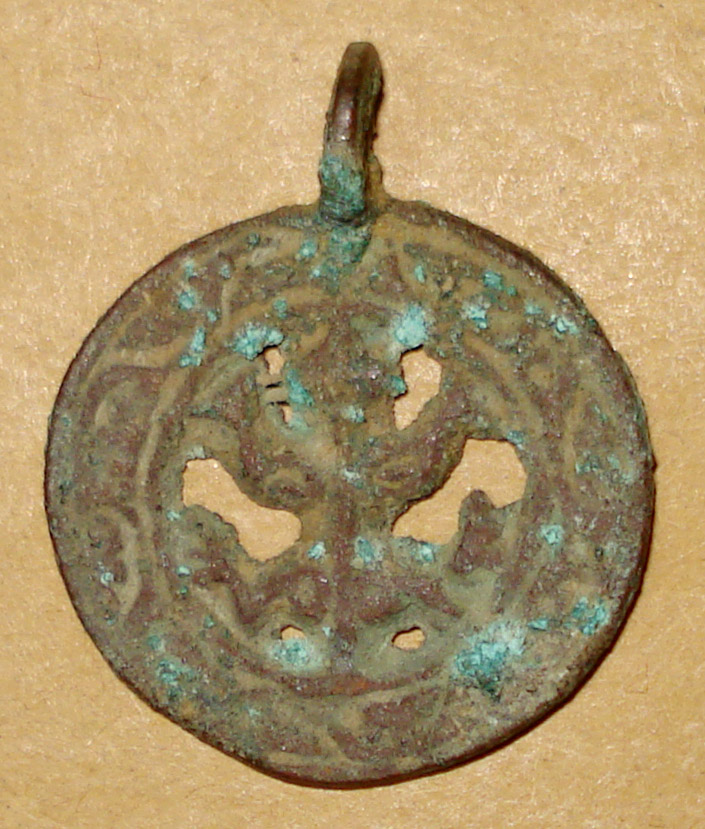 |
|
Pillar of the Community
United Kingdom
1168 Posts |
@Kushanshah Quote:
The real expert on this topic is Joe Cribb, formerly Keeper of Coins at the British Museum. I see that Joe Cribb has a new book ready for delivery at the end of July, and can be pre-ordered now. Kushan Coins: A Catalogue Based on the Kushan, Kushano-Sasanian and Kidarite Hun Coins in The British Museum, 1St 5Th Centuries AD. https://wordery.com/kushan-coins-jo...780861591916 |
|
Pillar of the Community
United Kingdom
1168 Posts |
From the same source, but a different lot. These appear to be. 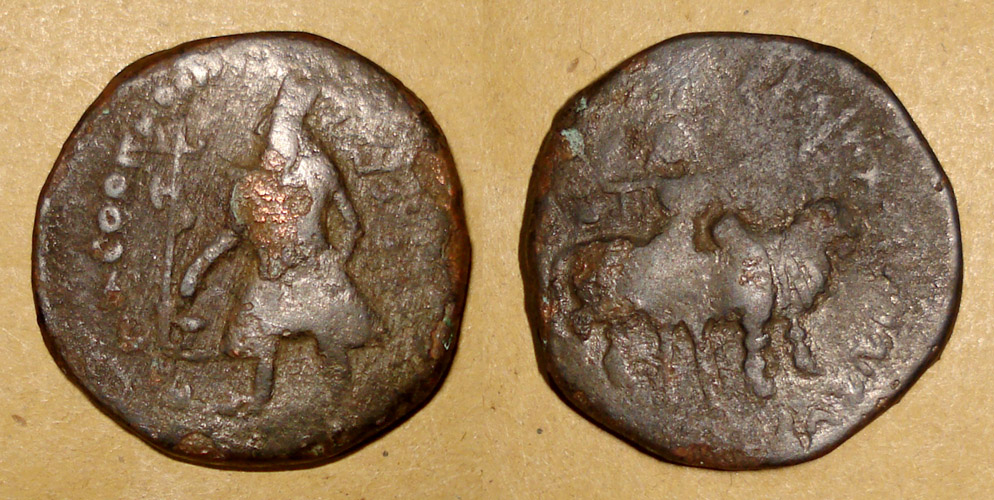 Vima Kadphises (circa 100 - 127/8 AD) AE Tetradrachm or Unit, 28mm diameter and 3mm thick. Obverse: King standing left, altar and trident on left. Reverse: Shiva standing facing, holding trident; and the bull facing right. 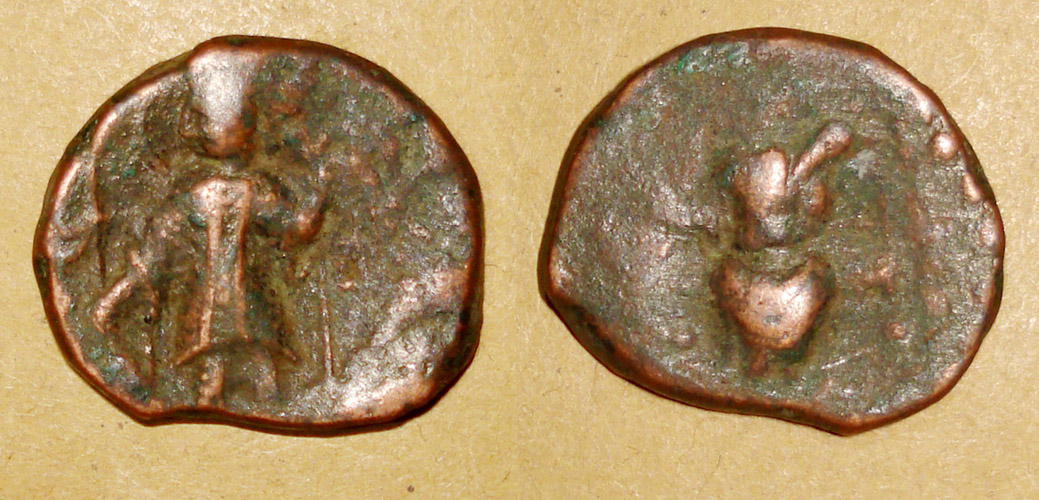 Kanishka-II ( circa 230 - 250 AD) AE Drachm, 23 x 20mm diameter and 2mm thick. Obverse: King standing facing the altar and trident on left hand. Reverse: Enthroned Goddess Ardoxo (Laxmi). |
|
Pillar of the Community
United States
7067 Posts |
Nice set of Kushans, Jim. But do keep an eye on the coppery rough patches on the Vima Kadphises tet. In all likelihood those are areas that were treated for bronze disease. They may bloom green down the line. Looks like a possible return already 10:00 reverse.
|
|
Pillar of the Community
United Kingdom
1168 Posts |
Thanks for the heads-up Bob. I did wonder about the rough patch being bright. I'll definitely keep an eye on the reverse. This last coin appears to be a drachm or ¼ unit of Kanishka (c. 128-150 AD). With it being in better condition than the others I thought it would be easier to identify, but I can't find a good match anywhere. Can anyone help? Thanks. 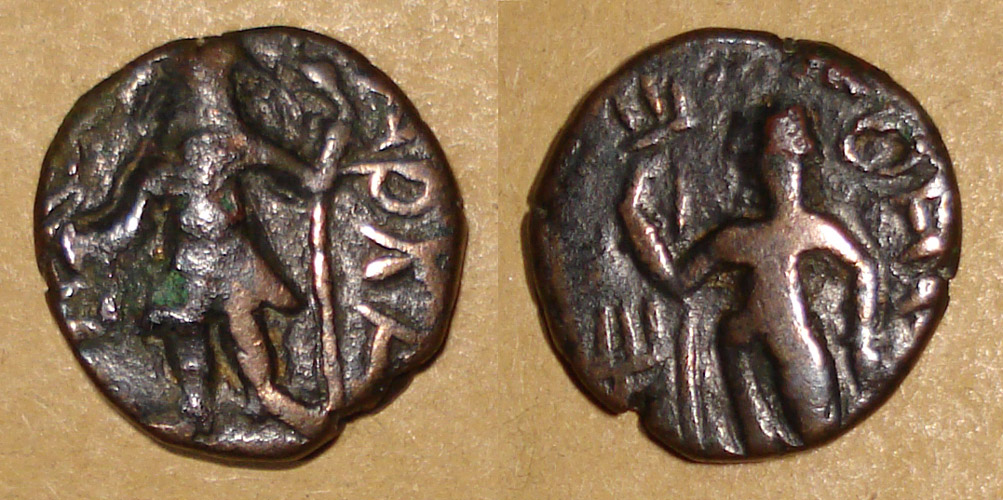 |
|
Pillar of the Community
United States
7067 Posts |
I agree, likely a ¼ unit or drachm of Kanishka I. ID'ing a Kushan coin by ruler is generally easier than determining its variety, imo. With such tight flans, occasional poor transcriptions of legends - as well as cropped legends, similar renditions of some of the gods, wear, poor strikes, and such, I find pinning the coins down - at least based on available online resources - often challenging. Hopefully that edition of Göbl's Kusanreiches finds it way to me. That would help.
The prominent reverse "O" might suggest that the diety is a two-armed rendition of Oesho (Shiva) rather than Mithra, Mao, of one of the others. Hopefully we'll get an opinion from Kushanshah, who is really good with these (among lots of other series).
|
|
Pillar of the Community
United Kingdom
1168 Posts |
Indeed Bob, all the different gods can be confusing, and the limited on-line resources. I'd go with Oesho on this one, so I'm a bit further forward. Fingers crossed that Göbl's Kusanreiches does arrive soon.
Hopefully Kushanshah will stop by in the near future, and shed some more light on the coin.
Many thanks again,
Jim
|
|
Pillar of the Community
United States
7067 Posts |
I've got the book in hand now, Jim. Second time I've borrowed it from across state. I'll need to find time to peruse it in the coming days (been really busy), but at initial glance it does appear you've got a Göbl 813 (Kanishka I) with Oesho reverse. Btw, the book also covers Kushano-Sasanian.
|
| |
Replies: 55 / Views: 6,100 |






 First Page
 Previous Page


 Posted 01/23/2020 08:35 am


