| Author |
 Replies: 9 / Views: 1,945 Replies: 9 / Views: 1,945 |
|
|
Pillar of the Community
 United States
8946 Posts |
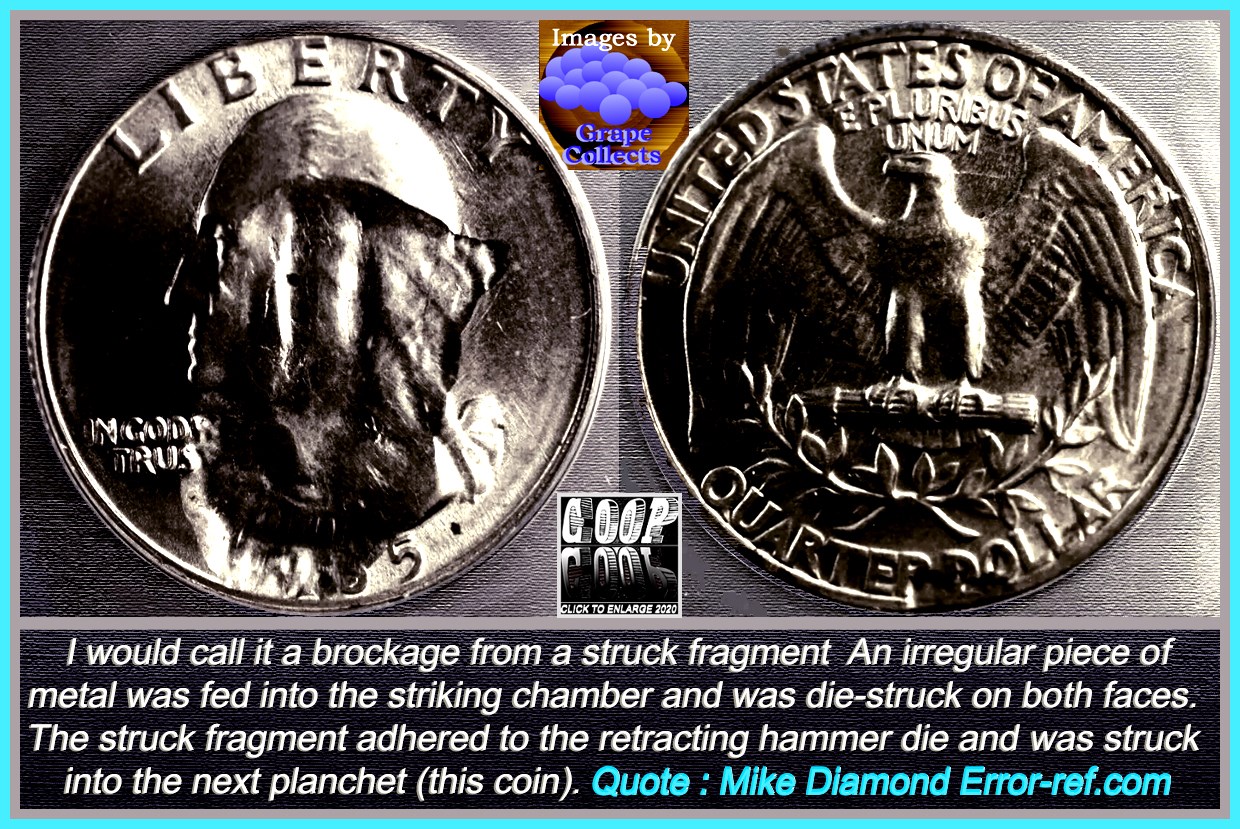
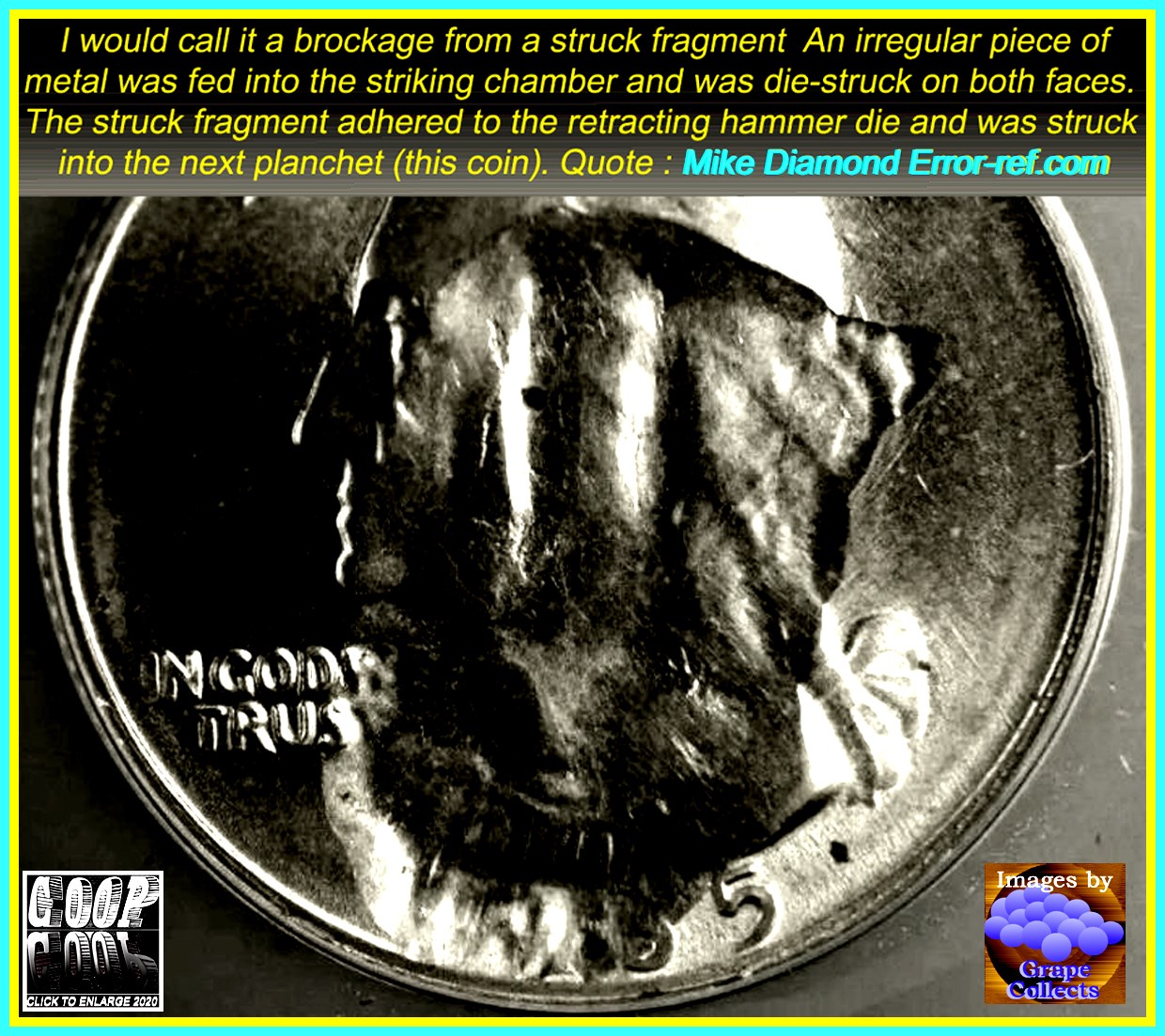
This interesting coin came in a few days ago and I finally had time to inspect and list it. In hand it shows an incuse almost brockage textured impression of the eagle and and a few letters of the motto from the reverse displayed on the obverse. ANACS had labeled this a struck thru struck fragment,which is plagued with redundancy. Here's my interpretation and write up on this coin. If you agree, or disagree. I have the advantage of seeing this in hand, but it is quite impressive. I should add this is not my coin. This is property of the LCS I work at and thought it was an interesting coin worth sharing. 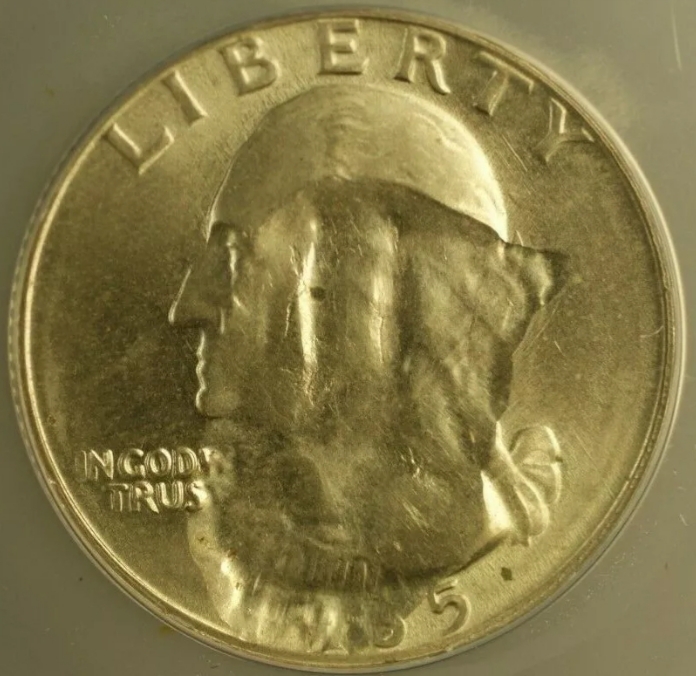  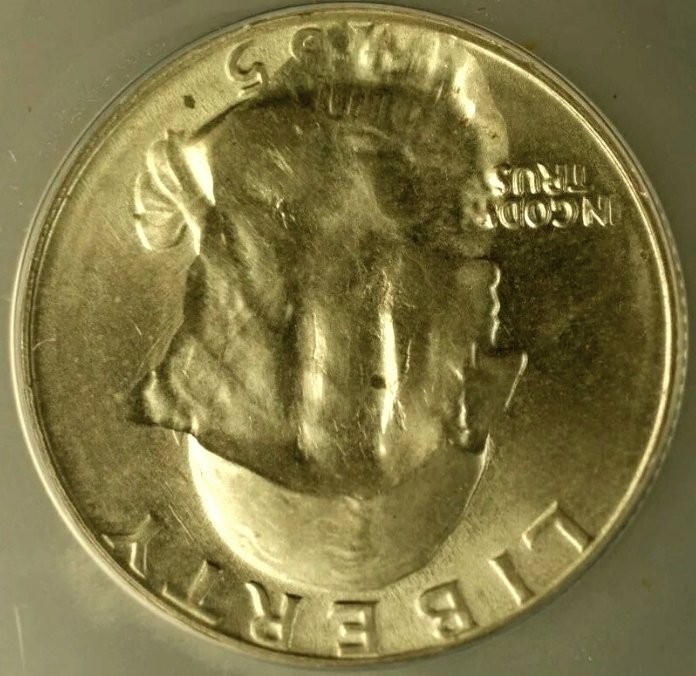 What ANACS describes as a fragment is not entirely correct, but not wrong either, it's just not very specific. Essentially what happened was a coin was fed into the chamber and struck normally, but either during the strike, or ejection a fragment of the coin, more than likely a clad layer detached from the coin and stayed in the striking chamber. Now here's where it gets a bit complicated. The Obverse die was in the hammer position (the moving die) and the Reverse die was in the anvil position (static). The fragment came from the reverse of the coin and as such would rest on the anvil die. However, it somehow ended up obstructing the obverse die. Logically that indicates that some sort of event would have to occur to transfer the fragment from the anvil position at which point the reverse would be obstructed, to the hammer position. My opinion is that what probably happened was the fragment failed to eject and was seated off center, nearly outside of the collar. When the planchet was fed into the chamber, the action of the closing collar folded over the fragment, thus transferring it to the position in which it would be able to obstruct hammer die and resulting in the current coin. My supporting evidence is that on the reverse by QUARTER DOLLAR there is evidence of another strike through of irregular shape. It seems very unlikely there would be another object in the chamber solid enough to cause an indent unless they were one in the same. What most likely happened was the force of the collar closing on the planchet fractured the fragment resulting in a vast majority being trapped between the planchet and hammer die, and a small portion left on the reverse. This is best supported by the distended portion of the strike thru by the date. Edited by GrapeCollects
02/03/2020 11:11 pm
|
|
|
|
Pillar of the Community
United States
5887 Posts |
Very interesting. What you said made sense. I can see how it would have transferred from the reverse to the obverse die, but wouldn't you see evidence of the strike through on the obverse rim as well if it got folded over? I think the reverse fragment may have been part of the obverse fragment, but tore/broke off from itself when the full fragment failed to eject and was fed into the chamber, and then part of it was left on the reverse while the majority was brought to the obverse. Thats why there is fragment struck through on the reverse rim but not on the obverse. I also see what may be a spitting eagle, which is associated with a die clash. If I see this correctly, that could mean that there was a fragment stuck to the reverse die when they clashed, and then the fragment could have torn/broke when the dies separated, and resulted in your coin. The majority of the fragment when to the obverse die while a small portion was left stuck to the reverse die. (But this is all only if there was a die clash) Anyways, That's what I see but I'm certainly not as experienced as you. Everything I just said might not even make sense! A very, very cool and interesting coin all in all. A great conversation piece as well.  -CH27 Edited by CoinHunter27
02/03/2020 11:50 pm
|
|
Pillar of the Community
 United States
8946 Posts |
That's effectively what I meant to convey. Think of it like this. If you line up a twig in a clamp in a vice and strike it with a hammer will it simply bend and absorb the blow, or snap or shatter? What I meant to convey is that a piece, as you said, broke/tore off. I'll try it this way.
Imagine the new planchet hasn't been feed into the chamber and the detached fragment is alone in the chamber. For the sake of argument and because I don't particularly feel like doing the math, lays 90% off center. A new planchet is fed into the chamber and rests on the 10% that is still on the striking surface. Now the collar closed, keep in mind, with great force. The collar then closes on the overhanging 90% of the fragment. The portion which is already trapped underneath the planchet will remain as is, however, the remaining 90% is moved by the collar. The failure point or point at which a stress fracture occurs, would be at the spot the die ends and overhang begins. The remaining 90% is now detached from the previous portion and its own independent entity. This fragment which I will refer to as Fragment 1b, is now thrown into a more centered position by the collars' movement. Because this occurred without the bending of metal because there is a failure point, there would be no rim disturbance. So now Fragment 1a is still in its original position on the anvil die, and 1b is now centered (by chance) on the hammer die. The coin is struck and ejected normally. This is what I meant to convey.
As per the spitting eagle, I investigated that possibility. Based on the shaping and texture under magnification, I believe it to be a die crack and minor clash. However I don't believe the dies would have clashed with enough force to produce the scenario you hypothesized. However, none of us were there to witness it, so an educated guess at best.
Edited by GrapeCollects
02/03/2020 11:58 pm
|
|
Pillar of the Community
United States
6196 Posts |
I love it! A most excellent coin.
|
|
Pillar of the Community
United States
8946 Posts |
Yep TB! This was part of a group of very high quality and oddity error coins that came in, some stuff I may share as I list them for educational threads.
|
|
Pillar of the Community
United States
5887 Posts |
Quote:
That's effectively what I meant to convey. My bad!  -CH27 Collector of U.S. Coins, Varieties, and Colonial Coinage
Edited by CoinHunter27
02/04/2020 08:31 am
|
|
Pillar of the Community
United States
8946 Posts |
Quote:
My bad! Not at all. It made me explain it in a better way, so thanks!  |
|
Pillar of the Community
United States
2752 Posts |
I was asked for my opinion. GrapeCollects' explanation seems unnecessarily complicated to me. I would call it a brockage from a struck fragemnt -- more or less what ANACS was trying to say. An irregular piece of metal was fed into the striking chamber and was die-struck on both faces. The struck fragment adhered to the retracting hammer die and was struck into the next planchet (this coin).
Error coin writer and researcher.
|
|
Bedrock of the Community
United States
62064 Posts |
|
|
Bedrock of the Community
United States
17884 Posts |
One other thing, the collar does not open and close, it is one solid piece of metal. On a vertical striking press like this would have been struck on the collar doesn't move, the dies and feed fingers move. After the strike the hammer die retracts, the anvil die rises pushing the coin out of the collar, the feed fingers extend pushing the struck coin awy and positioning a planchet over the anvil die, the anvil die retracts and the feed fingers open dropping the planchet into the collar, the feed fingers retract, and the hammer die comes down into the collar striking the coin. the the process repeats. The collar never moves.
The collar only opens and closes on the proof President and NA dollars. In that case it is a segmented collar that has to open and close, or else when the coin was pushed out of the collar it would create a nice groove in the edge of the coin where each letter had been.
|
| |
Replies: 9 / Views: 1,945 |
|










 Posted 02/03/2020 11:55 pm