Recent auction pick-up - I got one of these in a bulk lot a couple years ago but sold it and have been pining for a nice replacement! It is a bucket list goal of mine to own a coin from every major player in the Wars of the Diadochi.
Seleucid Empire
Seleukos I Nikator, 305-281 BC
AR Tetradrachm in the name of Seleukos and types of Alexander
Struck in Ecbatana, c. 295 BC
Obv: Head of Herakles in lion scalp
Rev: ΣEΛEYKOΣ / BAΣIΛEΩΣ - Monograms, anchor, and grazing horse to left - ΣΩ beneath chair
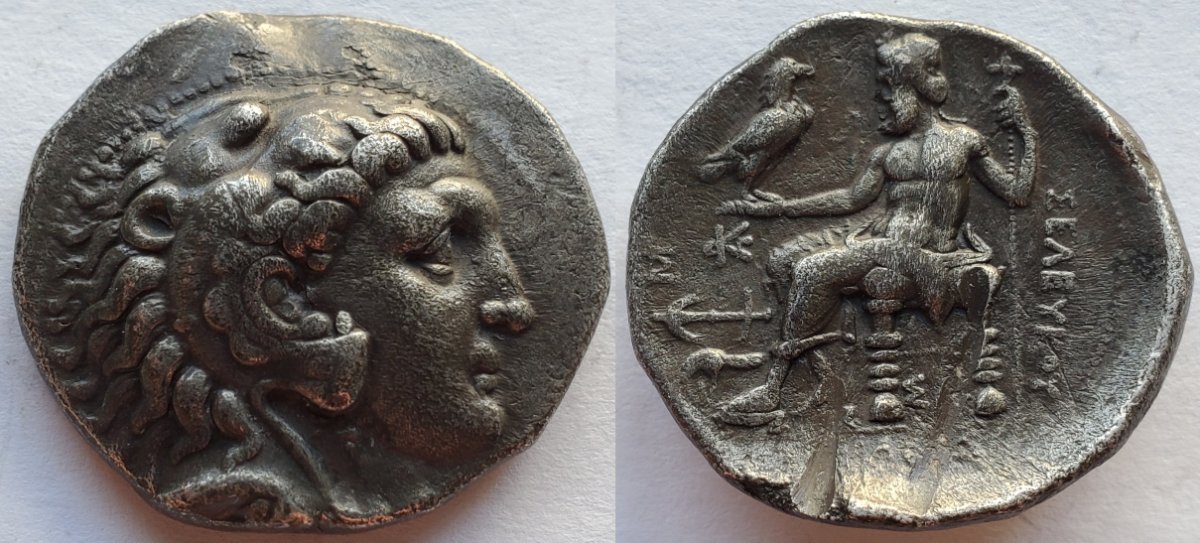
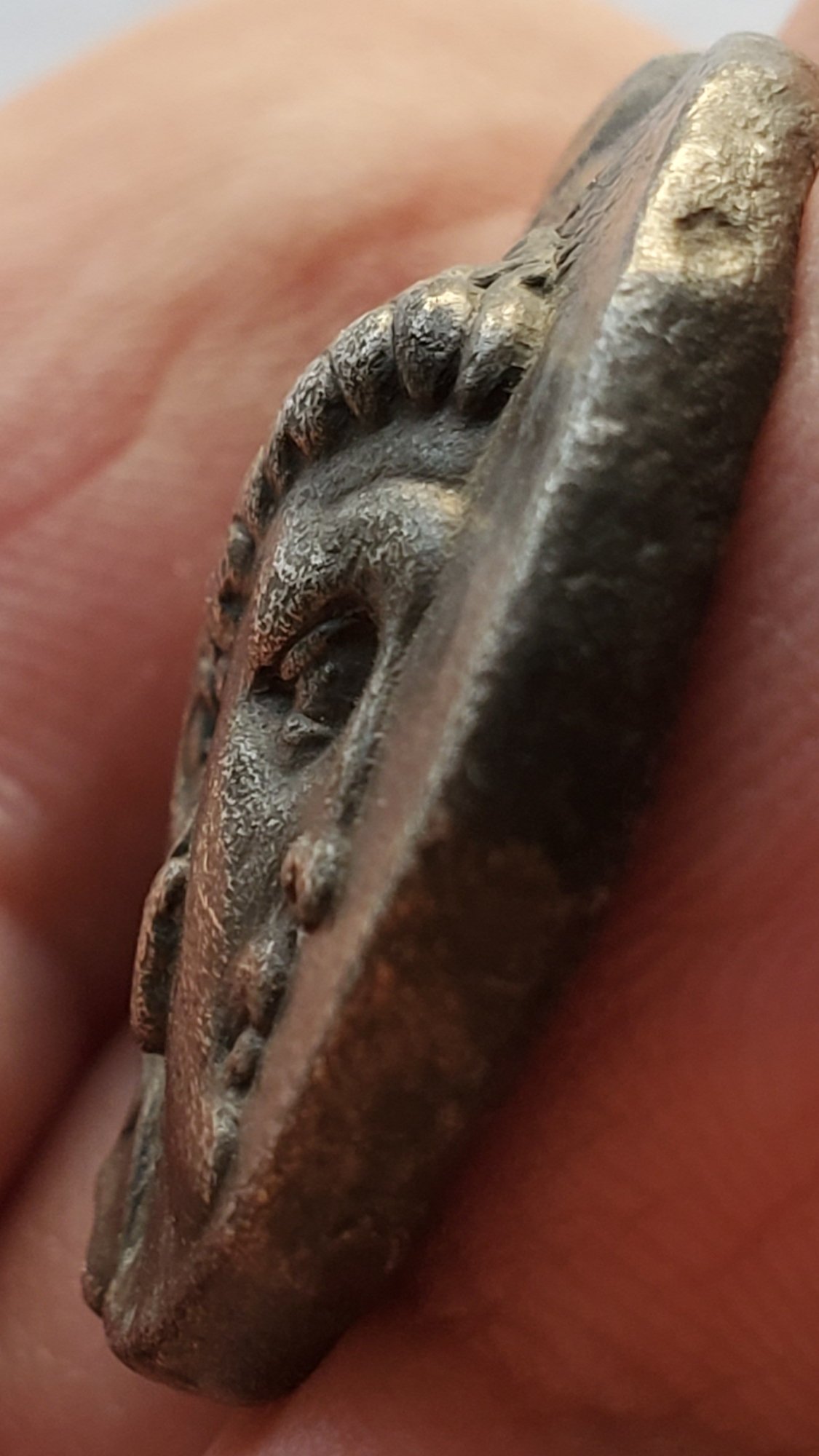
It is difficult to capture the truly incredible depth of this coin in a straight-on photo; I knew that these were struck in high relief, but was not expecting this:
After a bit of searching, I think that my coin is a die match to this example sold by CNG in 2003:
https://www.cNGCoins.com/Coin.aspx?CoinID=40004#Although there are no shortage of Alexander-type tetradrachms attributed to Seleukos, those bearing his actual name are markedly more scarce, yet nowhere near as scarce or valuable as the other types - Zeus/Elephant quadriga, and the Heroic bust/Nike and trophy types - both of which typically stray well into the 4 digit price range.
Extremely short history lesson...
Born in 358 BC, Seleukos was one of Alexander the Great's most trusted companion, and was given the command of Alexander's elite infantry units, which he brought with his king all the way into the heart of India. In the wake of Alexander's sudden death, he was one of the key players in the Wars of the Diadochi, as the kingdom was
inherited on paper by Alexander's simpleton half brother Philip III with his as-yet unborn son Alexander IV as heir apparent. Disagreements turned to open warfare, and although Ptolemy ended up with the incredibly rich Egyptian lands, Antigonus and Kassander with Greece, and Lysimachos with Thrace, Seleucus won the bulk of Alexander's empire, stretching from Asia Minor to the border of the fledgling Mauryan Empire. His reign was marked by perpetual power struggles and increasingly fragile alliances, culminating in his untimely death by assassination in 281 BC. Seleukos was followed by his eldest son Antiochus, and his legacy was an empire that would check the growing Roman Republic until the middle of the first century BC.










 Posted 02/09/2020 9:38 pm


 ...
...


