| Author |
 Replies: 15 / Views: 2,776 Replies: 15 / Views: 2,776 |
|
|
Pillar of the Community
 United States
732 Posts |
|
|
|
|
Pillar of the Community
United States
8056 Posts |
I think the only hope is that @erafjel or @t360 can get it from their knowledge of French coins of this era.
|
|
Pillar of the Community
Sweden
2124 Posts |
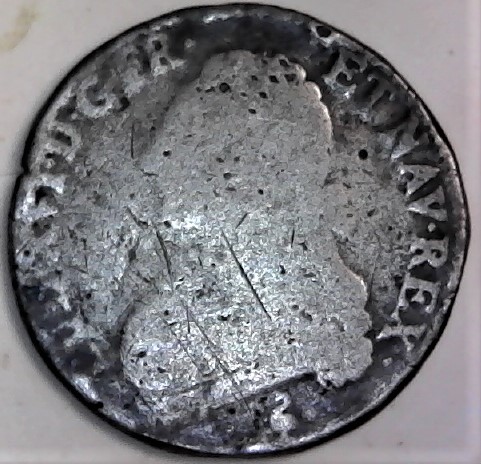
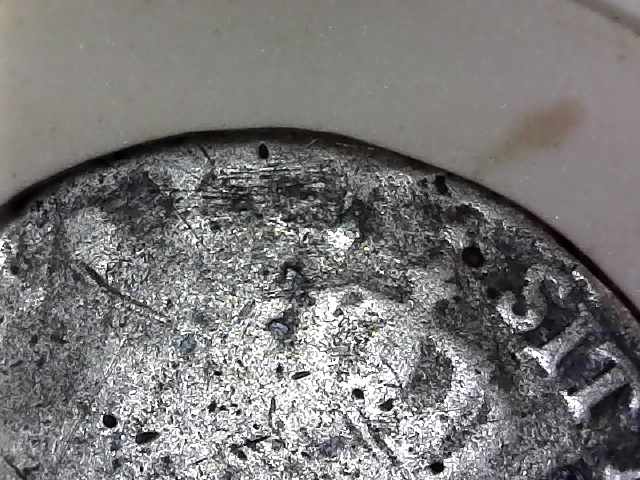
Hmm, these coins were minted 1774-1792, so either 1781 or 1791 is possible. Unfortunately there are no differences other than the year for Paris (A), the heron mint mark under the bust was in use both years. And both years are about equally common, 1791 being slightly more frequent.
Looking intensely at the year, I think I can imagine a 9 more than an 8...
|
|
Pillar of the Community
United States
541 Posts |
Does anyone here actually think this coin is genuine?
|
|
Pillar of the Community
Sweden
2124 Posts |
What makes you think it isn't?
|
|
Pillar of the Community
 United States
732 Posts |
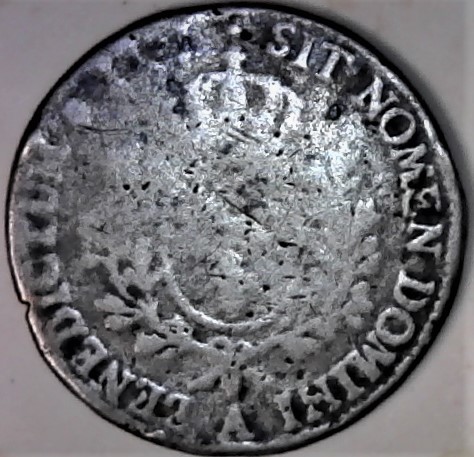
1 ECU - Louis XVI 1774-1791 KM 564 or KM# 572 everything matches EXACTLY!
well in current condition it is
29gm
41mm
Out of the book it is
29.49gm
41mm
So it is well with in limits. I haven't had it tested as I just got it yesterday in the mail.
|
|
Pillar of the Community
Sweden
2124 Posts |
It is KM 564.1. KM 572 is the regional Bearn issue with a slightly different inscription and different mint marks.
|
|
Pillar of the Community
United States
541 Posts |
I realize I would have to see this coin in person to make a final judgement but based on the pictures I think it is cast. The weight for a coin looking this worn would not be higher than the official issue weight. If you have the coin in hand put the edge against a sheet of white paper and see if you can put an X on the paper. Does it ring when tapped? Can you do a specific gravity test? There is also a "feel" which is sort of waxy or greasy and a "smell" sort of burnt that some cast coins have.
|
|
Pillar of the Community
United States
8056 Posts |
Quote:
The weight for a coin looking this worn would not be higher than the official issue weight This is a good point. But there is also statistical variation above and below the official issue weight, and I may have seen on CCF somewhere that during those turbulent times in France, that variability was higher, though I don;t know if that applied to all mints and types. I compared this example with the 3 or four 1791 examples from the Paris mint on CoinArchives and could not see any major red flags with design details, at least to my eyes, and given the state of the OPs coin. Letters like N with thicker diagonal strokes than vertical ones look OK. The V in NAV rides a bit higher than the letters around it in some of the other examples, but not all. I don;t know this series at all, can just comment on what I see  |
|
Pillar of the Community
United States
541 Posts |
I see that moose says this coin is 29 grams which for a very worn coin like this would be right on the money. My 1784 of this type weighs in at 29.488 grams.
|
|
Pillar of the Community
Sweden
2124 Posts |
Quote:
The weight for a coin looking this worn would not be higher than the official issue weight Valid point and a good observation there, @retiredkper. I agree that had the OP coin really had a weight of 30 g, that would be a red flag. How much the weight might vary for silver coins before and after the revolution is an interesting question to look into (especially on a Monday morning when the alternative is to come early to work  ). So I quickly gathered some statistics from the CGB site, 1784 ecus in stock (happened to be the year with most examples) and 1791 ecus sold and in stock (cgb.fr keeps the data sheets for all sold coins and is a great source to dig into when it comes to French coins!). The result looks like this: 1784 ecus (25 examples): Weight range 28.42 - 29.69 g with an average of 29.24 g. 1791 ecus (67 examples; one outlier with a stated weight of 27.54 g excluded - misprint or unrecognized fake?): Weight range 28.68 - 29.64 g with an average of 29.34 g. A more thorough investigation should correlate with the degree of wear and perhaps also separate the different mints (the two heaviest 1784 ecus both weigh 29.69 g and are from the Perpignan mint - were they extra generous with the silver or did their scales need calibration?). Still, as expected, the variation is more downwards than upwards. The mints were keen to keep the weight of (gold and silver) coins within as tight limits as possible and flans that were overweight were "adjusted" by scratching off surplus material with special tools (it is very common to see these sometimes rather ugly adjustment marks on gold and silver coins from this era). I don't know how the revolution in 1789 affected the precision of the mint work, but the small sample above does not seem to support that precision should have become worse - on the contrary, the span is smaller for post-revolutionary coins, in spite of the sample being larger than the pre-revolutionary sample. Well, now off to work!  |
|
Pillar of the Community
United States
8056 Posts |
As luck would have it, the rate of weight loss due to circulation in French silver coins was measured by the mint in the late 19th century. This study, and some others are included in a broad statistical treatment in this article: https://www.persee.fr/doc/numi_0484...m_6_170_3217For crown size silver, an average rate of weight loss of 0.02%/year was seen (English crowns came in pretty close to the same number). So, had the coin been in circulation for a century, a weight loss of half a gram (2%) would be considered normal. My guess is that this is smaller than the original mint tolerances for such a coin, so it may be a moot point. |
|
Pillar of the Community
United States
732 Posts |
This is extremely fascinating Thank you to every one for all the great info. Adds to my meager knowledge base.
|
|
Pillar of the Community
United States
732 Posts |
my specific gravity test came up with 9.255451713395639 :-)
It does ring when tapped
|
|
Pillar of the Community
United States
541 Posts |
Sorry to bring you bad news but a specific gravity of 9.255 is way too low to be the quality silver used in a genuine coin. This coin should be over 10.3.
|
|
Pillar of the Community
United States
1962 Posts |
Contemporary counterfeits of mid-to-late 1700s ecus abound. Just from first glance, that was my immediate thought.
Frankly, in this grade, it doesn't matter - this is dreck. You can get a really decent ecu of this bust style for not much money.
|
| |
Replies: 15 / Views: 2,776 |
|












 Posted 03/01/2020 03:43 am


