Machine Doubling can be found on any year/denomination/mint. Even a doubled die or RPM could also have
Machine Doubling. On the
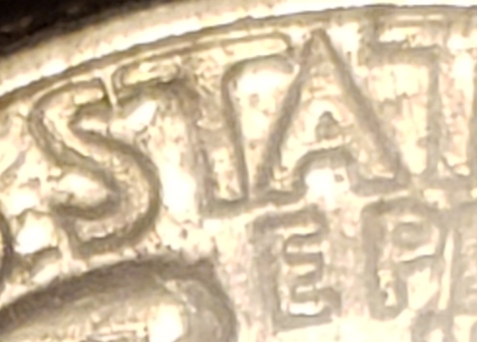
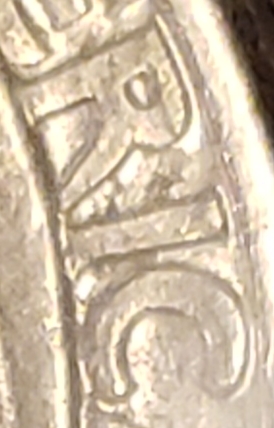
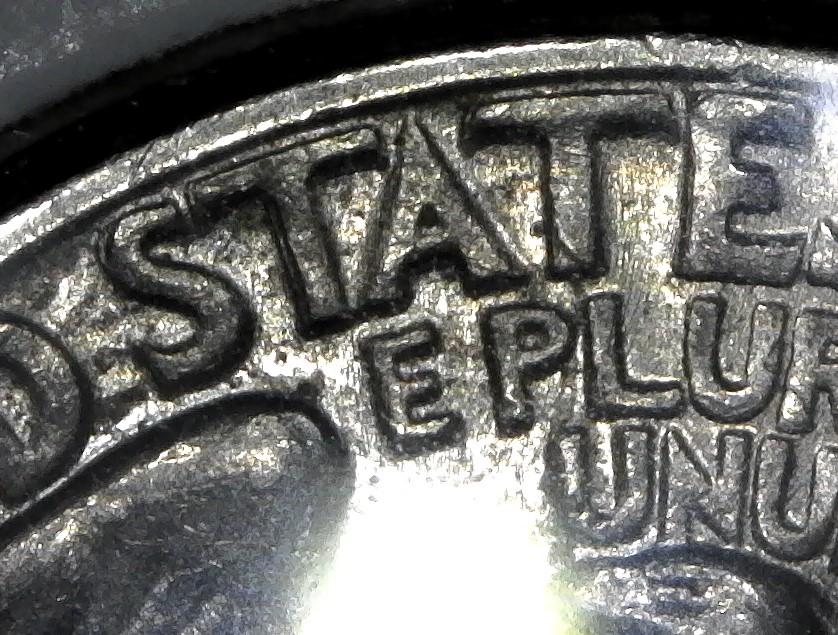
Machine Doubling it is always the outside edge of one side of the devices that area affected. This can seen on the same or different side on the devices. When you look that the devices, note, that the area you are looking at is reduced in size from what a normal device would be. Note on the "T" on States. Note how the affected area is reduced, compared with the second 'T' on States. Always a reduction as it is actually damage the machine makes after the strike. On a doubled die, the devices would be enlarged and show a spread on the centers of the devices:
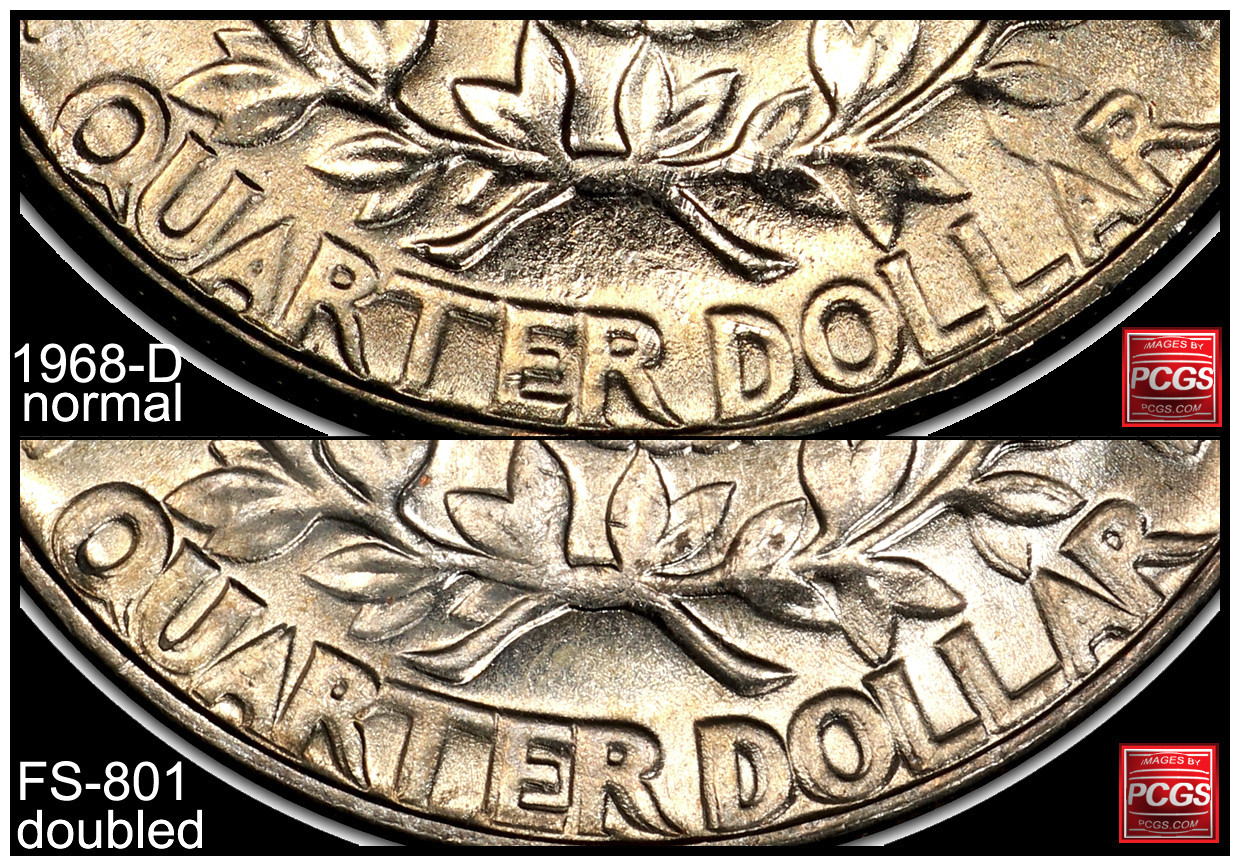
Note on this side by side, you can see the devices are enlarged, and also on the centers of the devices you can see the spread of the hubbing of the die with two sets of devices. The best way to visualize this is to used the old fashioned rubber stamp. Sure you can make a design once with the stamp. But it is weak, and you try to stamp it again, it is impossible to get to line up a second time. This is created on the die on a doubled die, thus the term: "Doubled Die". So the exact hubbing was not matched, or maybe a different hub was used in a fresher or older hub state. Or the hum may have been warped from continued use. (Class 6 doubled dies are like these as they affect just one area of the design on the die) But the biggest difference is that on a doubled die, all coins will show the same doubling from that die.
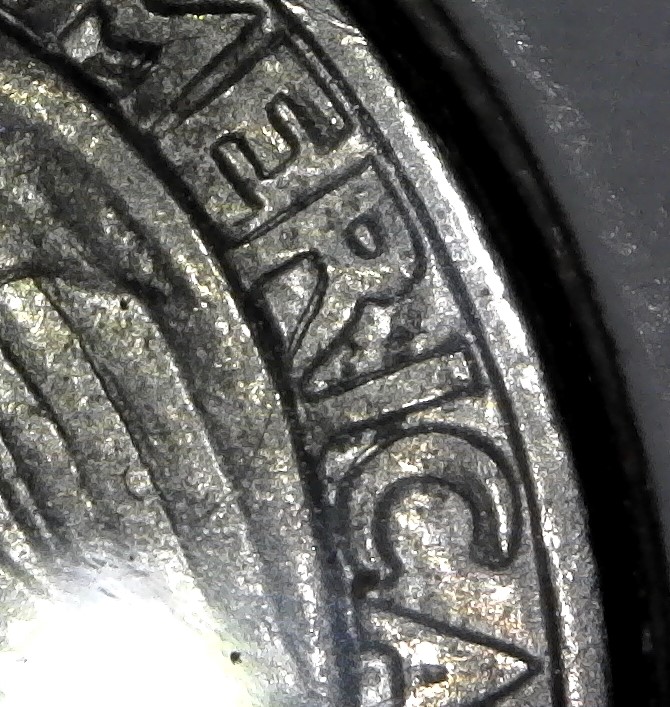
Machine Doubling is not the same on each strike and can vary from device to device:
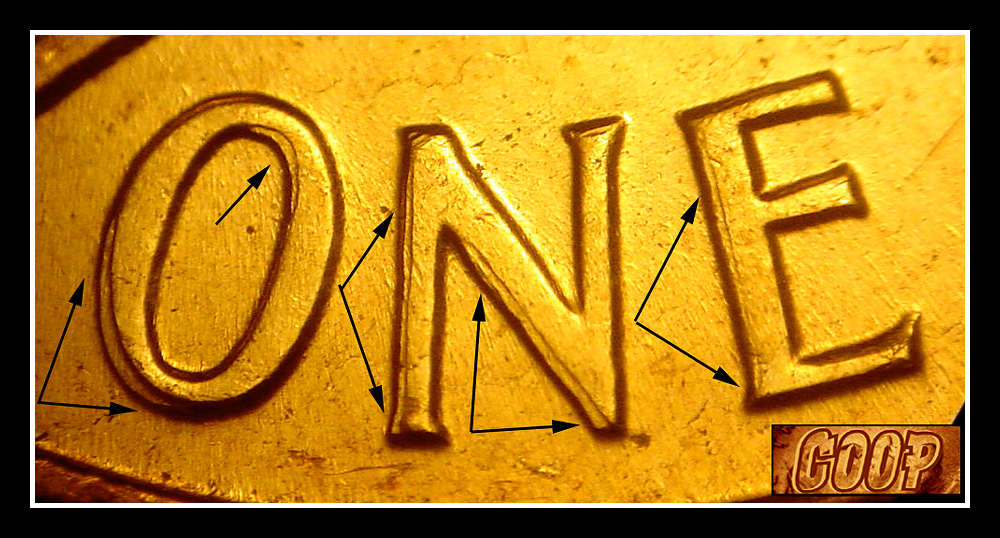
Note the area affected, outside left side. Note the differences of the affect on 'O' it is the strongest and 'NE' is trails off and becomes normal on the later devices. So MD happens at the will of the machine:
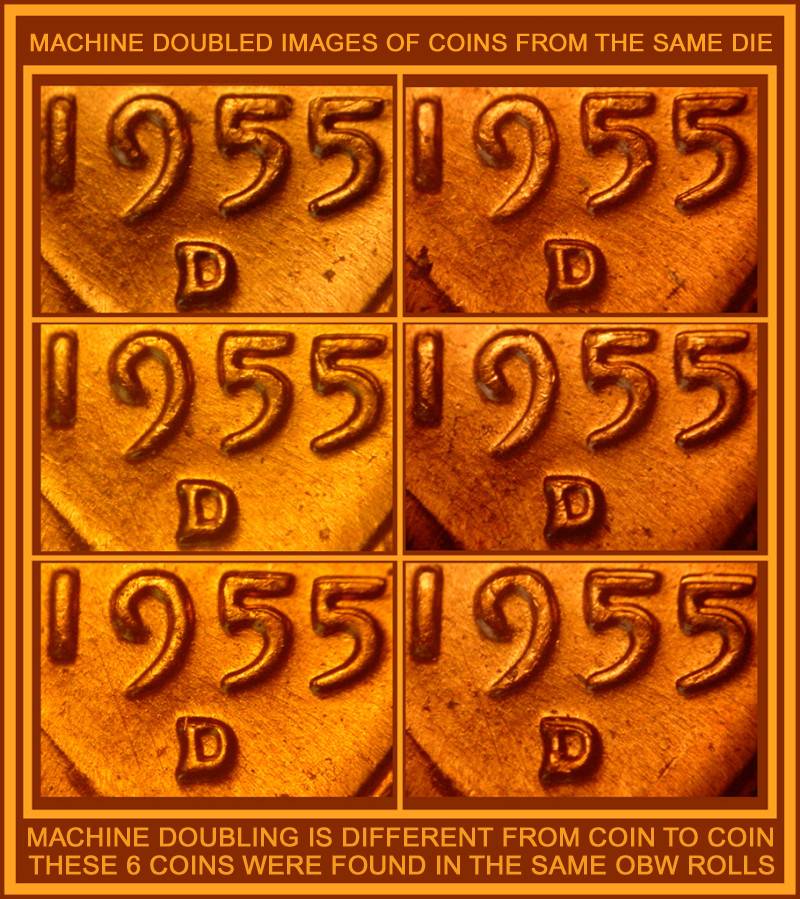
Note the differences. All have the same die markers and came from the same rolls. But note how the MD is different on each one. Then note how it is different. All are affected on the outside edges of the devices. Hope this helps.







 Posted 03/16/2020 4:36 pm





