| Author |
 Replies: 13 / Views: 2,241 Replies: 13 / Views: 2,241 |
|
|
Press Manager
 United States
1420 Posts |
PCGS - The United States one-cent coin was, along with the Half Cent, among the first denominations ever coined by the United States Mint for mass distribution and circulation in 1793. The nation's early one-cent coins are much larger in diameter than those produced since those of the current size and weight debuted in the years just before the Civil War. The one-cent coinage produced from the first days of the United States Mint until 1857 is nearly the size of a modern half-dollar and made from pure copper. These so-called "large cents" live up to their name, measuring as wide as 28.5 millimeters in diameter and the heaviest pieces tipping the scales at weights of 13.48 grams. 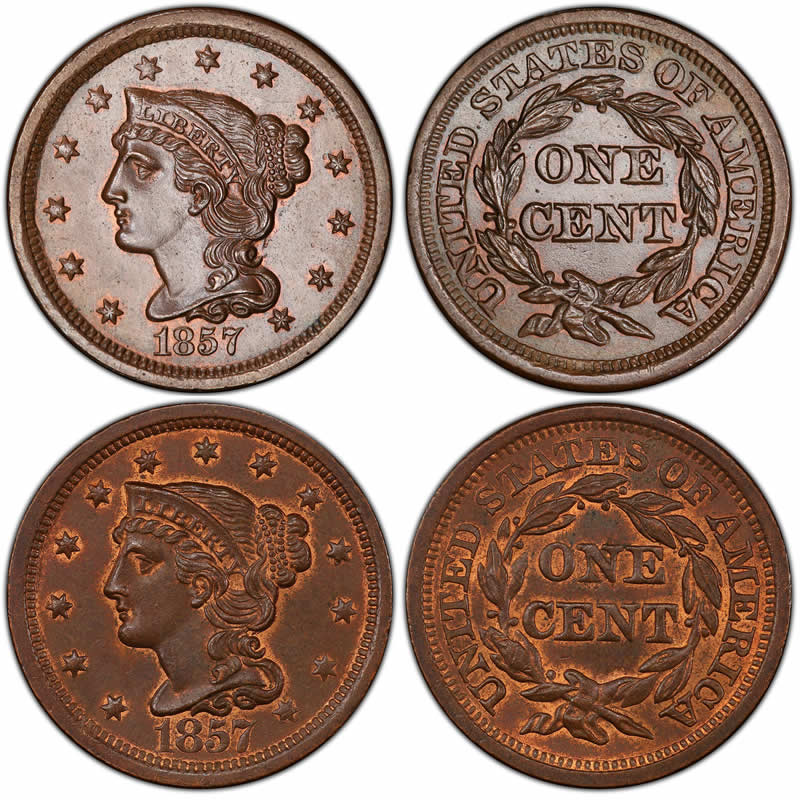 Back in the 1790s and early 1800s, the one-cent coin represented significant purchasing power. According to the United States Bureau of Labor Statistics consumer price index, one cent in 1800 would be worth about 20 cents today. In other words, the relative purchasing power of a one-cent coin back when the denomination was still new approached that of a quarter-dollar today. And quarters remain a critical part of daily commerce. However, inflation was as much an issue in the 19th century as it is today. And by the 1850s, the economic winds had shifted to the point that it took a lot of one-cent coins to buy much of anything. The large copper coin grew unpopular with the public. Read the entire article.
|
|
|
|
Pillar of the Community
United States
1613 Posts |
That '57 is a stunner! Nice choice for the topic.
ANA member - PAN Member - BCCS Member There are no problems only solutions - the late, great John Lennon
|
|
Bedrock of the Community
United States
94367 Posts |
Thanks for that, most interesting.
|
|
Bedrock of the Community
Australia
21792 Posts |
An average inflation rate of 1.4% per year will result in a 20X increase in face value over 220 years 1800-2020.
That is, one Cent in 1800 will have a buying power of 20 cents in 2020.
|
|
Pillar of the Community
United States
2724 Posts |
thanks for posting, shared that with a number of ppl.
|
|
Moderator
United States
196100 Posts |
|
|
Pillar of the Community
United States
7395 Posts |
|
|
Pillar of the Community
United States
646 Posts |
Quote:
This site says a cent in 1800 would buy what $1.52 buys today. Yes, this seems more realistic. My dad used to tell me that it cost them 5 cents to go to a Saturday matinee (mid 20's to early 30's), what does it cost today? Heck, I remember buying candy bars for 5 cents when I was a kid in the mid-60's!  |
|
Moderator
United States
196100 Posts |
I am not old enough to remember that, but I am old enough to remember when a payphone was only a dime.  And also old enough to know what a payphone is.  |
|
Bedrock of the Community
Australia
21792 Posts |
I used the info from the OP.
|
|
Moderator
United States
196100 Posts |
Yup, but I quoted you because you more accurately said what they were trying to say.  |
|
Pillar of the Community
Canada
5420 Posts |
Actually a Cent from 1800 is 2.05 in 2020 . Source in2013dollars.com
Edited by Pacificoin
05/11/2020 10:24 am
|
|
Moderator
United States
196100 Posts |
We just get further and further from the 20 cents originally stated.  |
|
Bedrock of the Community
United States
20753 Posts |
Quote:
Yes, this seems more realistic. My dad used to tell me that it cost them 5 cents to go to a Saturday matinee (mid 20's to early 30's), what does it cost today? Heck, I remember buying candy bars for 5 cents when I was a kid in the mid-60's! And I remember being lucky to have 5 cents. |
| |
Replies: 13 / Views: 2,241 |
|







 Posted 05/07/2020 6:52 pm





