| Author |
 Replies: 13 / Views: 1,106 Replies: 13 / Views: 1,106 |
|
|
New Member
United States
6 Posts |
I have found what I think is a PPDD (1955/5) not sure what a PPDD mean's, I also have a 1957 cent with the "B" in Liberty partially 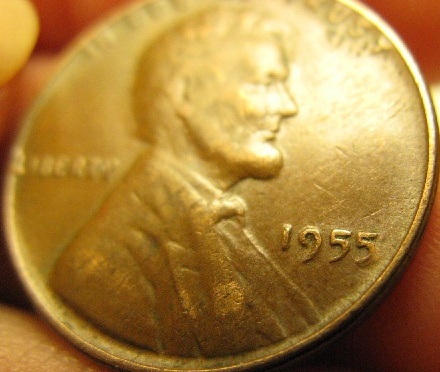 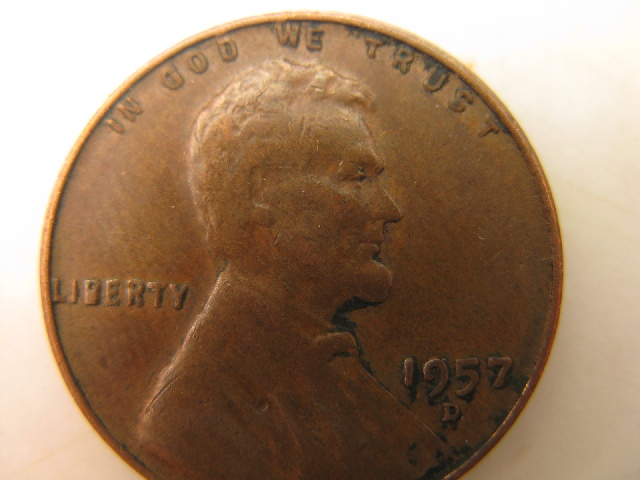 filled in. How does this happen and does it have any value. |
|
|
|
Pillar of the Community
United States
1807 Posts |
Both coins quite common. The 55 is from deterioration of the die on the last five and the 57 is from a broken die or die chip. May not have used the technical terms but I hope it makes sense.
And welcome to the forum...
|
|
Pillar of the Community
United States
764 Posts |
at one time I had a roll of poorman's DD. they are that common, unfortunately.
|
|
Pillar of the Community
United States
2540 Posts |
as littleboy mentioned, I also collected a roll+ in 'the old days'. Very common, and, today, no added value, except, possibly on ebay. |
|
Pillar of the Community
United States
581 Posts |
Interesting comments.
What does everone mean by "common" and "very common"?
As common as...... ?
I find them interesting because you can actually SEE the silly variation unlike 99% of the other ones. In addition, the history in the numismatic community at the time makes it a bit of a conversation piece as well.
I bet if there were holes for them in Dansco's and Whitman's, no one would be saying they're "common"!
Edited by Kabiye_Lady
11/07/2008 07:35 am
|
|
Bedrock of the Community
United States
62064 Posts |
In a roll of 50 BU cents I found 19 of them in that role from about 10 different dies. They were just the product of overworked dies from that era (1953-1955). They just kept using the dies after they were ready to be retired. No extra value in my book. Something common happens on many dies because of extreme wear. I would find/keep coins that were of earlier die states as they have more eye appeal. 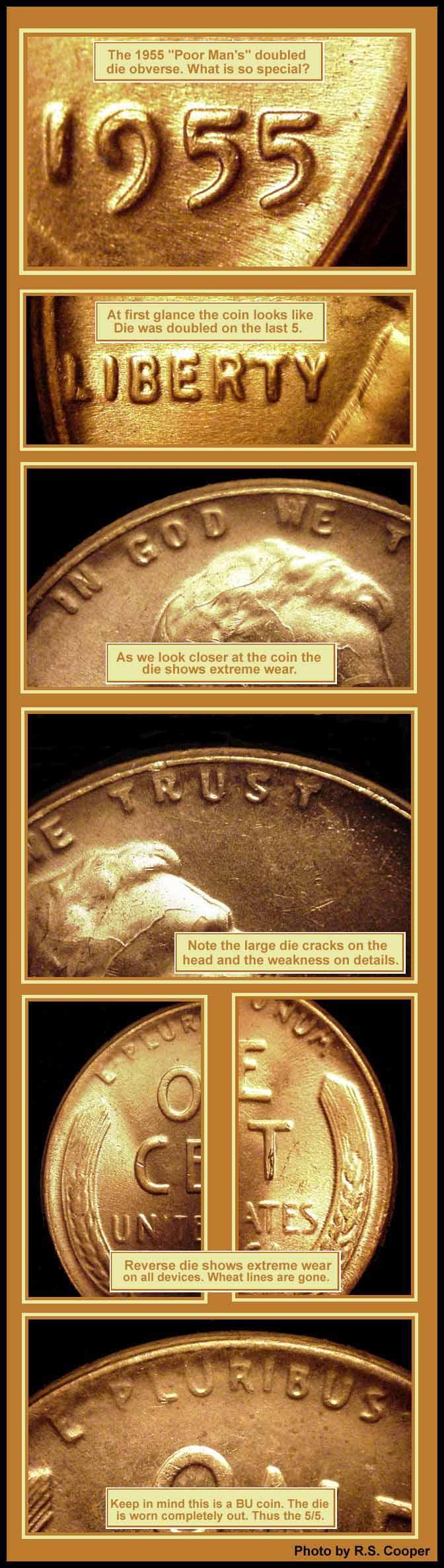 |
|
Pillar of the Community
United States
7629 Posts |
Kabiye Lady - 1955 cents with a shadow outside the last digit of the date are exceedingly common - about 40% of all coins minted that year. I should know, I have been through close to 100,000 1955 cents through my years, and bothered to keep half a dozen rolls of them to GIVE out as educational pieces. They are indeed completely worthless. Their cause is simple die wear. The outside edge of the design begins to chip away from the die with use, which leaves an indentation where the metal is missing from the die. This transfers to the coins struck as a raised area that is roughly the same shape as the device that caused the indentation in the die. They are readily available in many different year's cents, but it seems that 1955 is the only year that people tend to pay attention to. As to their 'historic' value - they do have some place in history, but not a good one. They are one of the single most overvalued and misunderstood common occurrences that stump novice collectors regularly. Dealers who don't know any better (along with the ones that do) still sell them for up to $10 to people who don't know that MANY typical bags and groups of circulated Lincoln cents contain dozens of these things at a nickel each or less. Furthermore, these are a common occurence with die use. They are not varieties, they are not doubled dies, they are not errors. Comparing them to repunched mintmarks and doubled dies is like comparing apples and oranges. One single die created the 1955 DDO cents that are so valuable. Over a hundred different dies created these late die state 'shadow digit' coins. That's a mintage figure of around 20,000-40,000 compared to over 100,000,000. The numbers are so far removed from one another there's no realistic comparison between them. We're talking the difference between grains of sugar in a tablespoon to grains of sand on a beach. The key here is KNOWLEDGE. Once you really understand what's going on with all of this, can distinguish the difference between what's real and what's not, and have had the enlightening opportunity to search through a few hundred thousand coins and LEARN what's common and what's not, you'll know more about how to realistically comment as a negative counterpart to those who have had that experience without showing an obvious lack of knowledge in the subject. |
|
Moderator
 United States
56855 Posts |
copperhead59, I noticed no one answered your question on your 1957,it's only die chips and are very common on the 1950's LMC so no added value,i should say that I am no expert though,oh yea...  to CCF  . John1  |
|
Bedrock of the Community
United States
62064 Posts |
The center post on the die for the devices (letters or numbers) makes the inside area of the device. The letter "B" & "8" would have two posts. On this die the post has fallen off the die and without the post, the center part of the device would be left out a center. It happens on "D" "R" also. But it is not a filled die, but the post that broke off the die. Some times part of the post breaks off the die and it shows a miss shapened center and later fills the entire area as the die wears. Just part of the process of die wear/breakdown. Common in the sense that it happens to every coin made after the event happens. Common as it happens on several dies. Sometimes they are used for markers to identify a certain die as on variety dies. But some of the earlier coins struck when the post was still there. But can be used IF the variety is present on the die. Going in reverse, looking for a marker first and trying to match it to a certain variety is useless. Because the dies go through the same stages of Clash/Cleanings/Cracks/Chips/Breaks/heavy die use they all go through different stages of events on different dies. So some markers may be present on several dies and mean nothing. IE: Die cracks/chips/breaks on column # 12. A very high percentage contain them and mean nothing. But may be usefull to identify a die state.
|
|
Pillar of the Community
United States
1807 Posts |
copperhead59 to the forum. This is why I come to this forum. A storehouse of knowledge. Thanks you educated ones. |
|
Bedrock of the Community
United States
19994 Posts |
Great pictures of die wear coop! Check this die wear out, this is what I call extreme: Image Insert: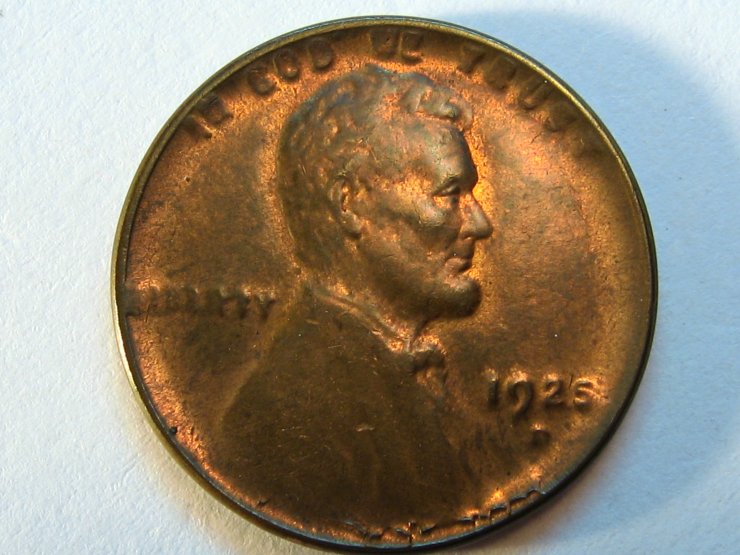 Image Insert: Image Insert: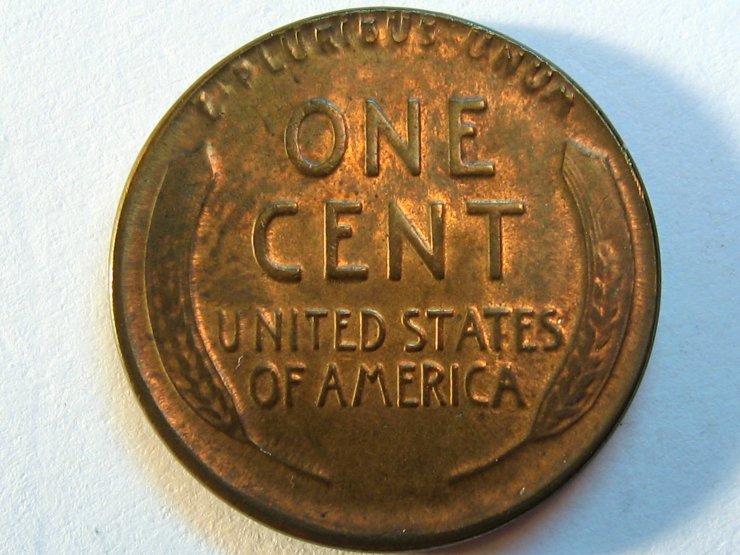 Lincoln Cent Lover!VERDI-CARE™ INVENTOR https://verdi.care/
Edited by BadThad
11/07/2008 11:37 am
|
|
Pillar of the Community
United States
581 Posts |
Thanks Coop for the clarification. I still think they're way more interesting than a regular 1955 - I have seen some where it is very pronounced. They also caused quite a stir many years ago. Coins with added history are always neat. no cents nickel, Trade dollars, etc. It's a lot easier to get people to enjoy our coin collecting hobby if you have something to show them and spin a little yarn at the same time! Everyone likes a story of crooked, conniving coin dealers trying to reap off innocent coin collectors! LOL! |
|
Bedrock of the Community
United States
62064 Posts |
I refer to coins that are like you mention and a few others I save (Not for any extra value) but as educational pieces. If someone describes something they've found, I just look up the roll of educational pieces to see if I have a match. Then I can provide an image if they can't put up one. It usually fits the bill or adds another question to be answered. BT: Sometimes it is die wear and other times other factors. But die wear isn't pretty to a purist collector like me. I want the earliest die example I can get as the coin smiles better on them. Not like this one..... 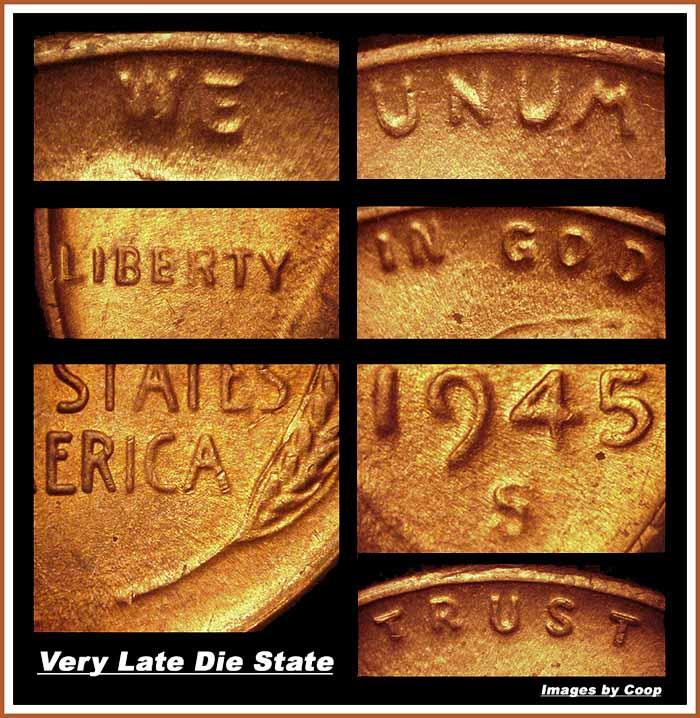 Here is a coin made from a better die state. Check out it's smile? 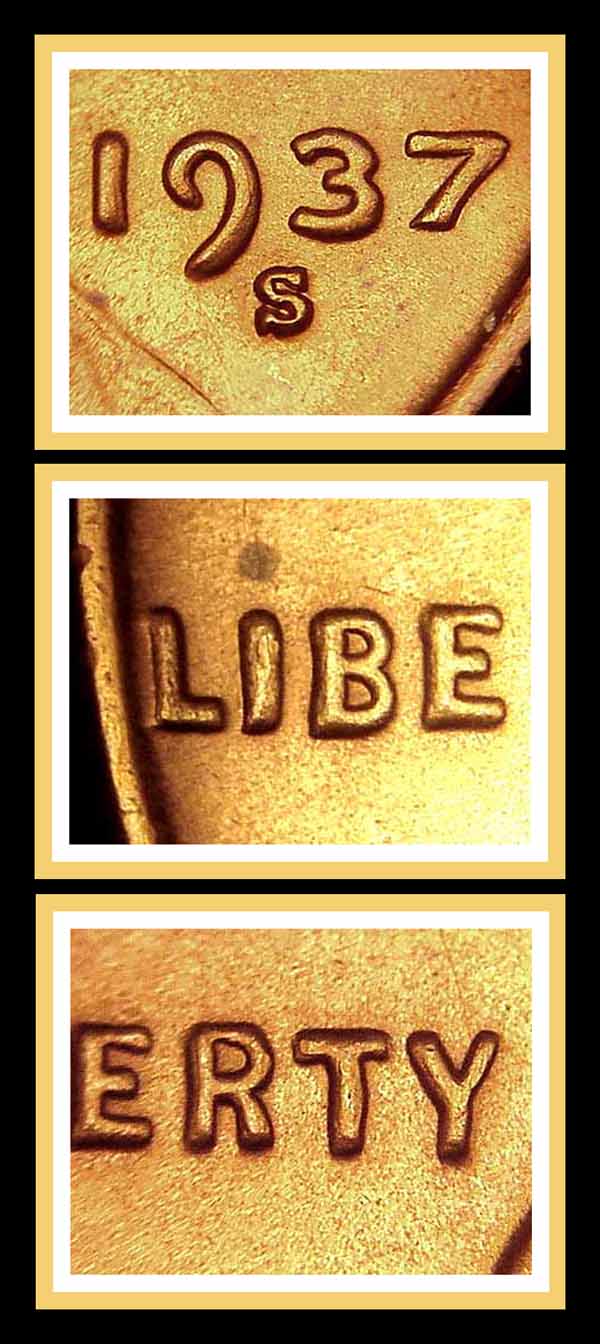 Edited by coop
11/07/2008 8:07 pm
|
|
Bedrock of the Community
United States
19994 Posts |
Quote:
BT: Sometimes it is die wear and other times other factors. But die wear isn't pretty to a purist collector like me. I want the earliest die example I Indeed, I bought this as a novelty coin. I seek these for the "interesting" part of my collection. |
| |
Replies: 13 / Views: 1,106 |
|






 Posted 11/06/2008 7:46 pm





