| Author |
 Replies: 12 / Views: 1,495 Replies: 12 / Views: 1,495 |
|
|
New Member
Spain
4 Posts |
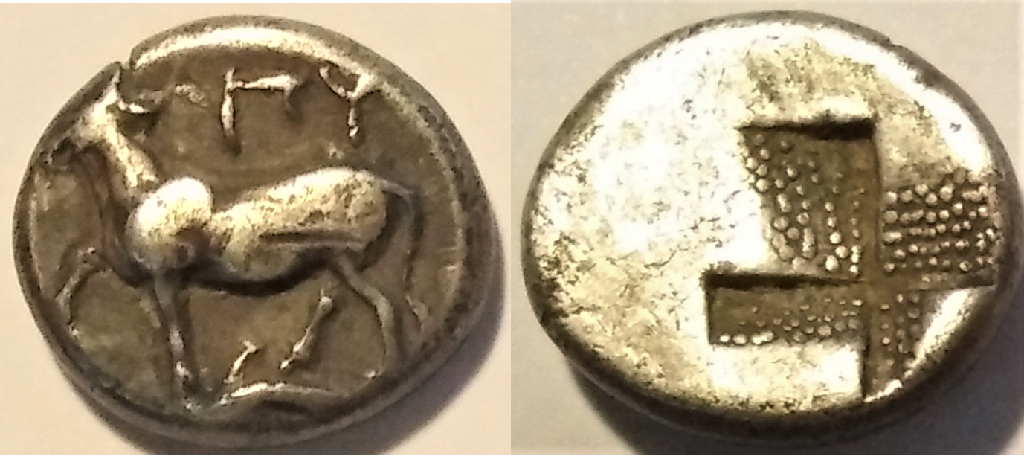
Hello everyone, this is my first post in this forum. Here I show you this silver coin, half-shekel (hemidrachm) from the greek polis of Byzantion, it is supposed to be 340 BC-320 BC. (Cy-1532) Obverse: Cow on dolphin,BY from Byzantion. Reverse: Incuse svastica. Weight 2,43 gr. Width 12 mm. As far as I have read, this coin of cow on dolphin might be older, probably 400 BC- 350 BC, as Byzantion "does not appear to have struck silver coins after the memorable siege by Philip of Macedon (340 BC) until the death of Lysimacus (280 BC). Any comments? 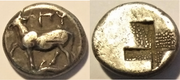 |
|
|
|
Moderator
 United States
23731 Posts |
 to the community It would help if you could provide a larger image of the coin. |
|
New Member
 Spain
4 Posts |
|
|
Moderator
United States
194970 Posts |
to the Community! |
|
Pillar of the Community
United States
7066 Posts |
Nice coin to have as your first post. Welcome, Melkart.
|
|
Moderator
United States
23731 Posts |
Thanks for posting a larger image, lovely coin.
|
|
Pillar of the Community
 Spain
2752 Posts |
....Don't know anything about these but looks to be a nice example..  Interestingly I tried searching using half shekel..'nothing'....Changed the search criteria to half siglos and up they came?... |
|
Pillar of the Community
United States
1543 Posts |
That coin does bear some resemblance to a Bithynian Hemidrachm. https://en.numista.com/catalogue/pieces185997.htmlSearching for anything labeled Shekel is difficult imo. I have read several times about a Sumerian Shekel cast in bronze, featuring Ishtar and a bushel of wheat/barley. Supposedly this is the oldest known coin but I cannot find photos of it. These were supposedly used to pay the "priestesses" of Ishtar |
|
Pillar of the Community
United States
1554 Posts |
Quote:
I have read several times about a Sumerian Shekel cast in bronze, featuring Ishtar and a bushel of wheat/barley. Supposedly this is the oldest known coin but I cannot find photos of it. These were supposedly used to pay the "priestesses" of Ishtar . The earliest known coins are believed to have been produced in Asia Minor in the 7th century BC. The "shekel" as a unit of measure indeed goes back to ancient Sumeria but coins did not come into use until much later. https://cNGCoins.com/Coin.aspx?CoinID=349632Edited by Kushanshah
05/19/2020 11:56 pm
|
|
Pillar of the Community
United States
1543 Posts |
Quote:The earliest known coins are believed to have been produced in Asia Minor in the 7th century BC. The "shekel" as a unit of measure indeed goes back to ancient Sumeria but cons did not come into use until much later. https://cNGCoins.com/Coin.aspx?CoinID=349632 Interesting, rather than hijacking Melkat's post I made a new one here. http://goccf.com/t/374569 |
|
New Member
Spain
4 Posts |
Thanks everyone for your comments. At that time (5th-4th BC centuries) Byzantion had been under Greek and Persian control, which might be reflected both in coins design and metrology standards. Traditionally a shekel weighs 8,4 grams, but Silver-Shekel coins in Persia in the period 450 BC-330 BC were just about 5.55 grams. Silver drachms in Greece were around 4.3 grams. Apparently, this makes my hemidrach/half-shekel(2,43 gr) under the Persian standard (2,775 gr) and above the Athenian (2,15 gr). In this sense, the source I am consulting ("History of ancient coins 700-300 BC", written in 1913  ) says: "At Byzantium drachms of Persian weight were issued (84 grains, 5.44 grams) with the type of a bull standing on a dolphin, and a somewhat primitive incuse on the reverse. It is hard to determine their date on stylistic grounds, as the incuse is obviously a mere survival, as it is at Cyzicus and Cardia; but I think that Mr. Head, is assigning it to 415 BC, come down too late. The date of the coins being doubtful, and the history of Byzantium full of vicissitudes, it is impossible to assign them to any particular phase of the history of the city, They seem to have continued for a considerable time, and to be the most noteworthy sign of Persian influence in the region." Considering that also for hemidrachms, it seems it was coined after 415 BC. Said before that it was coined before Macedonian times (started with the siege of 340 BC), and so it matches with the description provided here (416-357 BC): https://www.vcoins.com/en/stores/ap...Default.aspxAnd also here: https://www.soleryllach.com/es/lote...ntion-traciaThis also matches with the information provided by Gincoin43 about the hemidrachm. From the twin city of Kalchedon (monogram ΚΑΛ) (367-340 BC), separated from Byzantion by the sides of the Bosphorus strait, today form the European and the Asian sides of the city of Istanbul. As I have read, in 4th century Calchedon imitated Byzantion coins. So apparently the auction house made a mistake by describing it as 340-320 BC. |
|
Pillar of the Community
United Kingdom
946 Posts |
I think these coins were issued in the years given in most reference works for it: 340-320 B.C. Even when the city was under siege by King Philip II of Macedon in 339 B.C. and made subject by his son Alexander III until his death in 323 B.C. So this is the information I go with, and recorded for the ones (Drachms) I have bought: 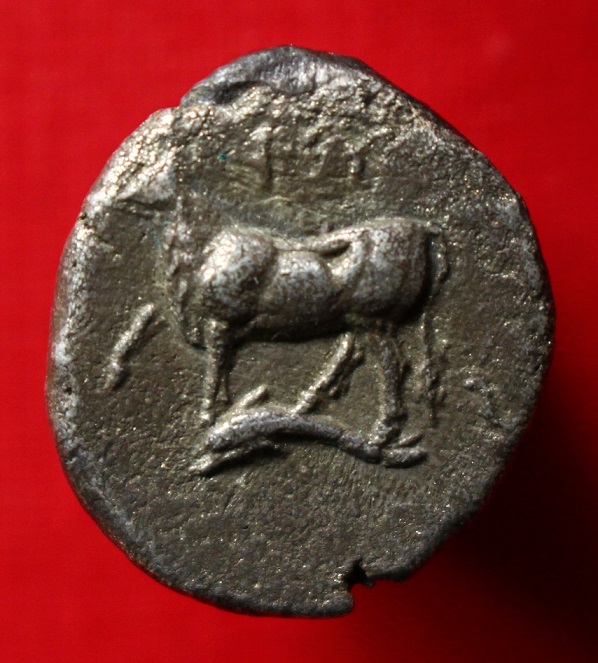 |
|
New Member
Spain
4 Posts |
Masis, thanks for your contribution. Do you have any catalogue reference for it? Hard to find anything conclusive.
|
| |
Replies: 12 / Views: 1,495 |
|







 Posted 05/19/2020 08:43 am



 [/url]


