First,

The 1938-D is common in MS-66. Strike quality, die state marriages, and clash polishing are all over the lot for this date, and greatly affect eye appeal. Coins with all three of the following are very hard to find, and command a premium: (1) early die states, (2) strong strikes, and (3) few clash marks and little polishing.
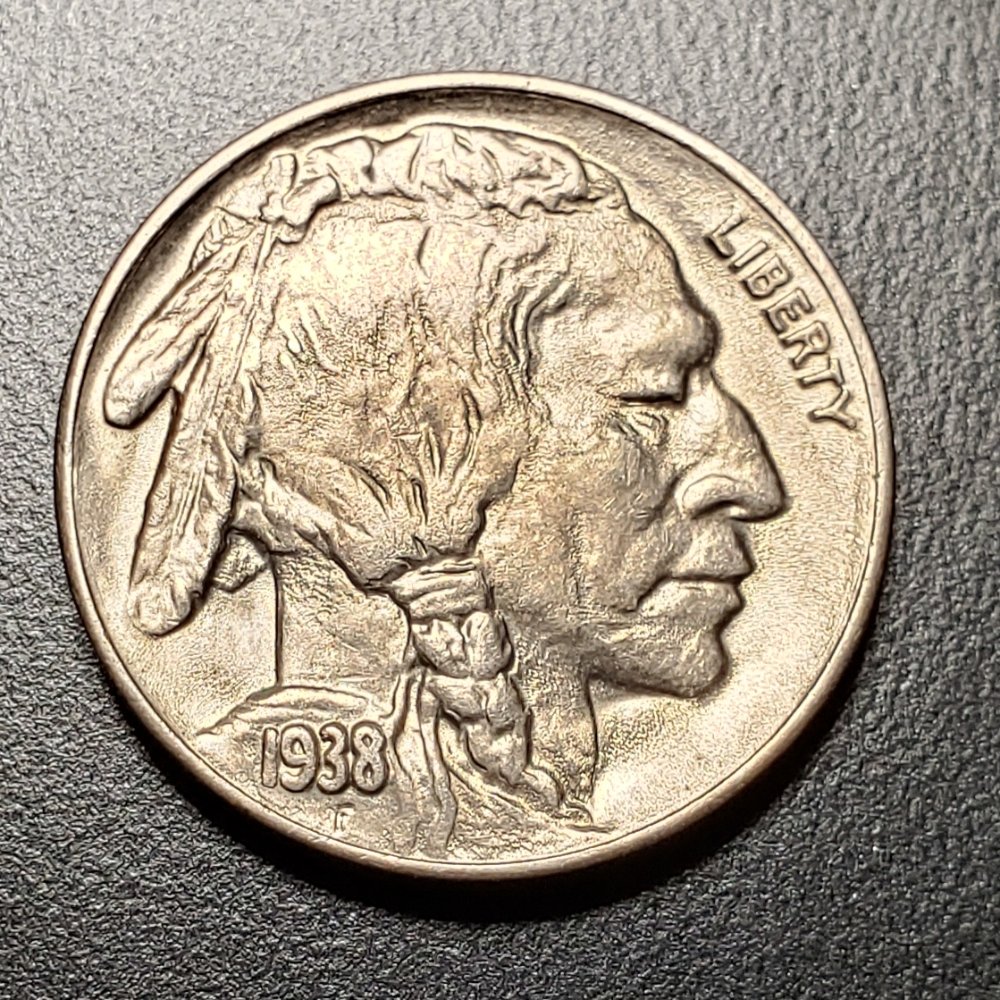
Your coin has fairly evenly matched dies, LDS obverse and LMDS reverse. Multiple die cracks on the obverse point to the late die state (see the cracks W of the ribbon tie, from the central third feather through the cheek, and from the braid through the neck).
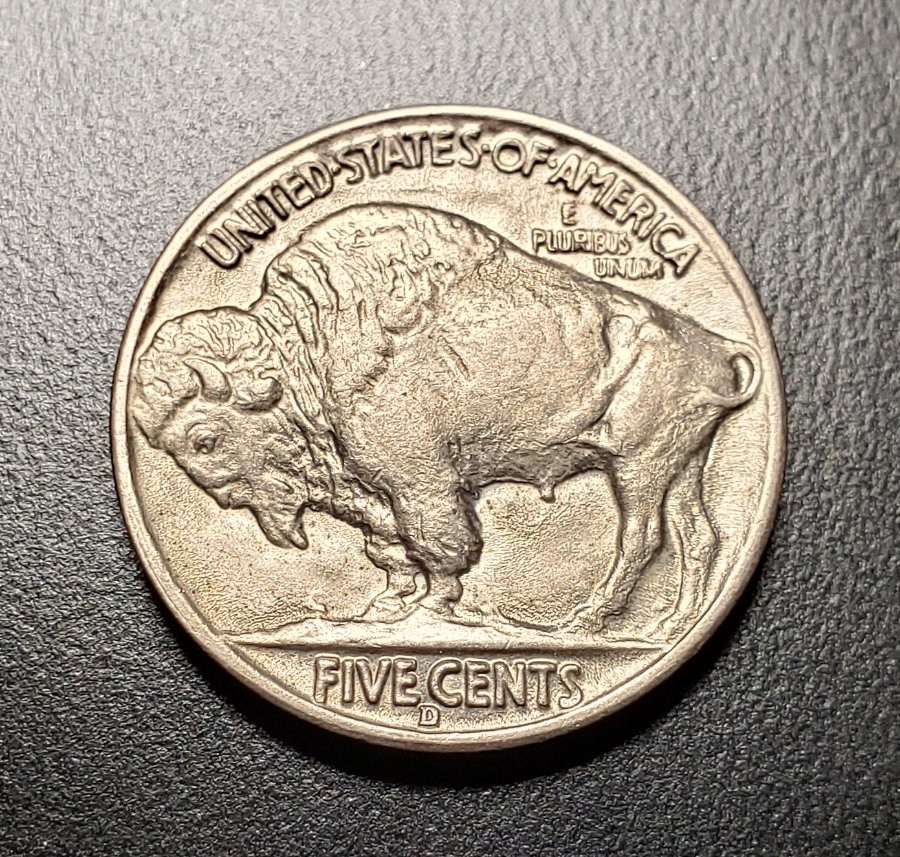
There is evidence of fairly extensive clashing and die polishing. The second feather / buffalo's head clash resulted in overpolishing the second feather (the rachis is incomplete) and the buffalo's head (about 2/3 of the hair remains). The Indian's neck / buffalo's back clash has been polished on the obverse (weakening the ribbon) and reverse (less than half the hair remains on the buffalo's upper back). The Indian's chin / EPU clash has been polished heavily, removing detail from the chin and weakening parts of EPU. The "LIB" of LIBERTY / right rear leg clash is evident at the "L" and has been polished heavily on the reverse. The Indian's hairline / ground level clash has not been polished. All of the polishing weakens the design.
The strike is slightly soft for a 1938-D, but not enough to cause an eye appeal deduction by itself. Notice the weakness on the central portions of the two long feathers, lower ribbons, buffalo's beard and neck, and the beginning blending of the "F" of FIVE and "S" of CENTS into the rim.
In terms of technical grade, the obverse is better than the reverse. There are several contact marks in the hair above the braid, running E-W toward the back of the eye, and on the cheekbone W of the nose. These are consistent with MS-64. The reverse has multiple SW-NE scuff marks across the buffalo's side, and one fairly evident ding on the buffalo's lower shoulder. These are consistent with MS-63. The net grade before eye appeal adjustment would be MS-63+.
The later die state and die polishing, resulting in loss of detail, would likely cause a half-point deduction, bringing the resulting grade to MS-63.
EDIT: The grading tends to be a bit harsher for the later Buffs (1934-PD to 1938-D) than the earlier Buffs, reflecting a
much higher survivorship of higher grade coins. In particular, full bags of UNC 1938-D Buffs were saved, and UNC rolls of 1938-D Buffs sold for under $4 well into the 1960s. I remember full
bags of 1938-D UNC Buffs trading on bourse floors in the late 1960s and early 1970s. Discovery of the RPMs and OMMs changed that overnight, and the frenzied great variety hunt was on.









 Posted 05/24/2020 3:00 pm





