Coin Community Family of Web Sites Join Thousands of Coin, Bullion, & Money Collectors
Specializing in Modern Numismatics Vancouvers #1 Coin and Paper Money Dealer Royal Estate Auctions - $1 Coin AuctionsJoin Thousands of Coin, Bullion, & Money Collectors Coin, Banknote and Medal Collectors's Online Mall Royal Canadian Mint products, Canadian, Polish, American, and world coins and banknotes. 300,000 items to help build your collection!


Username:
Password:
Save Password
Forgot your Password?


This page may contain links that result in small commissions to keep this free site up and running.

Welcome Guest! Registering and/or logging in will remove the anchor (bottom) ads. It's Free!

1786 Keyhole & Porthole - NGC Certified

To participate in the forum you must log in or register.
Author Previous TopicReplies: 57 / Views: 9,054Next Topic
Page: of 4
Pillar of the Community
jgenn's Avatar
United States
1156 Posts
 Posted 12/14/2020  9:29 pm  Show Profile   Bookmark this reply Add jgenn to your friends list Get a Link to this Reply
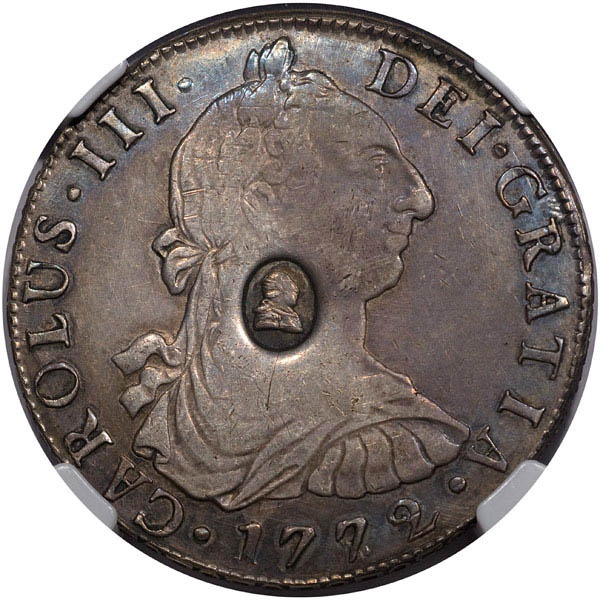
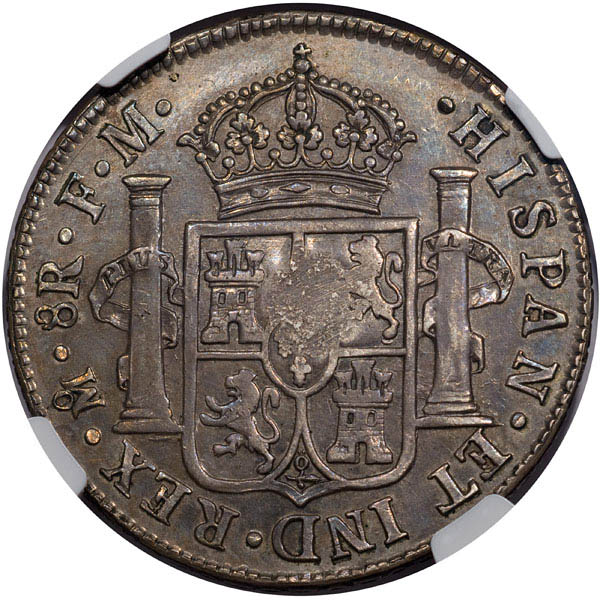
Remember this one? It's not a PH/KH but demonstrates that the GB counterstamps were placed on contemporary counterfeits. So you really can't use this counterstamp or shipwreck salvage from ships that sailed from English ports as useful examples of PH/KH on genuine issues. To me it just highlights the probability that the PH/KH is from one of the Birmingham operations.

1786-Keyhole-&-Porthole---NGC-Certified
Edited by jgenn
12/14/2020 9:35 pm
Pillar of the Community
Czech Republic
803 Posts
 Posted 12/15/2020  09:31 am  Show Profile   Bookmark this reply Add TwoKopeiki to your friends list Get a Link to this Reply
Jack, thanks for posting that one - one of my favorite counterfeits!

I don't have enough of my own empirical evidence to pick a side in this debate. I don't know if we have anyone here who cares enough about the issue to start buying-up all the available examples and testing them. SG alone should be enough for Sheffield Plate, but you can always cut a few lesser examples in half for illustrative purposes. With the volume of available KHPH examples, Bob's theory can be relatively easily proven/disproven. Personally I just find it fascinating how many of these are out there in the market.
Pillar of the Community
Czech Republic
803 Posts
 Posted 12/15/2020  11:10 am  Show Profile   Bookmark this reply Add TwoKopeiki to your friends list Get a Link to this Reply
One more in my collection: PCGS AU58 previously in NGC MS62. I might actually crack this one out and test next time I'm doing a PCGS submission.

1786-Keyhole-&-Porthole---NGC-Certified

Edited by TwoKopeiki
12/15/2020 11:14 am
Pillar of the Community
Czech Republic
803 Posts
 Posted 12/15/2020  11:35 am  Show Profile   Bookmark this reply Add TwoKopeiki to your friends list Get a Link to this Reply
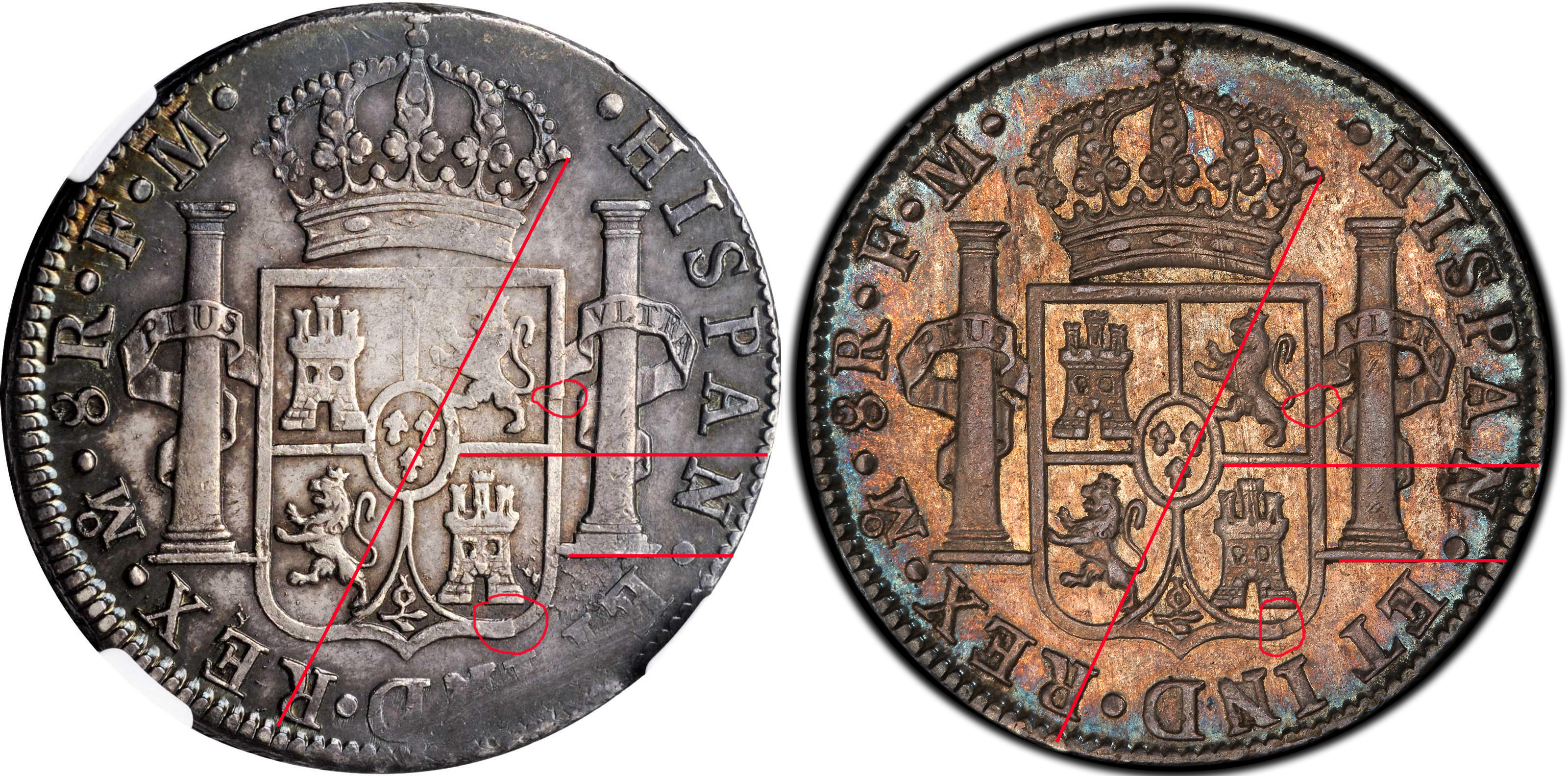
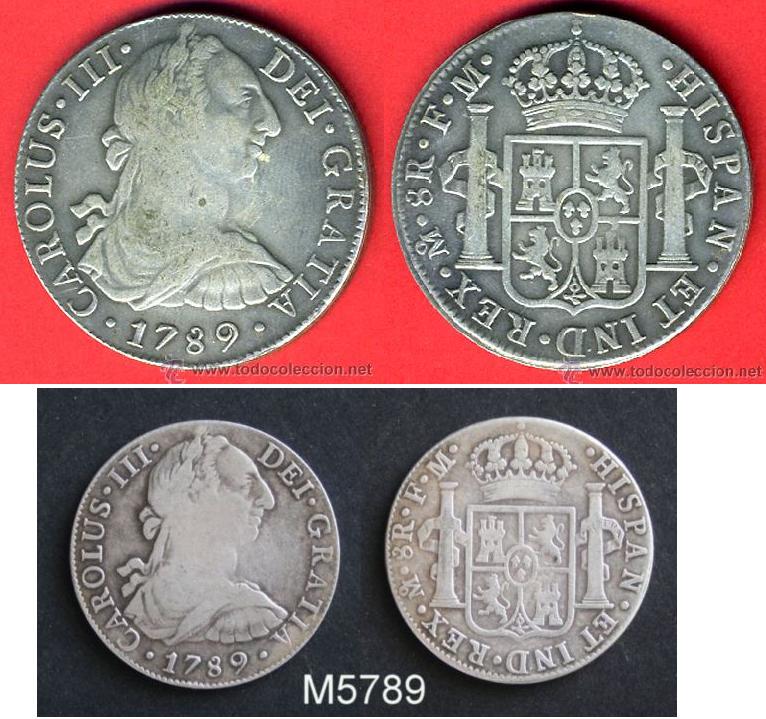
By the way, if you look at the 2 1789 PCGS and NGC examples side-by-side - you'll notice that it's different reverse dies (see legend vs shield positioning), and both seems to have been made with the same punches (see also the cracks on the shield outline circled)

1786-Keyhole-&-Porthole---NGC-Certified

Edited by TwoKopeiki
12/15/2020 11:38 am
Pillar of the Community
United States
1962 Posts
 Posted 12/17/2020  10:36 pm  Show Profile   Bookmark this reply Add realeswatcher to your friends list Get a Link to this Reply

Quote:
the probability that the PH/KH is from one of the Birmingham operations.


For really real, though?

You DO realize that the Birmingham/Sheffield plate types are, pretty much universally, obvious counterfeits to the experienced eye, yes?

The 1772 Newman piece... while better executed than some of the CCs you see with George III stamps (whether the stamp is genuine as it appears to be here or, as is more typically the case, also counterfeit) is simply NOT something which would ever be mistaken for regal by anyone whose opinion matters.

So, what, do you want to suggest that ALL of these perfectly executed pieces with the odd windows are contemporary counterfeits?!!
Pillar of the Community
United States
1962 Posts
 Posted 12/18/2020  12:44 am  Show Profile   Bookmark this reply Add realeswatcher to your friends list Get a Link to this Reply
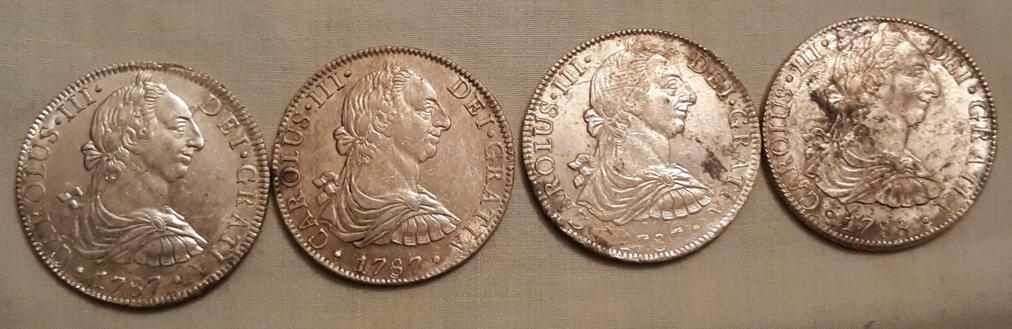
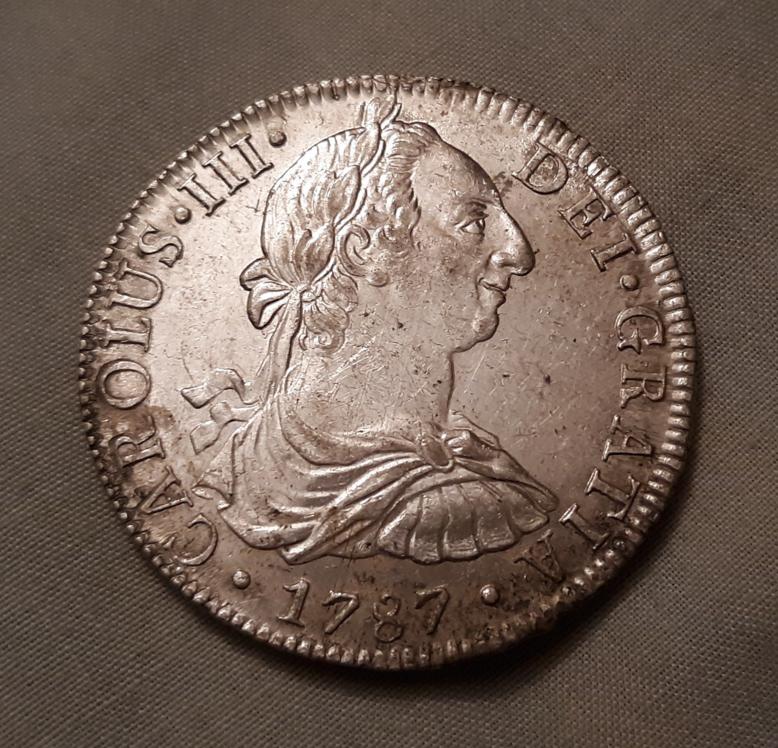
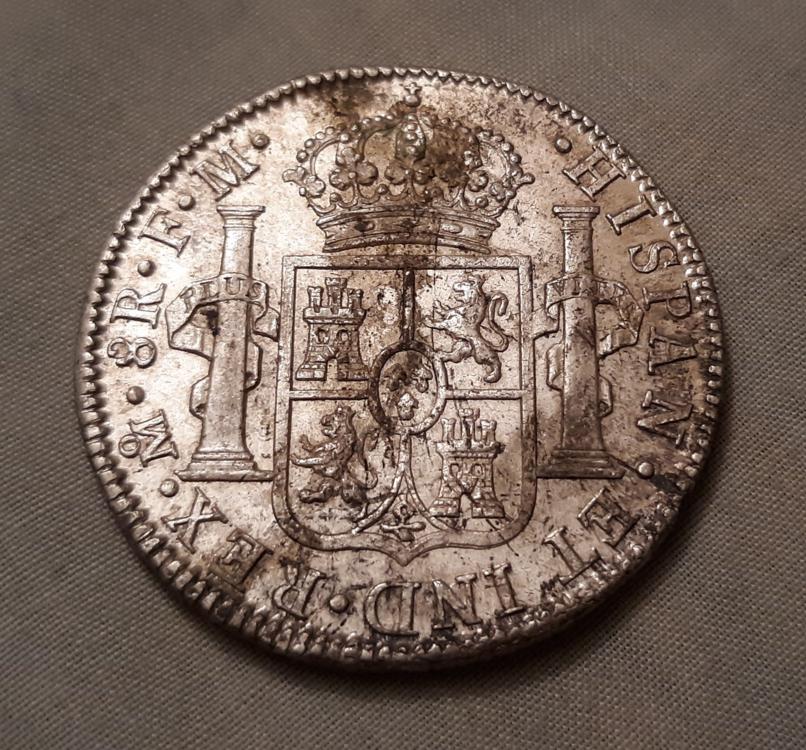
So I finally went about digging out the pieces I bought from "southfloridacoincollectibles" which were advertised as from a Haiti find. Jgenn, from the dates and condition of the coins, I'm certain these are from the "well-known hoard found in Haiti" Sedwick referred to as the source of your UNC contemporary counterfeit 8R... which, as I mentioned, Carlos Jara handled part of (I remember he had probably 100 or so pieces at the NYINC about 6 or 7 years ago). As I recall, the coins generally date up to the early 1790s, so presumably the hoard was stashed not too long after then.

And, of course, if circumstantial evidence doesn't suffice, the presence of an early contemporary counterfeit confirms the hoard dating to, at latest, the early 1800s.

Some archives of these listings on Worthpoint:
https://www.worthpoint.com/inventor...in+mexico%22
https://www.worthpoint.com/inventor...coin+lima%22

I ended up with (3) 1787 and an 1788, all of which could use some "conservation", but were among the nicer/least problematic of what was being offered. Two of the 1787 and the 1788 have "normal" windows. The other 1787, sure enough, has keyhole windows.

I've included a quick crummy pic of the group... plus more decent pics of the obv/rev of that 1787:
1786-Keyhole-&-Porthole---NGC-Certified
Pillar of the Community
jgenn's Avatar
United States
1156 Posts
 Posted 12/18/2020  12:55 am  Show Profile   Bookmark this reply Add jgenn to your friends list Get a Link to this Reply

Quote:
You DO realize that the Birmingham/Sheffield plate types are, pretty much universally, obvious counterfeits to the experienced eye, yes?


You seem to think that Birmingham only produced Sheffield plate CCs.
Edited by jgenn
12/18/2020 12:56 am
Pillar of the Community
United States
1962 Posts
 Posted 12/18/2020  02:30 am  Show Profile   Bookmark this reply Add realeswatcher to your friends list Get a Link to this Reply
They certainly DIDN'T produce counterfeits that were EXACTLY perfect regal-looking, good silver (solid) alloy pieces... which all of these examples shown are!

The only legit question on these is whether they could have been later 1800s bullion restrikes... and the evidence points to that not being the case.
Pillar of the Community
jgenn's Avatar
United States
1156 Posts
 Posted 12/18/2020  03:34 am  Show Profile   Bookmark this reply Add jgenn to your friends list Get a Link to this Reply
Based on Bob's research, I believe that there were several operations in Birmingham and that some of them continuously improved their counterfeits from the early Sheffield plate period all the way through the China trade/bullion forgery period.

The the counterstamped 1772 FM (not inverted) shows that some operations could produce better counterfeits than the typical crude Sheffield plate examples as early as 1797 (if we assume the stamp is legit). Given a few more years to correct the fonts, yes I think the technical ability to produce regal looking counterfeits did exist in the early 1800's.
Edited by jgenn
12/18/2020 03:36 am
Pillar of the Community
United States
1962 Posts
 Posted 12/18/2020  4:57 pm  Show Profile   Bookmark this reply Add realeswatcher to your friends list Get a Link to this Reply
It's not about the engraving getting really really really good, almost exactly like the original could fool most people close...

Either they could do exact transfer die imitations - like the late 1800s bullion restrikes, like the Micro-O Morgans... or they could not. At that point, in the early 1800s, they could not. The best you would get at that time - in terms of EXACTLY replicating the detail of genuine pieces - would be a really good cast. And with those, the surfaces and/or weight will almost always give those away.

Any thoughts on the Haiti hoard piece I showed?
Pillar of the Community
jgenn's Avatar
United States
1156 Posts
 Posted 12/19/2020  4:03 pm  Show Profile   Bookmark this reply Add jgenn to your friends list Get a Link to this Reply
Looks "market acceptable" and a perfect candidate for the full diagnostic checkup
Pillar of the Community
United States
1962 Posts
 Posted 12/19/2020  6:51 pm  Show Profile   Bookmark this reply Add realeswatcher to your friends list Get a Link to this Reply
Pillar of the Community
jgenn's Avatar
United States
1156 Posts
 Posted 12/20/2020  02:57 am  Show Profile   Bookmark this reply Add jgenn to your friends list Get a Link to this Reply
? The presence of one CC in the hoard does not give a pass to any better looking coins. IMO it increases the likelihood of other coins in the hoard to be CCs. You still have it?
Pillar of the Community
United States
1962 Posts
 Posted 12/20/2020  1:40 pm  Show Profile   Bookmark this reply Add realeswatcher to your friends list Get a Link to this Reply
Freakin eh... Coins this exact in detail - as only a REGAL example or transfer die counterfeit/fake would be - are simply ***NOT*** Birmingham or Sheffield emissions!! The BEST, most approximately correct detailing you are going to get with those is going to be something like your UNC 1781 from that Haiti hoard.

-----------

As an aside... Bob (whom I hope is OK - not responding to any of this?) mentioned seeing several base metal core examples of the goofy keyhole window type. I posted my take on any pertinent examples from his book's photo CD. I also am reviewing my own files - there is a modern fake 1789 that sort of fits that description... but it's modern. I have observed (2) of them, matching IDing marks... at least one which advertised as a reproduction IIRC. I would agree with that term for it, moreso than "forgery" or fake (note the sloppy rim/denticles)... it's clearly not a contemporary counterfeit.
1786-Keyhole-&-Porthole---NGC-Certified
Edited by realeswatcher
12/20/2020 1:51 pm
Pillar of the Community
swamperbob's Avatar
United States
5362 Posts
 Posted 01/02/2021  02:11 am  Show Profile   Bookmark this reply Add swamperbob to your friends list Get a Link to this Reply
realeswatcher You replied to the following comment by jgenn :


Quote:
You seem to think that Birmingham only produced Sheffield plate CCs.


You said:


Quote:
They certainly DIDN'T produce counterfeits that were EXACTLY perfect regal-looking, good silver (solid) alloy pieces... which all of these examples shown are!

The only legit question on these is whether they could have been later 1800s bullion restrikes... and the evidence points to that not being the case.


Jgenn is actually correct and yours makes assumptions that are incorrect.

Birmingham created many counterfeit coins including solid full weight 850 fine silver copies beginning BEFORE 1820. Those were used by English Merchants in China at Canton to decrease the balance of trade deficit with China. The premium on older Bust coins of the Carolus type began a few years after the introduction of the unpopular Ferdinand VII dollars. By 1835 England was complaining of the fact that the Chinese were making their own "Bustman dollars" that were debased even further than the ones made in England and they didn't want to take them in payment for English goods.

So the basic contention that all Birmingham counterfeits are easily detected by SG is incorrect. Some were made with silver but with an alloy that was 5% short which the Chinese could not detect.

To detect an 850 fine silver coin (distinguishing it from a 903 fine coin) requires a very accurate scale - accurate to 5 decimal places. A scale of that accuracy was just not available in 1835 in China.

A ten point deficient coin the size of a dollar can be detected with very careful use of a scale accurate to 4 decimal places. But even today scales of this accuracy are only seen in laboratories. So in 1835 the British saw it as perfectly safe for them to manufacture coins that were short of silver by 5% and on top of that to collect the premium of 12-14% more offered by the Chinese for Carolus dollars and make a very healthy profit. To do this the English ordered the coins from Birmingham made with 850 fine silver. They copied the Mexican dies somehow rather accurately.

I want to point out the absolute FACT (unless someone cares to call me a liar) that there are counterfeits of this type that do exist. Some are effectively heavy Sheffield with a copper core. Others seem to be solid and debased. The one thing linking these coins is the window shapes. The fact that there are also modern Numismatic Forgeries using the same KHPH design is not at all surprising. It is a very commonly seen detail as evidenced by all the pictures above.

Are all KHPH coins bad ?

I do not know because I have not tested all of them. I have tested some that seem to be genuine - BUT I do not own a scale accurate to 5 decimals either. The the most I can say is that some seem good silver (better than 800 fine) and others are definitely BAD (under 800 fine). That is the accuracy of my present equipment until I can purchase a new analytical balance scale.

It is my belief that all coins should be checked with SG to eliminate those examples that are easily detected as BAD because visual examination is definitely inadequate to detect some of these counterfeits.

Later on in the discussion realeswatcher says:


Quote:
Either they could do exact transfer die imitations - like the late 1800s bullion restrikes, like the Micro-O Morgans... or they could not. At that point, in the early 1800s, they could not. The best you would get at that time - in terms of EXACTLY replicating the detail of genuine pieces - would be a really good cast. And with those, the surfaces and/or weight will almost always give those away.


Let's examine that statement carefully. Is transfer technology the only way to duplicate a die? I know for instance that there are Birmingham counterfeits that were made using perfectly correct fonts. A second point where the statement above is incorrect is by assuming that in the early 1800's there was no way to replicate a die. The line of argument seems to presuming that a full die replication was needed. It is absolutely proven that by the mid to late 1830s in France as well as England that dies could be copied accurately using some sort of approach which Riddell did not specify. See J.L. Riddell's comments regarding the copying of dies written in 1845.

It is also inaccurate to say that the only option open to counterfeiters in the early 1800s other than striking with engraved dies was casting. Casting technology usually is easy to spot. However, there were earlier methods of die creation available.

How was that possible? The very earliest was recreating the Matrix blocks used to make genuine coins. A letter by letter, number by number approach to copying the punches used to create original dies was definitely within the capability of some Birmingham factories BEFORE 1820. Such an approach could produce dies that looked quite genuine. Spacings of legends vary but that matched original coins as well. The King punches were problems (Like the King's portrait) but not the smaller die elements like the Lions and Castles.

This was long before the period of the Micro-O dollars which I am quite sure was in the early 1930s - over 100 year later.

There are simply stated counterfeit coins made before 1845 that are almost exact copies of genuine coins. In Riddell's correspondence are allusions to dies themselves being copied (he uses the word abstracted) in France and England before 1845 for the creation of Cap and Ray coins.

The period from 1797 to 1820 was a period of astounding progress in mint technology at Bolton's Soho Factory and
in France as well. It did not stop at that point either. The US was significantly behind the European mints in terms of mint technology.

My research on this topic has progressed since I wrote my book on Counterfeits in 2013. If I live long enough I plan to do an update to add significant new findings.

I am answering here, once again, to correct errors in explaining my theories that have been presented. I also think this discussion has sufficiently covered the facts of the case.

Any more is in my opinion

  Previous TopicReplies: 57 / Views: 9,054Next Topic
Page: of 4

To participate in the forum you must log in or register.


Disclaimer: While a tremendous amount of effort goes into ensuring the accuracy of the information contained in this site, Coin Community assumes no liability for errors. Copyright 2005 - 2026 Coin Community Family- all rights reserved worldwide. Use of any images or content on this website without prior written permission of Coin Community or the original lender is strictly prohibited.
Contact Us  |  Advertise Here  |  Privacy Policy / Terms of Use

Coin Community Forum © 2005 - 2026 Coin Community Forums
It took 0.44 seconds to rattle this change. Forums