| Author |
 Replies: 7 / Views: 2,485 Replies: 7 / Views: 2,485 |
|
|
New Member
United Kingdom
1 Posts |
Hi all. Just joined today. See my intro' for details of my coins etc. Can anyone identify/value this. I have two amongst the pile I have (more posts to follow). 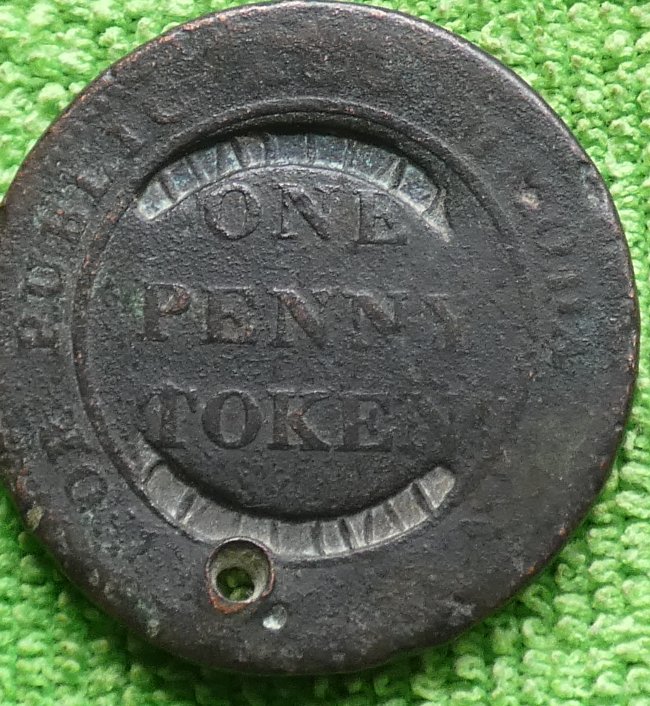 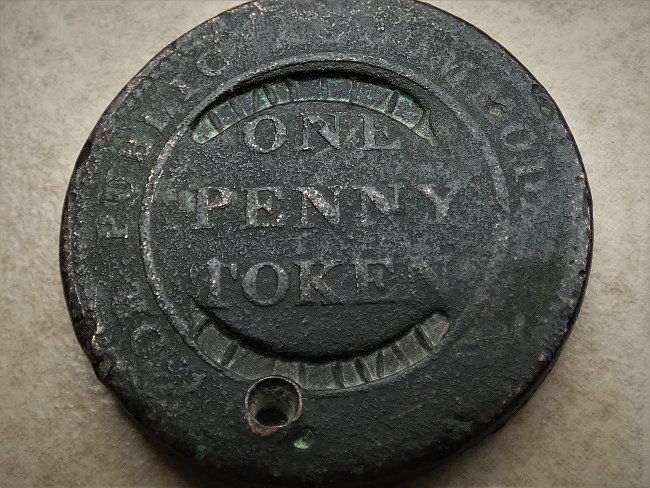 |
|
|
|
Pillar of the Community
United Kingdom
945 Posts |
 Can we have a picture of the other side? There are quite a few Penny tokens of the early 19th century that have the "One Penny for Public Accommodation" so we need a bit more to go on. Also, if you can make out any writing on the edge, that may be relevant. The deep curved trenches above and below the words do not look to be contemporary with the minting - not sure what is going on there. |
|
Moderator
 United States
56855 Posts |
|
|
Rest in Peace
United States
2668 Posts |
Looks like a hotel token. |
|
Pillar of the Community
United Kingdom
709 Posts |
Welcome to the forum.
I cannot quite make out the markings in the counterstamp. Looks like text. Can you read what it says?
|
|
Pillar of the Community
United States
1077 Posts |
This is a counterfeit Bradford Workhouse (Yorkshire) counterstamp on what is most likely an 1812 Union Copper Company penny token (Warwickshire). It's not an exact match with any of the three varieties Withers catalogued (413a-b-c), but those of us who specialize in this series are always turning up new material for inclusion in the next edition of the Witherses' Big Green Book...mainly edge varieties and die rotation anomalies, so why not a counterfeit counterstamp? In Withers, these are also called "nonsense countermarks," but I think I've seen them referred to as "garbled" in some other context. Meanwhile, Davis makes no reference whatsoever to counterfeit, nonsense, or garbled countermarks. The counterfeits are rated RRR on the Withers rarity scale, which is the most difficult category. The authentic ones are merely "S," for scarce. The silver bank tokens of that era were also countermarked for the Bradford Workhouse, and they're much, much harder to find than the pennies. (My 3/- example is shown below.) I'll save the countermarked and counterfeit-countermarked pennies of Keighley, also in Yorkshire, for a another discussion topic. There's a long story about why anyone would even bother counterfeiting countermarks on beat-up old tokens, and I think that will be my angle in an upcoming forum. Here's my W413b: 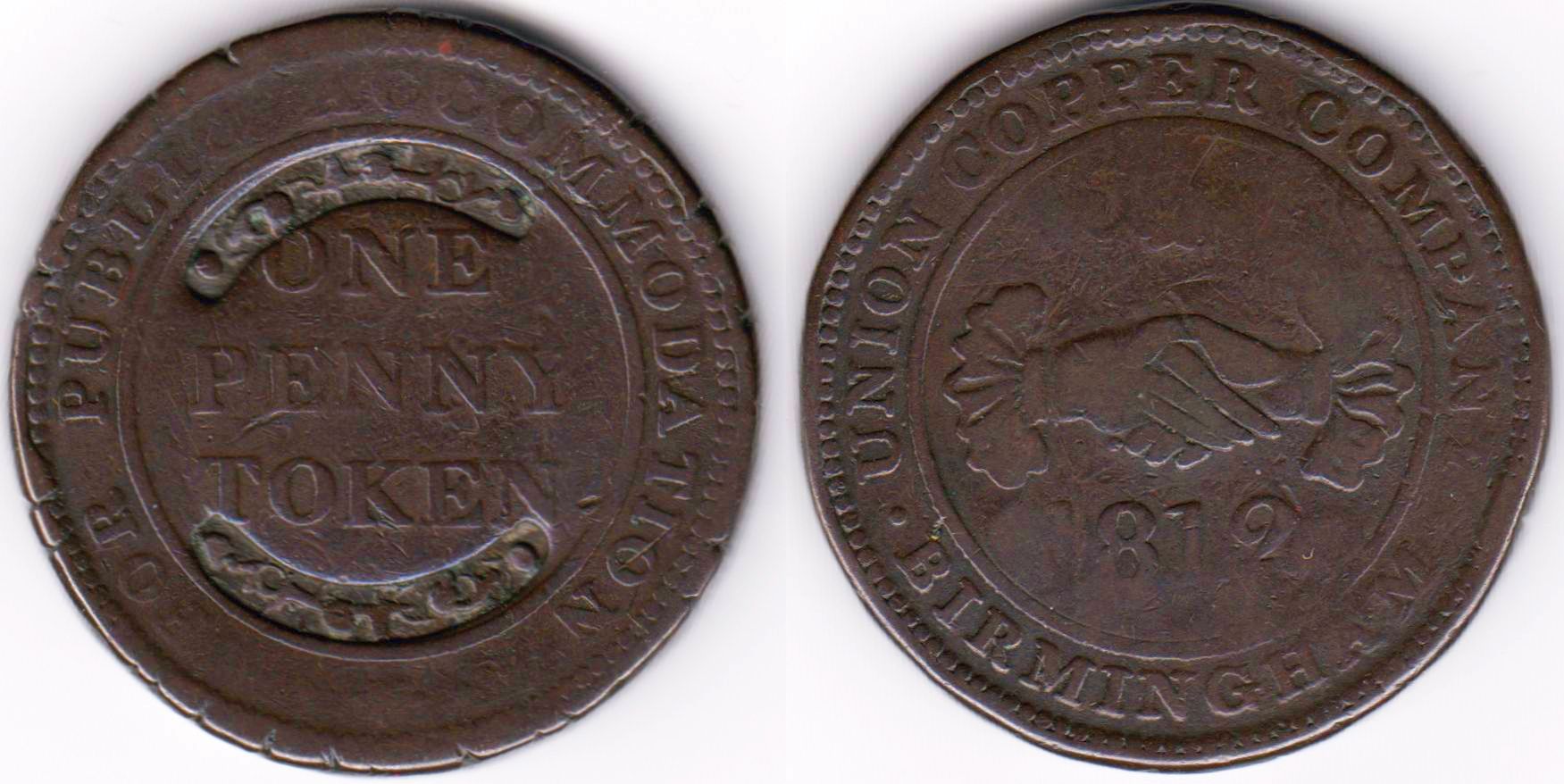 This is what the authentic cm looks like (W412): 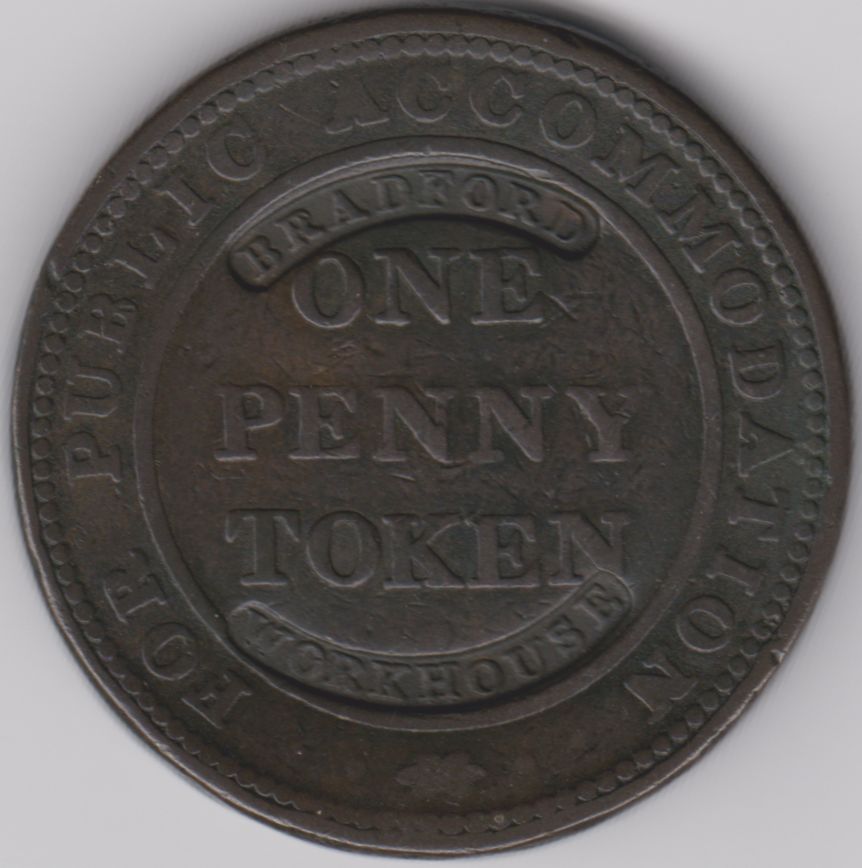 And my silver 3/- version: 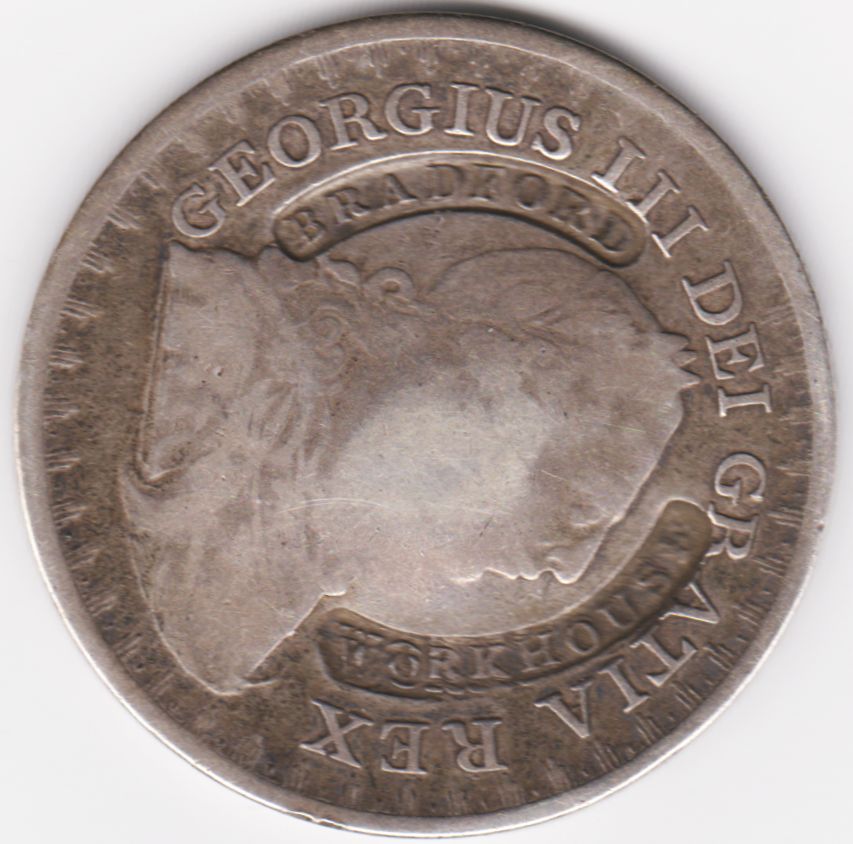 "If everything seems to be under control, you're just not going fast enough."
--- Mario Andretti
|
|
Pillar of the Community
United Kingdom
709 Posts |
Thanks Daltonista.
There is one possible scenario where it could have been worth making contemporary countermark counterfeits.
After tokens stopped circulating there was a short period in which workhouse tokens were still allowed. During that time if you had a pile of now useless copper tokens you could transform them back into money just by faking the countermark.
This is just pure speculation on my part. But if I, as pure as the driven snow, can come up with such a plan, I am sure my more devious ancestors could! Is there any evidence of something like this happening?
|
|
Pillar of the Community
United States
1077 Posts |
Anaximander, you just hit the jackpot! That's exactly the answer I was going to offer Parsley, if he'd ever made his way back to his own post here. Then I'd probably have gone into the laws a bit to explain how the workhouses were given until 1823 to continue circulating their tokens, which, as you point out, would have turned trash into treasure for anyone willing to create such confabulations as Parsley's and mine.
As for evidence, no smoking guns yet to my knowledge (like the execution of countermark counterfeiters), but my casual reading in the field over the last 35 years tells me that respected sources like Davis, Whiting, Bell, etc., have pretty much concluded that the tokens, countermarks, and counterfeits all speak for themselves and all point in the direction of your theory. I believe the underlying numismo-historical principle is "Why else?"
All of that leave me with this question: Why didn't it happen in Sheffield, where the workhouse minted gazillions of penny tokens in the four-year 1812-15 window? Neither "official" countermarks nor counterfeits have turned up, so I guess that one calls for more research on my part.
Way to go!
Tom
"If everything seems to be under control, you're just not going fast enough."
--- Mario Andretti
|
| |
Replies: 7 / Views: 2,485 |
|




 Posted 06/20/2020 3:01 pm





