PCGS - On March 1, 1932, a man by the name of Puyi became the Datong, or chief executive, of Manchukuo. It was just six days earlier that Puyi had accepted the offer with a drunken party to celebrate this event. This celebration included a wide variety of guests ranging from Japanese military generals to geishas. The latter were invited to come from Japan as entertainment. While the event was held in Puyi's honor, the geishas who entertained the new Datong didn't even know who he was. Puyi was once the child Emperor of China, last of the Qing Dynasty, abdicated, restored, then reversed after only 11 days. Now at the age of 26, he once again held a title but not rule. Puyi had accepted a deal to restore himself to power, and thus he became a puppet of Japan in their occupation and rule of the Chinese territories under the state of Manchukuo.
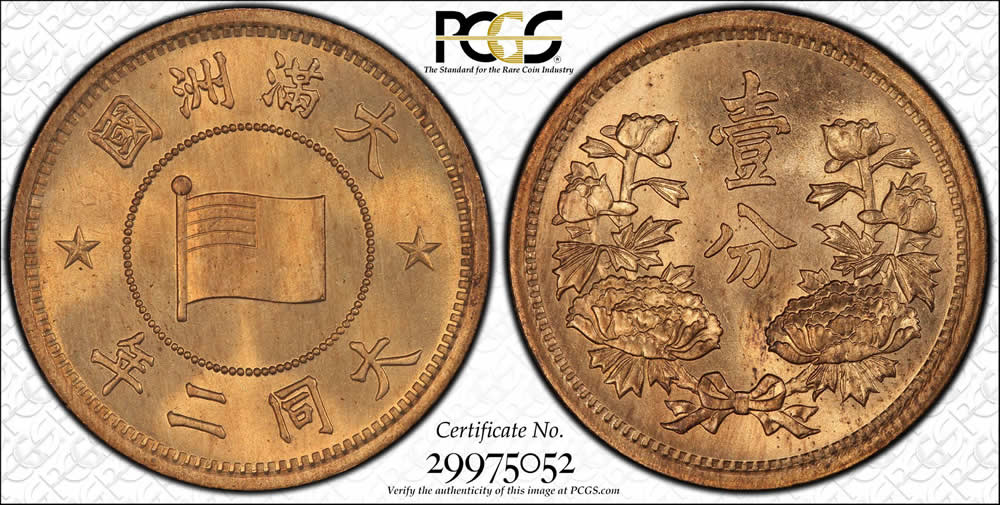
In 1931, Japan had invaded Manchuria, China, under the Manchurian Incident, where the Japanese staged an explosion of dynamite next to a railway owned by Japan's South Manchuria Railway. This explosion was so weak that the train tracks remained intact but became the pretext for invasion and occupation of Chinese providences. With the Chinese government fractured due to internal problems, warlords, and political struggles, Japan encountered little resistance in conquering Manchuria. Yet, being occupied and ruled by Japan would not be tolerated by the Chinese people of Manchuria.
Read the entire article.









 Posted 07/26/2020 09:20 am