| Author |
 Replies: 10 / Views: 1,821 Replies: 10 / Views: 1,821 |
|
|
Pillar of the Community
United States
7123 Posts |
Hi everyone
Third grade point VG-8
I thought it would be interesting to run a series of threads on grading criteria and what you may use to help determine the grades of circulated Lincoln cents , the object is to describe as close as possible how you would determine a grade of VG-8 , pictures are welcome as illustrations along with how you arrived at the grade of VG-8.
this will be a continuing series of posts with threads for all grade points from G-4 to AU-58 ,, Please keep each thread pure to the topic !
|
|
|
|
Bedrock of the Community
United States
10982 Posts |
Here's a couple ebay pics of a VG8:   What do you think? I'll be back later with another post. |
|
Bedrock of the Community
United States
10982 Posts |
Here's my take on VG8: Obverse: All letters clear, part of the ear present, some hair details must show. Reverse: Some wheat lines must show, the rim should be solid. As you can see in the ebay photos above, the coin is a solid VG8 on the obverse but the reverse looks G6. |
|
Pillar of the Community
 United States
7123 Posts |
I will be posting mine a little later tonight , I'm on my way pretty soon to town !
|
|
Bedrock of the Community
United States
20037 Posts |
Lincoln Cent Lover!VERDI-CARE™ INVENTOR https://verdi.care/
|
|
Pillar of the Community
United States
7123 Posts |
Baseline VG-8 Obverse Bust is worn flat, seperation between jaw and coat, hair details still indistinct only the deepest details of the outline show well,ear is mostly worn flat , bowtie is mostly visable ,Rim is full . Reverse Wheat shows some details in the stalk , some wheat lines are present ,lettering is clearly readable ,rims are full. coin may have moderate circulation marks ,dings ,nicks and abrasions ,finger prints , color brown or uneven color lighter and darker areas .   |
|
Pillar of the Community
United States
7123 Posts |
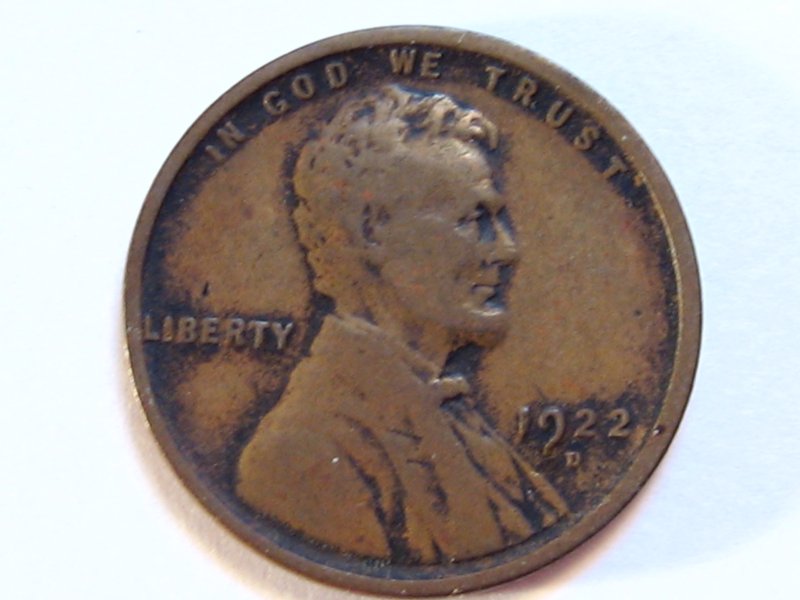
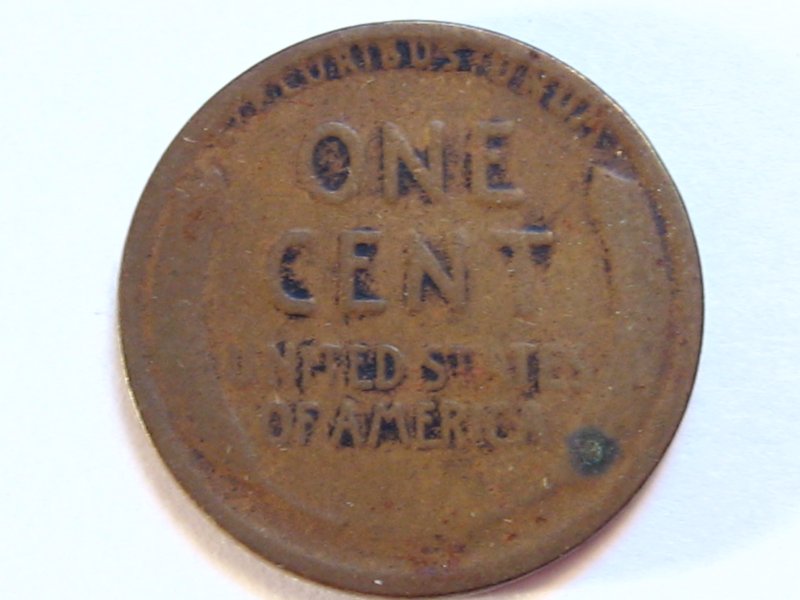
Thad whose picture is that ? they are not up to your normal standards . nice VG-10 22-D I notice the weak reverse on this coin !  The strike quality of actually many dies for many years in the lincoln series can be a wrench in the works when grading circulated cents , it helps to know which dates have known weak dies , the 22-D is a no brainer ,with both obverse and reverse weakness occuring in the mintage . in such cases and actually in most cases regardless of the date I divide the grade 60% obverse and 40% reverse . This particular coin has a bit to much ear to be baseline VG-8 but its a nice VG-10 piece .  |
|
Bedrock of the Community
United States
20037 Posts |
Quote:
Thad whose picture is that ? they are not up to your normal standards .
nice VG-10 22-D I notice the weak reverse on this coin !
The strike quality of actually many dies for many years in the lincoln series can be a wrench in the works when grading circulated cents , it helps to know which dates have known weak dies , the 22-D is a no brainer ,with both obverse and reverse weakness occuring in the mintage .
in such cases and actually in most cases regardless of the date I divide the grade 60% obverse and 40% reverse .
This particular coin has a bit to much ear to be baseline VG-8 but its a nice VG-10 piece . It's my picture of a coin I sold. It's a bit old, I was still learning when I took it. I wanted to use this coin, you understand why. The 1922D is a TOUGH coin to grade, at least for collectors. I've looked at a ton of them on ha.com (graded) and there's a distinct trend of the TGP's NOT accounting for die/strike weakness. They absolutely do not do it. They assign a technical grade and move on to the next coin. I suspect PCGS or NGC, if they would grade it all (rev verdigris), would call it G-6 on a good day. However, an experienced collector, understanding the series, would certainly grade this V8-10. Afterall, circulated grading is SUPPOSED TO BE ABOUT WEAR. Until you get to the higher MS grades, IMO, it's not fair to down-grade a coin on strike weakness or die state. VG-8 LincolnObverse: No separation between check and jaw. Hair details missing except for the deepest parts of the design. Some of the ear, besides the canal should be seen. Rim complete and not rounded in like on a Good scale coin. Some details on the coat should be present, especially on the lapel. Reverse: 20-30% of the wheat lines should show. The lines need not be full, but there must be some present. The rims are full and not rounded or merged. The entire wheat stalk should show some detail and not be completely smooth as on a Good coin. Overall: The coin may show some discoloration/uneven color. Dings, nicks, surface debris and other signs of heavy circulation may exist. Metalman - You picture is a PERFECT VG-8 example....I can offer no better. |
|
Pillar of the Community
United States
7123 Posts |
bherring1964 I agree with yur assessment of the coin you posted . do you remember when both side of the coin were graded independently ? Your coin would be a good candidate for such a grading practice . you could grade the coin you pictured VG-8 depending on which standard you use , PCGS or ANA or photograde . of course those guides today use the new standards and are a bit more liberal than the older standards . |
|
Bedrock of the Community
United States
20037 Posts |
I wish more people would give their opinions. I enjoy the learning and thinking experience too. Gathering collectors thought and opinions is a great learning tool. I was hoping to stir some posts up with my 22D. Time for F-12 yet? |
|
Valued Member
 United States
306 Posts |
Thanks for the lessons on VG-8. Can't wait for F-12 to start. I like circulated coins and this much more interesting than determining MS grades.  |
| |
Replies: 10 / Views: 1,821 |
|










 Posted 11/22/2008 10:28 pm