| Author |
 Replies: 12 / Views: 4,191 Replies: 12 / Views: 4,191 |
|
|
New Member
United States
3 Posts |
Just came across this coin in a local estate auction. It weighs 20.1 grams. What do you think? real or fake? I know there are more fakes of this coin than real so my chances are slim. But the weight is correct. 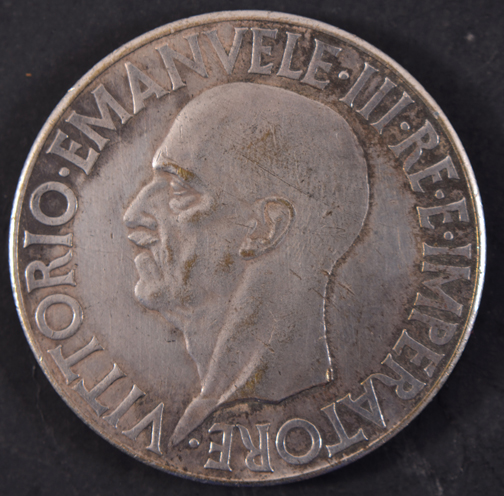 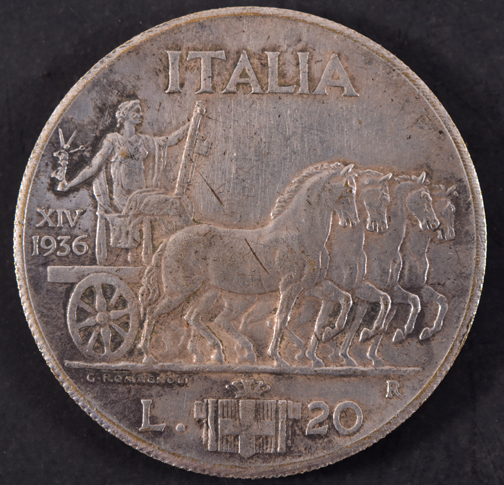 |
|
|
|
Pillar of the Community
United States
1915 Posts |
It has the color of a number of fakes I have. But that's just a photo, which by itself, is not a good diagnostic for me.
I have fakes with good weight's and bad, so being about right is also not a good diagnostic.
I have a step by step process to determine genuine or fake in my shop- we just can't do that here.
A good first step is to find out if it is .800 silver or not.
|
|
New Member
 United States
3 Posts |
Albert,
Thanks for your reply. That's very good info!
I also did an ice test (melted really fast) as well as the ping test (it has a wonderful sound!)
I realize these are not fool proof tests, but it does give me hope.
Do you suggest I get it graded/authenticated or should a good, local coin shop be able to help?
Edited by bagtosser
08/22/2020 11:34 pm
|
|
Pillar of the Community
United States
5362 Posts |
bagtosser That particular coin is often seen as a Numismatic Forgery (NF). That means it was expressly made not to circulate as currency but rather it was made to fool a collector. A counterfeit, in particular a Circulating Contemporary (or Contemporaneous) Counterfeit (CCC) was made to circulate along side genuine coins of the same type.
There is a world of difference. Most NF coins should be melted and are nearly worthless, while CCC coins are historic collectables with some value beyond metal content.
Both can be collected to illustrate the types that are not genuine.
Here there are some worrisome signs. The color and streaking of the color noted earlier, but also the appearance on the Reverse (date side) of the reeds. When a cheap cast copy is supplied with reeds, the forger often does that by forcing a stack of coins through a tapered ring die. The ring die contains the reeds cut in reverse and when the coins are pressed through the die some metal is dragged along leaving similar traces on the side that goes through the die last.
Some VERY tight collars can produce at time a somewhat similar appearance however here the effect looks incorrect.
I would start by presuming the coin is not genuine and work to prove it is real.
Specific gravity (to confirm 0.800 silver) will be difficult unless you own an analytical balance. XRF could be employed but unless you get a metals lab to certify the result I would not accept that alone. A handheld XRF in this case is almost useless for authentication unless in indicates a nickel or nickel copper alloy.
The best bet is to examine the edge under a 60-100X binocular microscope looking for the tell-tale signs of a ring die edging. I have explained that issue and what to look for before on this forum.
|
|
Pillar of the Community
United States
1915 Posts |
Swamperbob is right about SG and that's why I spent the big bucks to get some good lab equipment. But it's only because I collect and document fakes. What's frustrating is that many forum posters don't have large numbers of fakes and don't collect them. So they may lack the useful tools to satisfy the questions posted here. In this case, I'd see if the coin was diamagnetic, and if so, then SG looking to see a 10.14 or close to it, followed by a microscope exam and maybe some other things too. I feel so useless in posts like this because if I had the coin, I'd know the answer, but I don't.
|
|
Pillar of the Community
United States
5362 Posts |
Albert I agree with you completely that in hand it is often rather easy to identify fakes of both types. But having a coin in hand is a luxury and learning to spot the new fakes in photographs is critical.
Having collected CCC types for many years (now 63) and in the process trying to avoid NF types, I have learned to look for tiny clues that modern NF coins often possess - like the reed traces on one side in this case. Not fool proof but pretty good.
Pictures are far from worthless especially when it comes to fakes we have seen before.
|
|
Pillar of the Community
United States
1915 Posts |
I agree but I'm not there yet on a lot of posts here because so much is often lacking in photo quality. Very few posted pictures say much to me. It's not often that I suggest authenticity looking at posted photos. It does happen in cases where details are more obvious. I've been burned before by claiming authentic coins were fakes- so I'm gun shy to repeat that experience I had with egg on my face and being embarrassed among fellow collectors in my coin group. That was some years ago and a lesson was learned. I've seen quite a few posted pics here with authenticity questions I could have given an answer. I now have the tools and instruments to satisfy my own concerns and regret I can't help others. I just shy away from saying if good or bad looking at the picture.
|
|
Pillar of the Community
United States
5362 Posts |
Albert That is a sensible position. When I worked for ebay, we of course had to use pictures alone when we voted on authenticity. Absolute certainty was impossible in many cases but we had other "options". The ebay rules required that the pictures had to be clear. So we could ask the seller to post better picture or face termination. That usually resolved the issue, but it was time consuming. Since the Coin Watch Committee was terminated in 2013, ebay no longer takes a position on authenticity and leaves that up to the buyer alone. That policy is legally valid since ebay is a venue NOT an auctioneer. "Let the buyer beware" is a very legitimate position to take unless you represent yourself as an auctioneer.
|
|
Pillar of the Community
United States
1915 Posts |
I think the small 300Kb file size limit here is also a factor. And I suppose a lot of posters come across suspect coins so infrequently they may not have microscope cameras. One reason I don't post many detailed pictures of flaws on fake coins is because my pictures contain much more finer detail and the file sizes are too large exceeding the limit when adding an image to a post. I guess I could experiment to see if I could get a suitable image that fits. I'll try it some time and then see if I can post images of some of my more interesting counterfeits, fakes, flubs, flaws and forgeries.
|
|
Moderator
 United States
191802 Posts |
 to the Community! |
|
New Member
United States
48 Posts |
this is a really rare coin and most of the posters are right. The coin can be silver,too, but the weight is one certain factor. In Italy the coins are usually real if the weight is correct. That's because, I have been told by many Italian collectors that there is a law that allows the coins to be struck as long as the weight is off. There are some books about this showing the coins that are fake, but unless you collect Italian you probably have not seen them. Suffice to say if the weight is good and the rims are not thick but wire you might have a real coin here. It's worth sending to a TPG service. It might come back details scratched but at least you will know it's real. Commands $3-400 in that grade |
|
New Member
United States
3 Posts |
Thanks for all the replies. I will send the coin to get graded. Not so much for value but as a "need to know" thing.
Besides, I used the coin for a few lottery scratch tickets and won $200!!
|
|
Pillar of the Community
United States
5362 Posts |
bagtosser While I would not waste my money on a TPG for authentication, I hope that you let us know what the results are. Many times the thread remains unresolved.
|
| |
Replies: 12 / Views: 4,191 |
|










 Posted 08/22/2020 11:33 pm


