











 Posted 09/06/2020 7:27 pm


For anyone thinking, "Those lucky kids must be rich now"... no. That's not how archaeology in Israel works. It's certainly not "finders keepers".
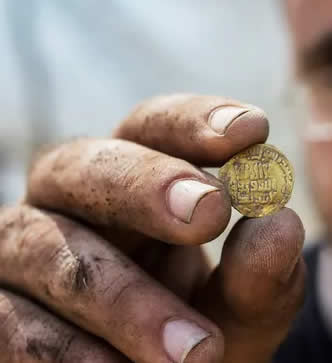
As they were found by National Service conscripts working on an official archaeological dig, these coins will remain the property of the State and would become part of a museum's collection. Being found in Israel, the coins may also become a focus of the politically-charged archaeological divide; they are Arabic coins, so these coins may be seen as "pro-Palestinian" finds; as they were found by (and will now be kept by) Israeli archaeologists, they may be perceived as not receiving the attention which Palestinian archaeologists would seek for them.
In any event, the coins will not end up in the hands of the finders, or collectors generally. The "finders reward" in this case will be getting their names in the acknowledgements of the research paper (or papers) that will eventually get published about the site and the finds, in a few years time.
As they were found by National Service conscripts working on an official archaeological dig, these coins will remain the property of the State and would become part of a museum's collection. Being found in Israel, the coins may also become a focus of the politically-charged archaeological divide; they are Arabic coins, so these coins may be seen as "pro-Palestinian" finds; as they were found by (and will now be kept by) Israeli archaeologists, they may be perceived as not receiving the attention which Palestinian archaeologists would seek for them.
In any event, the coins will not end up in the hands of the finders, or collectors generally. The "finders reward" in this case will be getting their names in the acknowledgements of the research paper (or papers) that will eventually get published about the site and the finds, in a few years time.
Don't say "infinitely" when you mean "very"; otherwise, you'll have no word left when you want to talk about something really infinite. - C. S. Lewis


