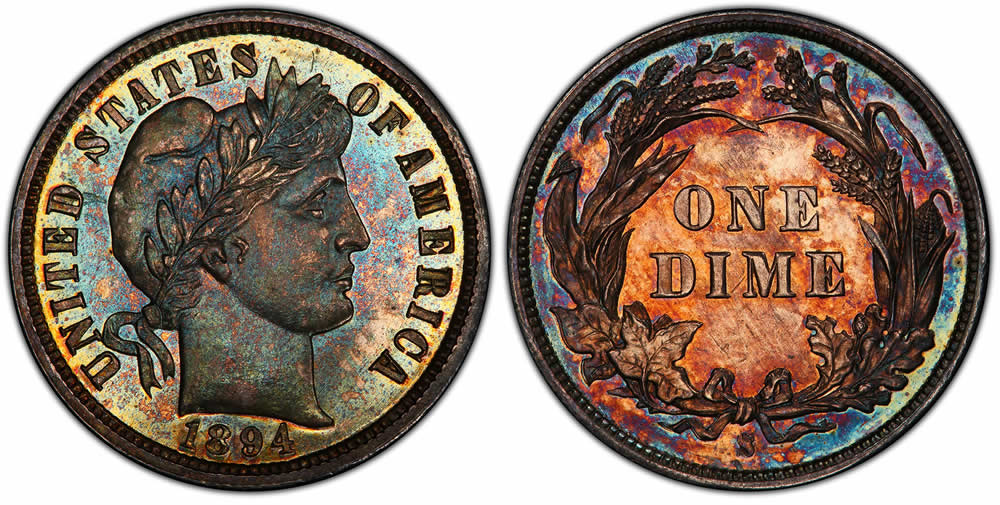
PCGS - The Barber coin designs of 1892 represented a new era for
United States coinage, which had featured the iconic Liberty Seated motif of
Christian Gobrecht since as early as 1836. Unlike circulating coin designs today, each dedicated to its own denomination, the Liberty Seated visage was seen on most circulating silver coinage of the period, including the
Half Dime, dime, quarter, half dollar, and dollar; the short-lived
Twenty Cent Piece of 1875-1878 bears a Liberty Seated design as rendered by
William Barber.
While the Liberty Seated design was a mainstay on
United States coinage for generations, calls for new designs emerged by the late 1880s. Further thrusting the move toward design changes was the recently authorized Mint Act of September 26, 1890, mandating that coin designs could be changed after being in use for 25 years. This meant that the dime, quarter, and half dollar were eligible for new designs. So, by late 1890, United States Mint officials decided to launch a design competition among 10 of the best-known artists of the time to submit designs for
United States coinage.
The 10 designers invited to participate included Herbert Adams, Kenyon Cox, Daniel French, Olin Warner Herbert, Will S. Low, Miller MacMonies, H.S. Mowbray, Charles S. Niehaus, Augustus Saint-Gaudens, and J.Q.A. Ward - all of whom were well respected in their artistic and engraving disciplines. Faced with a set of rules and regulations that they felt stifled creativity and promised too little reward for too much effort, the 10 artists uniformly agreed that terms of the competition were unfair.
Read the Entire Article 









 Posted 10/01/2020 2:32 pm


