PCGS - The
Liberty Seated coinage, one of the longest-running motifs on
United States coins, remains one of the most popular and widely collected 19th-century types. These coins were produced at a time when it was standard for multiple denominations to share a common design, as was the case with the Flowing Hair, Draped Bust, and Capped Bust designs that preceded the
Liberty Seated coins and the
Barber coinage that replaced "Seated" coinage beginning in 1892.
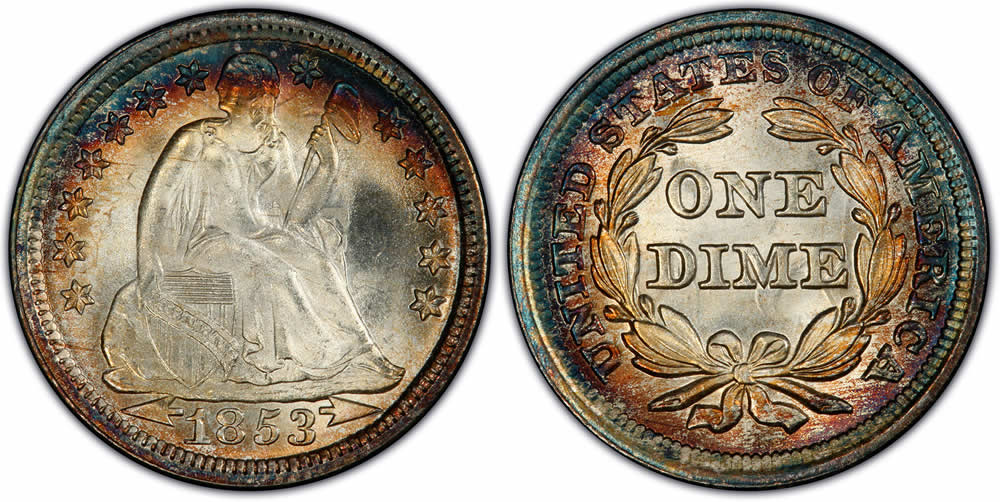
The Liberty Seated design as originally crafted by Chief Engraver of the United States Mint
Christian Gobrecht appeared on various silver coins between the late 1830s and 1891, including the
Half Dime (1837-1891), dime (1837-1891), quarter (1838-1891), half dollar (1839-1891), and dollar (1840-1873). It should be noted that Gobrecht's Liberty Seated motif appeared as early as 1836 on a limited run of so-called "
Gobrecht dollars" struck until 1839 and served as the inspiration for the virtually identical Liberty Seated design on the obverse of the
Twenty Cent Piece (1875-1878) and similar
Trade dollar (1873-1885), both latter types designed by Chief Engraver
William Barber.
While the Liberty Seated design constitutes a single type for each of the denomination on which the design was featured, there are a few important subtypes for most of the related denominations. Some of these involve the addition of decorative rays around the eagle or inclusion of the motto "IN GOD WE TRUST" inscribed on an ornate ribbon upon the reverse. Meanwhile, the obverse saw some important changes, too, including the addition of stars on the
Half Dime and dime and, on all long-running denominations from
Half Dime to half dollar, the appearance of arrows around the date.
Read the Entire Article 









 Posted 09/11/2020 5:26 pm


