PCGS - The One-Cent coin debuted in 1793 as the first circulating Federal coin for mass production, alongside only the
Half Cent. However, the
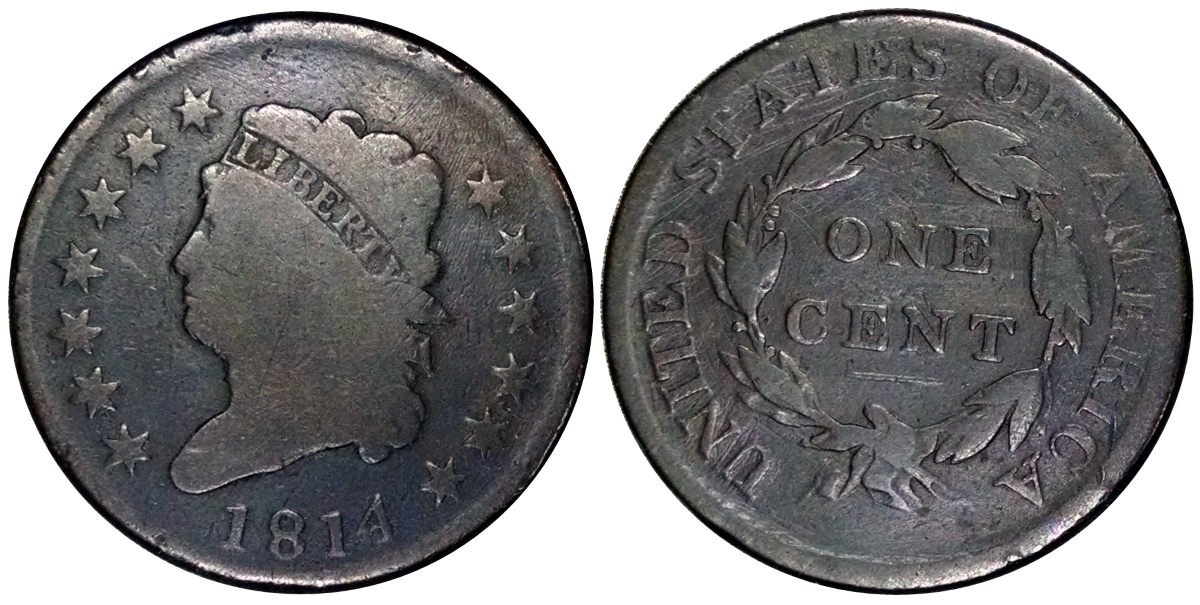
Half Cent was discontinued in 1857 while the One-Cent coin chugged along and is still in production today, making it the nation's longest-running denomination. Yet, there is one date during which the Cent was not struck, and that's the year 1815. But why were there no One-Cent coins struck in 1815, and what's the story behind the two types of 1814 Large Cents? It's a rather complex story.

Classic Head Cent, 1814 1C Plain 4, BN, PCGS MS67BNCopper & The War of 1812Coin production at the United States Mint had become erratic in the years leading up to the War of 1812 anyhow, with no
Half Cents struck since 1811,
Half Dimes off the production roster since 1805, and an absence of Silver Dollars and Gold Eagles since 1804. While silver and gold bullion for planchets came from various domestic resources, including melted foreign coins that were still circulating legal tender in the United States, copper planchets came from England.
The origin of the copper planchets from Boulton & Watt of Birmingham, England proved problematic during the War of 1812, which saw the United States declare war on Great Britain after the Brits, along with the French, held economic sanctions against the U.S. during the Napoleonic Wars. The U.S. Mint continued making Large Cents from on-hand surplus for 1812 and 1813, but in 1814, the United States Treasury ordered the mint to stop production of One-Cent coinage until further notice - a drastic directive that to this day came without known reason, even with copper planchets still on hand.
Read the Entire Article 








 Posted 10/22/2020 4:56 pm





