| Author |
 Replies: 11 / Views: 1,060 Replies: 11 / Views: 1,060 |
|
|
Valued Member
United States
108 Posts |
I found these two large cents in a large lot of coins. They are non-magnetic, and I really have no idea what they are made of, but they have the appearance of nickel. The 1919 is filed down on the edge, so this finish is not just superficial. Any clues? 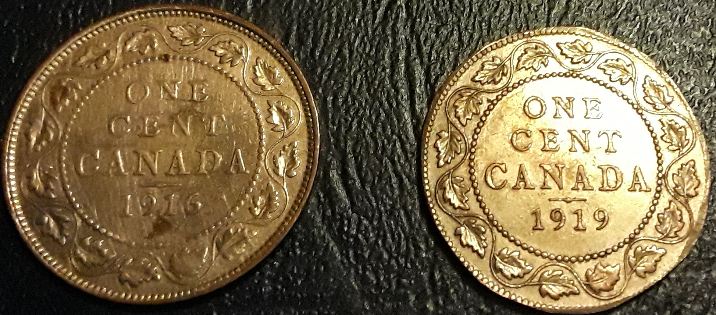 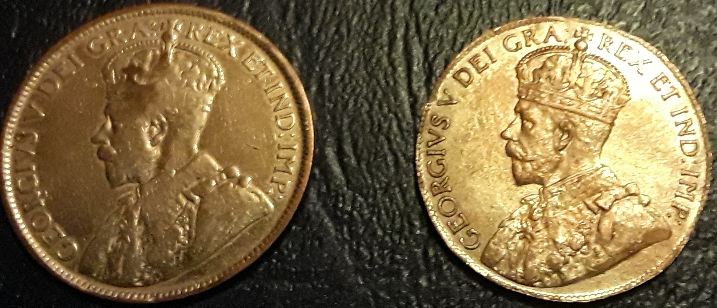 |
|
|
|
Pillar of the Community
Canada
2786 Posts |
nickel is silver in appearance,
those are just everyday bronze, Alloy: 95% copper, 4% tin and 1% zinc
|
|
Pillar of the Community
 Canada
9914 Posts |
Sure looks like normal bronze in those pics.
Nickel will stick to a magnet.
"Dipping" is not considered cleaning...
-from PCGS website
|
|
Valued Member
 United States
108 Posts |
I will try to get a better picture tomorrow. They are definitely not bronze.
|
|
Valued Member
United States
108 Posts |
|
|
Pillar of the Community
Canada
1636 Posts |
They look like they've been plated.
Do you have a weight?
|
|
Valued Member
United States
108 Posts |
The 1916 weighs 5.4 grams and the 1919 weights 5.2 grams.
|
|
Valued Member
United States
108 Posts |
The 1919 weighs less because the edge is filed down.
|
|
Valued Member
404 Posts |
They are chromium plated cents - you often encounter them in junk lots. They had a variety of uses such as key chains, encased pennies, etc.
|
|
Pillar of the Community
Canada
5670 Posts |
Definitely bronze (normal) and either plated or dipped in some chemical to change the surface.
|
|
Bedrock of the Community
United States
94367 Posts |
  to the CCF! |
|
Valued Member
United States
108 Posts |
I'll go with the chromium plate explanation, since this is apparently common. Thanks!
|
| |
Replies: 11 / Views: 1,060 |
|







 Posted 11/29/2020 11:35 pm