Coin Community Family of Web Sites Join Thousands of Coin, Bullion, & Money Collectors
Join Thousands of Coin, Bullion, & Money Collectors Specializing in Modern Numismatics Vancouvers #1 Coin and Paper Money Dealer 300,000 items to help build your collection! Royal Canadian Mint products, Canadian, Polish, American, and world coins and banknotes. Coin, Banknote and Medal Collectors's Online Mall Shop for APMEX Bullion on eBay!


Username:
Password:
Save Password
Forgot your Password?


This page may contain links that result in small commissions to keep this free site up and running.

Welcome Guest! Registering and/or logging in will remove the anchor (bottom) ads. It's Free!

"Live Science" Article About Bribe To Septimius Severus Of 700,000 AR Coins

To participate in the forum you must log in or register.
Author Previous TopicReplies: 5 / Views: 1,662Next Topic  
CCF Advertiser
Learn More...
louisvillekyshop's Avatar
United States
1304 Posts
 Posted 01/03/2021  12:29 am Show Profile   Bookmark this topic Add louisvillekyshop to your friends list Get a Link to this Message Number of Subscribers
Roman subjects paid emperor piles of silver to leave them alone, inscription reveals

By Mindy Weisberger - Senior Writer December 02, 2020

A stone inscription immortalized the emperor's gratitude for the generous 'donation.'
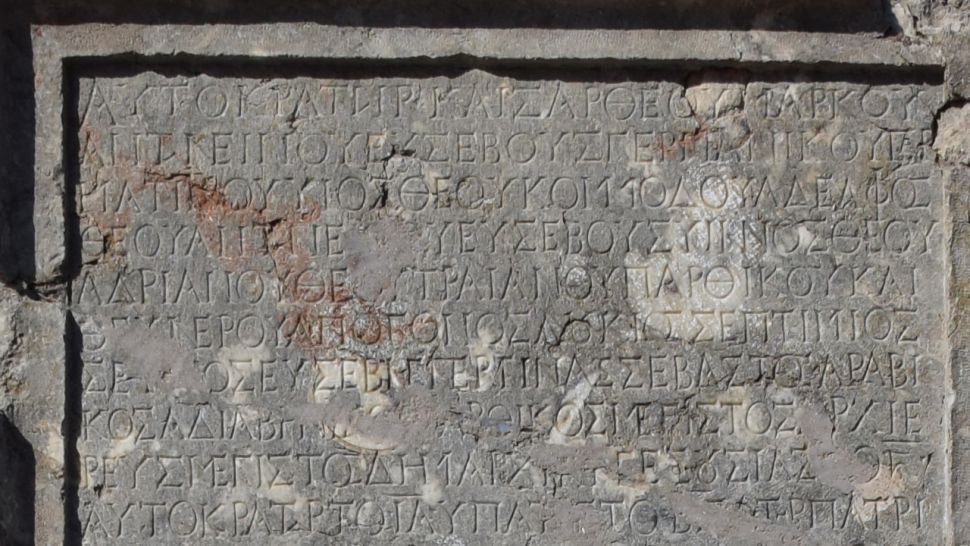


"You are men of good will and loyalty," said Roman emperor Septimus Severus in the letter.
(Image: © Courtesy of Kalin Chakarov)

An ancient Greek inscription dating to the second century A.D. is essentially a thank-you note for a shady cash gift, a new translation reveals. The inscription immortalized the words of a Roman emperor who accepted piles of silver from a city anxious to demonstrate its loyalty.

During a time of political upheaval in the Roman Empire, residents of the city Nicopolis ad Istrum, in what is now Bulgaria, backed an unsuccessful contender for the emperor's seat. After their champion's loss, they promptly sent the victor — Emperor Septimus Severus — 700,000 silver coins, as a sign of fealty.

Emperor Severus openly acknowledged accepting their donation in a letter that was sent to the town in A.D. 198, written in ancient Greek. The letter's text was then immortalized by the city as a stone monument. Scholars recently restored the broken artifact and translated the inscription, making it available to the public for the first time, a researcher with the restoration project told Live Science in an email.

Few letters penned by Roman emperors survived the era. In this rare example, Severus tells the town that he accepts their bribe, which he called a "cash contribution," according to the new translation by Nicolay Sharankov, an assistant professor in the Department of Classical Philology at Sofia University in Bulgaria.

Sharankov recently translated the text into Bulgarian and updated a prior English translation by James H. Oliver, said Kalin Chakarov, an archaeologist at the Regional Museum of History in Veliko Tarnovo, Bulgaria, and coordinator of the project that restored the stone monument and its inscription.

Buying mercy

Nicopolis ad Istrum was founded by the Roman Emperor Trajan at the beginning of the second century. It quickly grew to be a thriving metropolis, populated by artisans and full of sculpture and ornate architecture; the city even minted its own coins, according to the UNESCO World Heri... Centre.

But the city's inhabitants may have found themselves in a potentially dangerous predicament when Emperor Commodus was assassinated in A.D. 192. Five men vied for the vacancy; the city likely threw its support behind one of the losers and had to prove to the new Emperor Severus that they could be trusted.

"That's why they had probably decided to write a letter to the emperor, begging him for mercy, and bringing him the sum of 700,000 denarii (Roman silver coins) as a gift for their loyalty," Chakarov explained. "The recently restored monument is actually an answer of the Emperor Septimius Severus and his son Caracalla to the citizens of Nicopolis ad Istrum. They describe their victories and state that they receive[d] this gift by people who had taken 'the right side.'"

Because the emperor's response was so important to the town, they carved his words into a limestone monument standing about 10 feet (3 meters) tall and 3 feet (1 m) wide, and weighing about 2 tons (2 metric tons), Chakarov said.

When archaeologists discovered the carved slab in the city's ruins in the early 1900s, it was badly damaged and broken into burned fragments, Archaeology in Bulgaria reported. The monument was stored in pieces until the end of 2019, when a grant enabled scientists to begin the seven-month-long conservation process, Chakarov told Live Science in an email. Once the monument was repaired, it was installed at the Nicopolis ad Istrum site, next to a display of the translation in Bulgarian and English.

Emperor Severus was clearly pleased with the citizens' gesture, praising the townsfolk for their "zeal" and declaring "You have shown thereby that you are men of good will and loyalty and are anxious to have the better standing in our judgment of you."

But the emperor didn't just embrace gifts of money in his letter — he also lied about his credentials.

In the inscription, Severus describes himself as an heir of Emperor Marcus Aurelius, who ruled from A.D. 161 to A.D. 180. However, Severus' ancestors hailed from northern Africa; he was born in the city of Leptis Magna in what is now Libya, and he wasn't related to Marcus Aurelius — or the line of emperors that came before him, Sharankov told Archaeology in Bulgaria.

"With this letter, the emperor sought to legitimize himself before the people," Sharankov said.

Link to article: (But I pasted it all here in case the link went down at some point.)
https://www.livescience.com/roman-i...ruption.html


Edited by louisvillekyshop
01/03/2021 12:43 am
Pillar of the Community
oriole's Avatar
Canada
5239 Posts
 Posted 01/03/2021  07:39 am  Show Profile   Bookmark this reply Add oriole to your friends list Get a Link to this Reply
Politics..nothing has changed in 2000 years.
Pillar of the Community
Learn More...
tdziemia's Avatar
United States
7939 Posts
 Posted 01/03/2021  08:55 am  Show Profile   Bookmark this reply Add tdziemia to your friends list Get a Link to this Reply

Thanks for sharing that great story @louisville.

CCF Advertiser
Learn More...
louisvillekyshop's Avatar
United States
1304 Posts
 Posted 01/03/2021  11:29 am  Show Profile   Bookmark this reply Add louisvillekyshop to your friends list Get a Link to this Reply
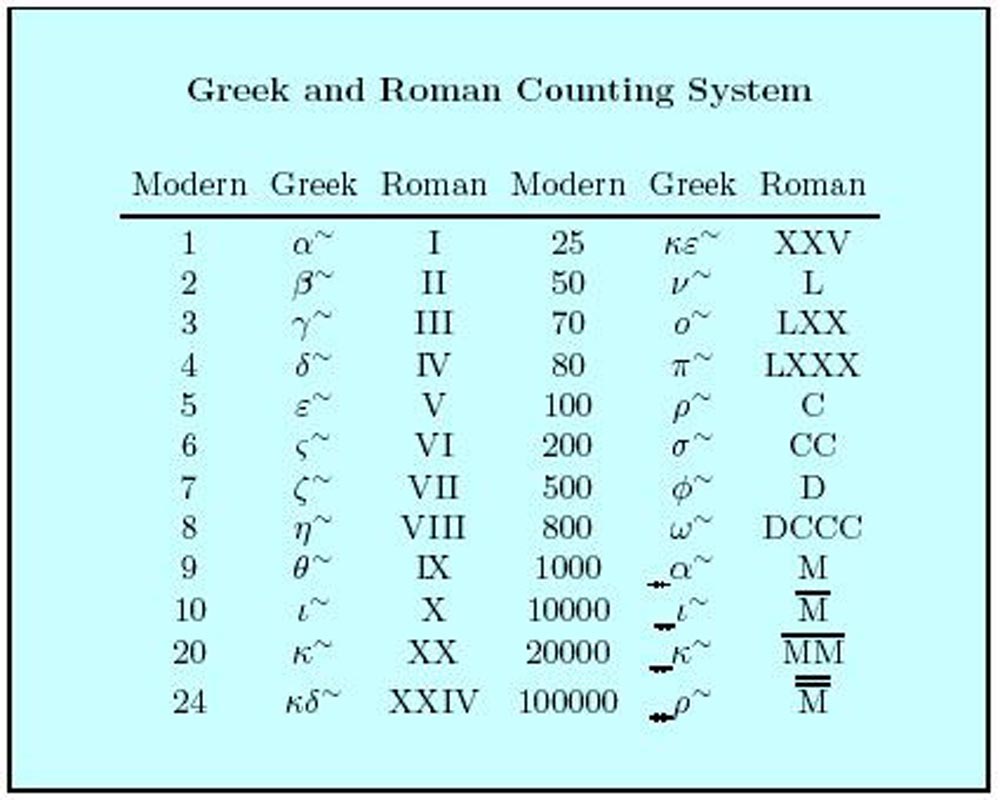
OK now I am thinking where the number 700,000 is written on this two metric ton giant limestone monument. Here is an image from a 2012 article by Gary Kasparov the chess player where he talks about ancient math and how numbers were wrote in Greek and Roman. It is clear the scientists found the number 700,000 in there so I should be able to as well.


Link:
https://blog.world-mysteries.com/sc...of-the-past/

Moderator
Learn More...
echizento's Avatar
United States
23731 Posts
 Posted 01/03/2021  2:49 pm  Show Profile   Bookmark this reply Add echizento to your friends list Get a Link to this Reply
Bribery a way of like in those days saved many cities from being destroyed by the Roman Army. Very enjoyable article.
Moderator
Learn More...
Sap's Avatar
Australia
16817 Posts
 Posted 01/03/2021  11:33 pm  Show Profile   Bookmark this reply Add Sap to your friends list Get a Link to this Reply
According to one of the websites linked to in the article, the full text is 37 lines long, and the number 700,000 appears down near the bottom. Here is the translation, from ancient Greek, to Bulgarian, and then to English:

Quote:
Emperor Caesar Lucius Septimius Severus Pius Pertinax Augustus,

Conqueror of Arabia and Adiabene, and Greatest Conqueror of Parthia

Son of the deified Marcus Aurelius Pius, the victor in Germania and Sarmatia

[Marcus Aurelius], brother of the deified Commodus, grandson of the deified

Anthonius Pius, great-grandson of the deified Hadrian, and descendant of

The deified Trajan, the victor in Parthia, and of the deified Nerva,

Supreme priest, holding the tribune power for the sixth time,

Eleven times proclaimed emperor, twice consul,

Father of the fatherland, proconsul, and Emperor Caesar Marcus Aurelius Autonius

Augustus [Caracalla], son of

Lucius Septimius Severus Pius Pertinax Augustus,

Conqueror of Arabia and Adiabene, and Greatest Conqueror of Parthia,

Grandson of the deified Marcus Aurelius Pius, the victor in Germania and Sarmatia,

[Marcus Aurelius], great-grandson of the deified Anthonius Pius,

Descendant of the deified Hadrian, the deified Trajan,

The victor in Parthia, and of the deified Nerva, with tribune power and proconsul,

Greet the archons, the city council, and the people of Nicopolis ad Istrum.

We have seen your remarkable devotion declared in our decree.

As well-meaning and loyal people striving to receive a more

Favorable assessment in our eyes, you have clearly shown

That you share our joy from the recent events; you have also conducted

Mass celebrations at the news for our successes - the common peace

Which has arrived for all people thanks to the victory

Over the barbarians who constantly embolden themselves to attack the empire,

And the joint leading of the state by the two of us in just collaboration,

Together with the legal Caesar [Geta] belonging to our family.

That is why we have read the decree with the due respect to

The monetary installment of 700,000 [denarii] as coming from well-meaning people.

Our friend and legate, the excellent Ovinius sent the decree.

Unfortunately, the translation is not broken down line-by-line. I believe this picture contains the end of the text, so the number should be in the second-last or third-last line here:


I would also point out that, if they're not entirely sure the monetary unit is "denarii" (with the brackets denoting uncertain translation and/or missing/damaged text), then it could well be 700,000 sestertii, rather than denarii, that was sent - I believe the sestertius was still the money of account in the Empire in Septimus' time period. 700,000 sestertii would "only" be 175,000 denarii.
Don't say "infinitely" when you mean "very"; otherwise, you'll have no word left when you want to talk about something really infinite. - C. S. Lewis
  Previous TopicReplies: 5 / Views: 1,662Next Topic  

To participate in the forum you must log in or register.


Disclaimer: While a tremendous amount of effort goes into ensuring the accuracy of the information contained in this site, Coin Community assumes no liability for errors. Copyright 2005 - 2026 Coin Community Family- all rights reserved worldwide. Use of any images or content on this website without prior written permission of Coin Community or the original lender is strictly prohibited.
Contact Us  |  Advertise Here  |  Privacy Policy / Terms of Use

Coin Community Forum © 2005 - 2026 Coin Community Forums
It took 0.33 seconds to rattle this change. Forums