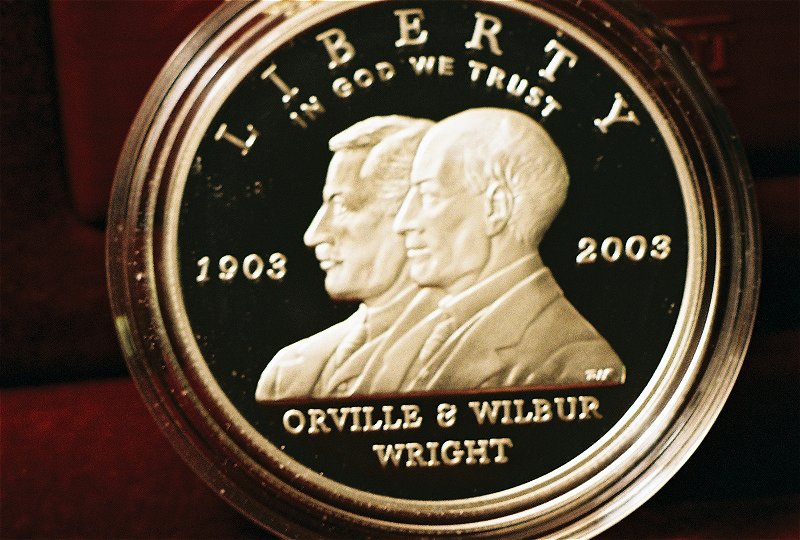
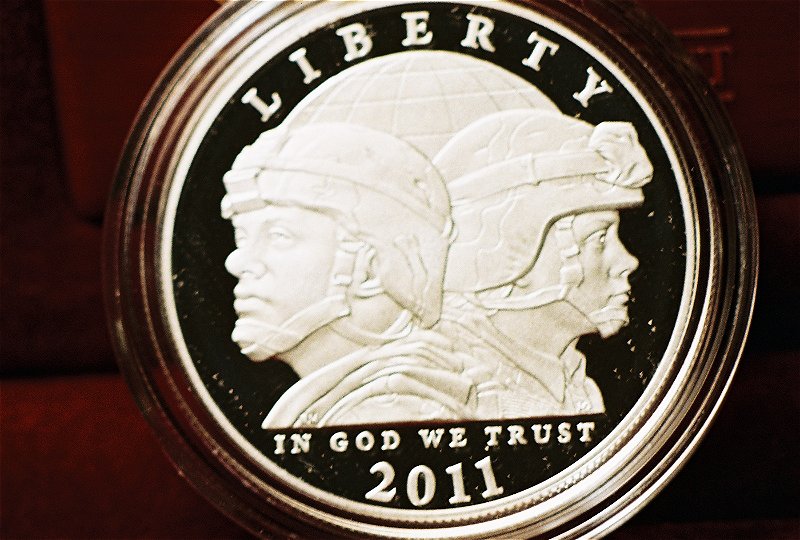
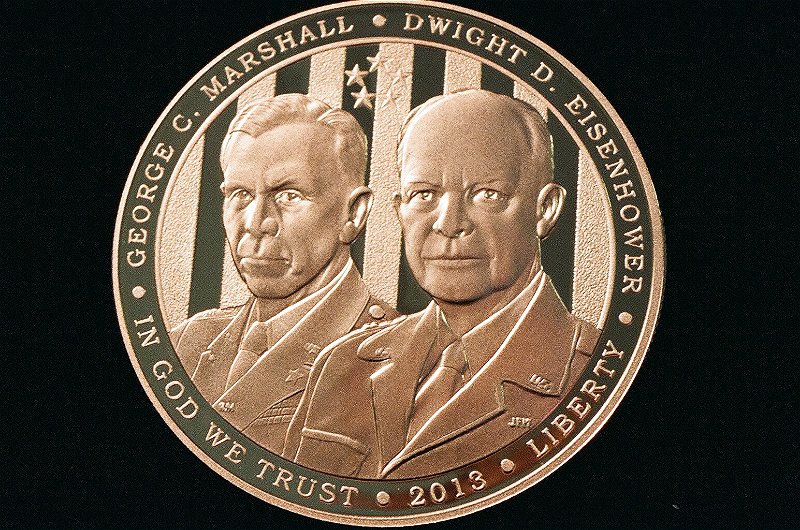
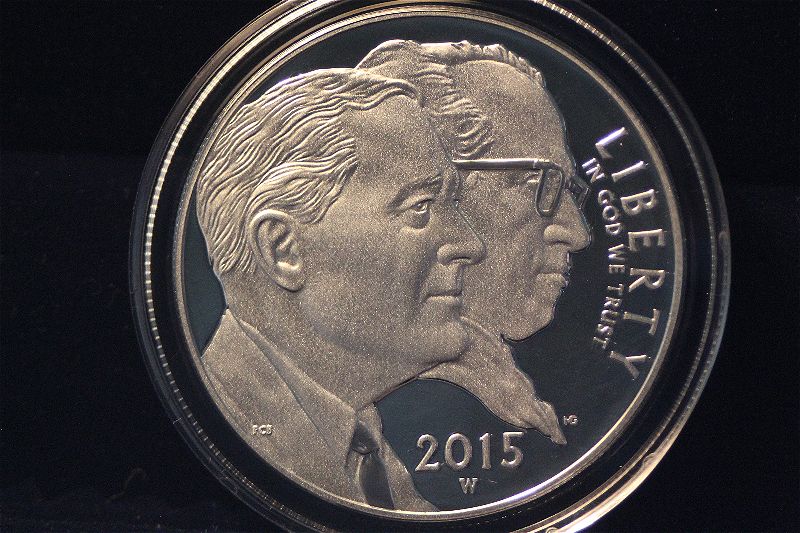
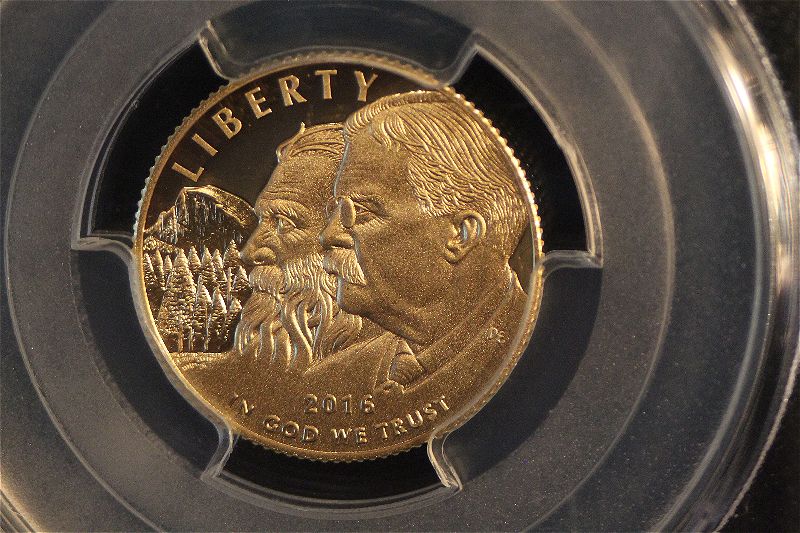
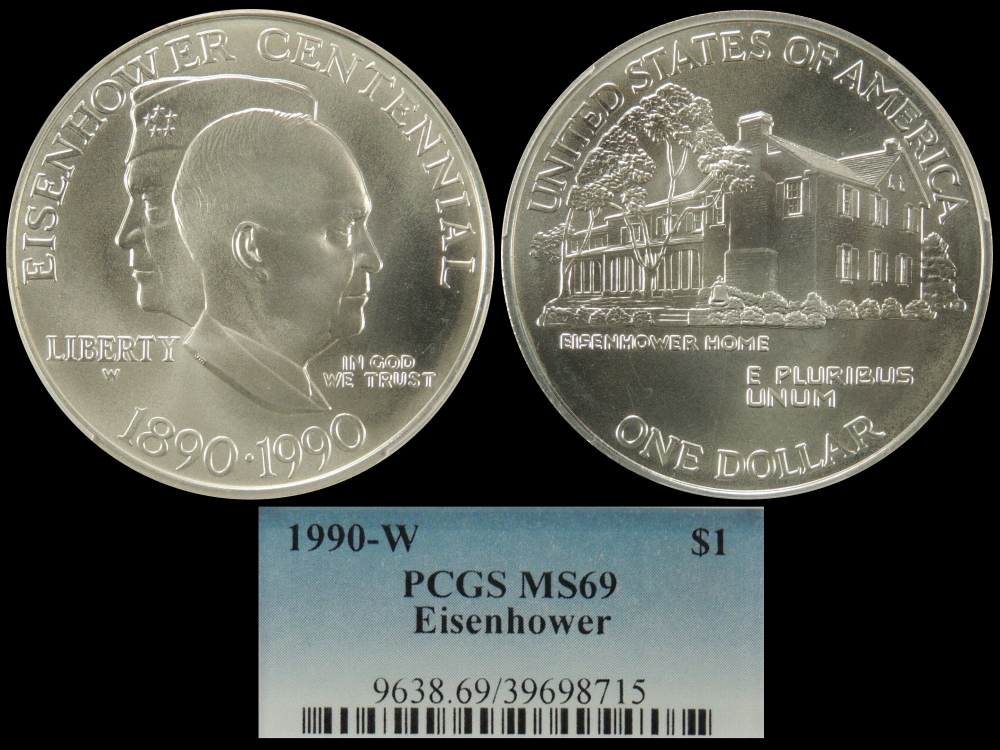
The use of conjoined (or jugate) portraits within the classic series of US commemorative coins was quite popular with ten of 48 half dollar types - 21%! - making use of the design approach.
The first coin to feature conjoined portraits was the 1900 Lafayette Memorial Dollar which depicts George Washington (forward portrait) and Frenchman Marie Joseph Paul Yves Roch Gilbert du Motier, Marquis de Lafayette who was instrumental in helping the American forces defeat the British in the US' Revolutionary War.


There was roughly a 20-year gap until the next issue, the 1921 Alabama Statehood Centennial half dollar, was released. The coin depicts William Bibb, Alabama's first governor in 1819 and Thomas Kilby, the state's governor in 1919.
(Note: Kilby was the first living person depicted on a US coin.)

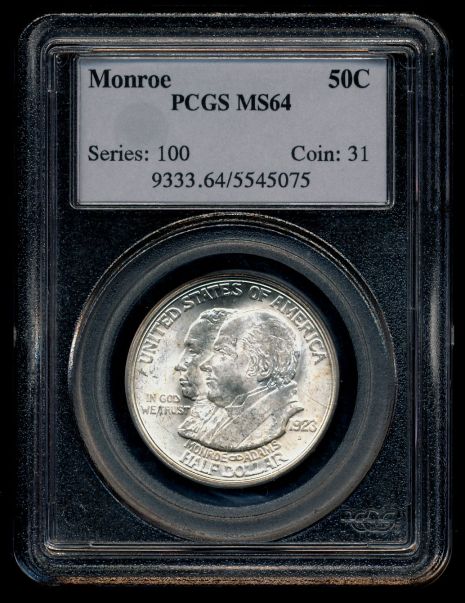
The early- to mid-1920s was a popular time for coins with conjoined portraits. During this period, the 1923
Monroe Doctrine Centennial coin, featuring circa 1823 President James Monroe (rear portrait) and Secretary of State John Adams was released. It was soon followed by the 1924 Huguenot-Walloon half dollar which depicts Admiral Gaspard de Coligny (forward portrait) and William the Silent.


In 1926, the American Independence Sesquicentennial half dollar was issued with portraits of George Washington (forward portrait), the first US President, and Calvin Coolidge, the president in 1926.
[Note: Coolidge was the first sitting US president to appear on a US coin; he was the second living person ever to appear on a US coin.]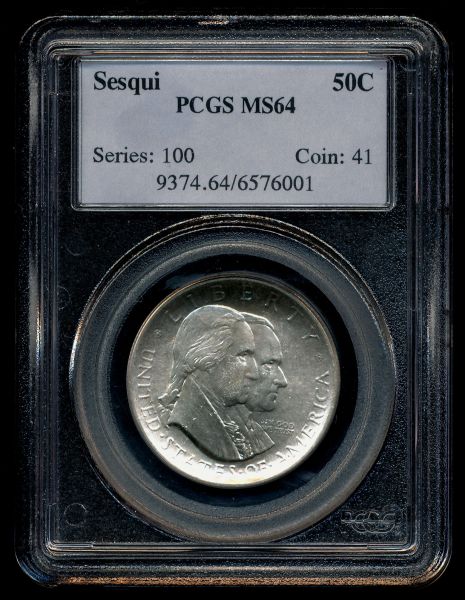

A near decade-long gap then occurred, with the next coin with conjoined portraits not appearing until 1935 when the Arkansas Statehood Centennial commemorative program was launched; the state marked its centennial in 1936, but its commemorative coins were issued annually from 1935 through 1939. The coins feature conjoined portraits of Miss Liberty (forward portrait) and a representative member of the local Quapaw tribe of Native Americans.


The 1936 Long Island Tercentenary half dollar followed. It presented a representative Dutch colonist (forward portrait) and a representative member of the local Algonquin tribe of Native Americans.


The Battle of Gettysburg half dollar was next, it was struck and released in 1937 (though dated "1936"). The coin features portraits meant to be representative of the Union (forward portrait) and Confederate soldiers who fought at the battle. The Battle of Antietam half dollar was also struck and released in 1937. It features Union General George McClellan and Confederate General Robert E. Lee (forward portrait).
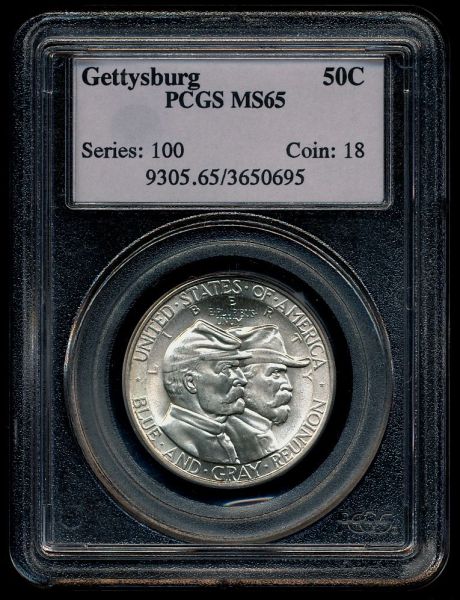

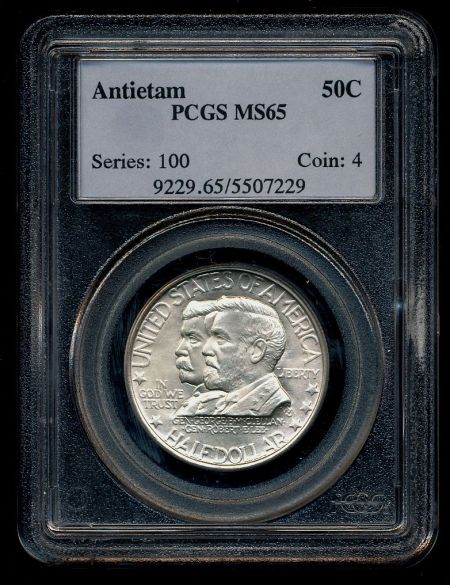

The final US classic commemorative coin with conjoined portraits didn't appear until 1951, with the release of the Carver-Washington half dollar; the coin depicts George W. Carver (forward portrait) and Booker T. Washington.


As I also consider the coins struck for the US Territory / Commonwealth of the Philippines to be
US coins (they include "United States of America" on them!), I need also mention the two One Peso commemorative coins issued to mark the Philippines' transition from Territory to Commonwealth in 1935. The first Peso features portraits of Manuel Quezon (forward portrait), the first president of the Commonwealth, and Frank Murphy, the last US Governor-General of the Philippines; Quezon and Murphy also appear on the US-PI 50 Centavos commemorative coin but are depicted as facing each other vs. conjoined. The second Peso depicts Quezon and US President Franklin Delano Roosevelt; Roosevelt is shown behind Quezon's portrait but his portrait is moved out from behind Quezon's to show more of his profile.


So, just like with countries around the world, conjoined portraits have proven to be a popular design approach for US commemorative coins - they make for an interesting subset of the overall series!
I've posted about all of the above coins, you can find them here -
Read More: Commems Collection.







 Posted 01/03/2021 9:08 pm