PCGS - The series of United States proof coins struck from 1936 through 1942 represents a popular run of proof coinage that promises both challenge and opportunity to adventuresome collectors. It numismatically captures a short and colorful period at the U.S. Mint, which had returned to striking proof coins after a 20-year hiatus that began in 1916. It was during the mid-1930s that the United States was just beginning to see signs of economic hope after the mire of the Great Depression, which plunged most Americans into financial despair. U.S. involvement in World War II was on the horizon, and it was the key reason the U.S. Mint yet again placed a prolonged moratorium on striking proof coins beginning in 1943.
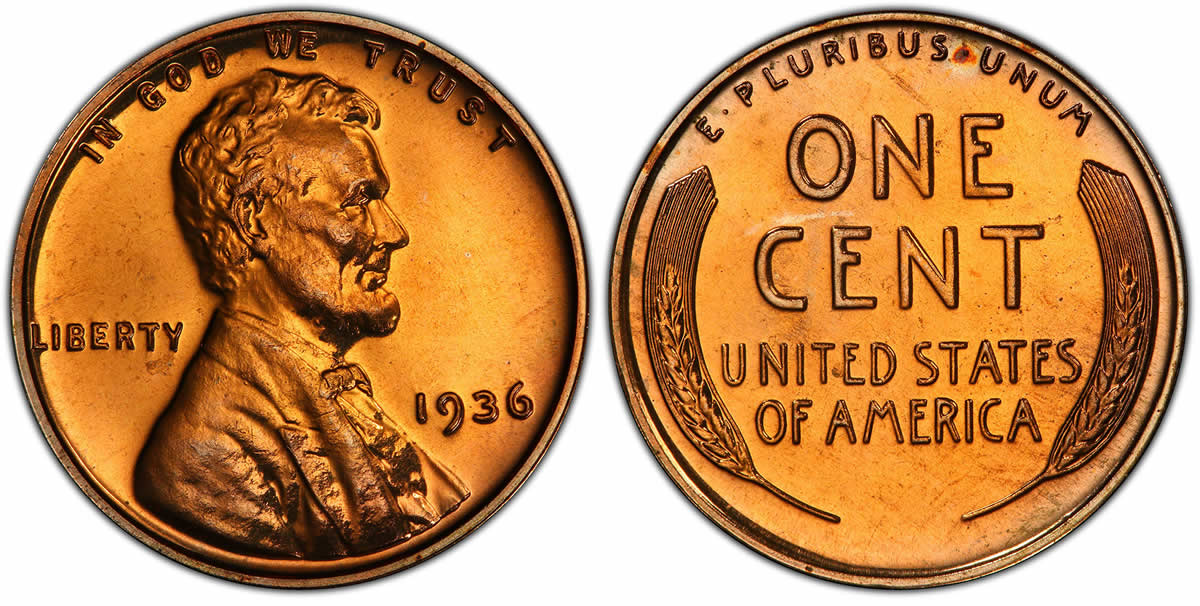 Lincoln Cent (Wheat Reverse), 1936 1C Brilliant, RD, PCGS PR67RDThe Dawn of Modern Proof Coins
The modern proof set era officially began on April 28, 1936 - the first day United States proof coins were distributed to the public following a generation-long interlude of regular-issue U.S. proof coinage that began in 1916. The decades-long gap in striking regular proof coins for collectors is often cited as the cause of a memory gap that may have existed in 1936 among U.S. Mint coiners, perhaps having forgotten exactly how to produce the brilliant proof coinage that was customary at the mint in the 19th and early 20th centuries.
The earliest
Lincoln Cent,
Buffalo nickel, and a handful of
Mercury dime Proofs from 1936 bear a satin-like finish that appears akin to business strikes of the period. These early matte-like 1936 proofs, classified by collectors as "Satin" or "Type I" Proofs, proved rather unpopular with collectors at the time. By the end of 1936, brilliant proof strikes with sharper design details had been perfected and became the standard level of quality in U.S. proof strikings moving forward.
These sharper, more brilliant 1936 proof pieces are known as Type II Proofs and represent the smaller share of 1936 proof coinage, which all told is scarce anyway. While the Type I Proofs are more common among the 1936 Lincoln Cents and
Buffalo nickels, the reverse is true regarding 1936 Proof
Mercury dimes - nearly all are of the Type II variety, with only a handful known exhibiting Type I proof strike features. Proof coinage struck from 1937 through 1942 bears the brilliant fields and sharply struck devices and details that were seen on much of the 19th-century proof coinage produced by the United States Mint. Moving forward along the proofs of this short-set period, the brilliant, mirror-like surfaces are the norm.
Read the Entire Article 



 Posted 05/19/2021 4:33 pm





