| Author |
 Replies: 11 / Views: 3,647 Replies: 11 / Views: 3,647 |
|
|
Valued Member
United States
220 Posts |
All,
I am curious about what I call "finishes" of some modern memorial pennies. I have many newer pennies (1980 to 2000) which I would say are four different "finishes." The first is a "clean" finish (pretty much the standard). The second is "grainy" with a consistent tiny grain pattern over the full surfaces. The third is is a consistent directional "brushed" finish all over the surfaces (not any evidence of cleaning as far as I can tell). Lastly, there is what I would describe as "marbled" with "extra metal?). A great example of this is the MS-68 example on the PCGS photo grade site. (I do realize that the value of these is relatively low except for errors and grades MS-66 and above.)
Could anyone please tell me if/how grading would be affected on those different from the regular matte finish?
Thanks.
Bill
|
|
|
|
Pillar of the Community
 United States
6514 Posts |
For starters I would guess that the 'grainy' finish you see are only on Zincolns. The cause of the grainy look and texture is zinc dust left behind during the copper plating process.
|
|
Pillar of the Community
1110 Posts |
 with chafemasterj. |
|
Pillar of the Community
United States
4963 Posts |
Here's PCGS's example of an MS68. 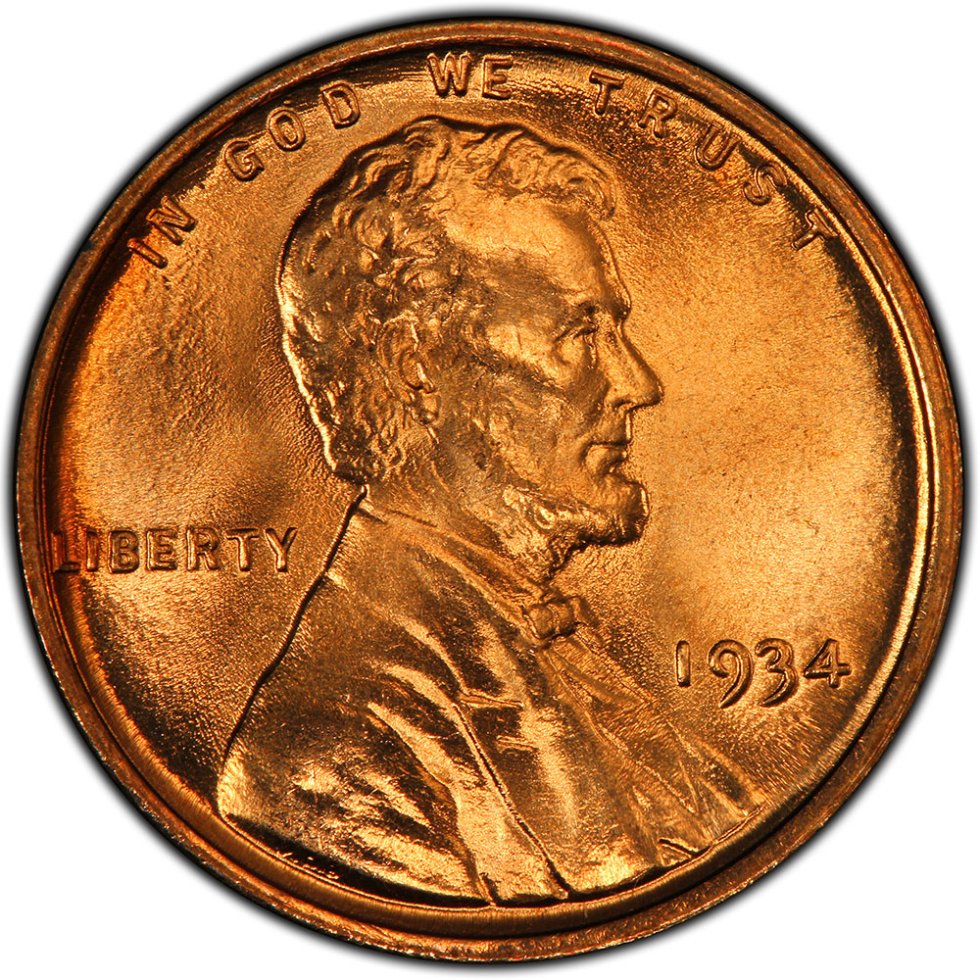 That just looks like a coin struck by later-stage dies. |
|
Valued Member
 United States
220 Posts |
OK. Thanks. I'm going to post some phots of some of these different types for grading advice later today.
:)
Bill
|
|
Valued Member
United States
220 Posts |
All, Here is one of the "marbled/excess ink" pennies I mentioned. Could someone please comment on what happened during minting and provided a grade estimate? Thanks. (more of the different "finishes coming) :) Bill 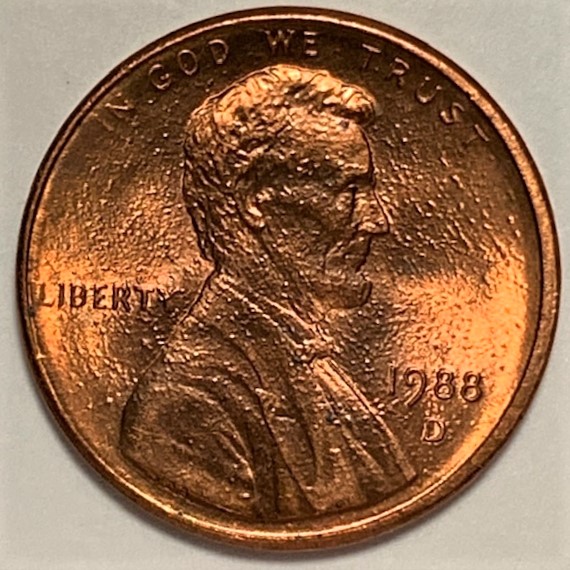 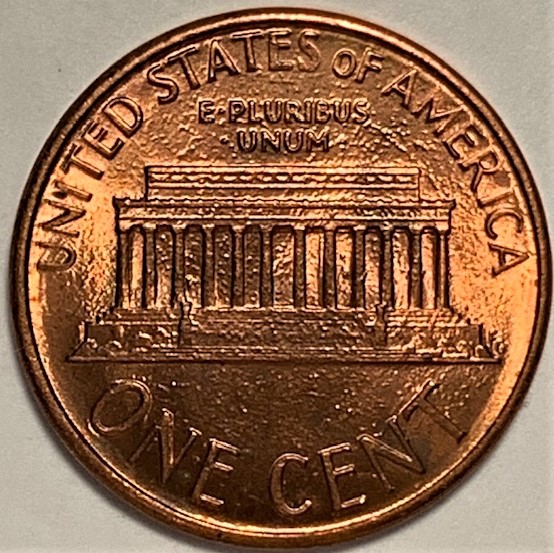 |
|
Moderator
 United States
198363 Posts |
Bumps are formed from gas or dust trapped under the copper plating on the zinc planchet.
|
|
Pillar of the Community
United States
1667 Posts |
"The third is is a consistent directional "brushed" finish all over the surfaces " Is the below what you mean? If so this is "roller lines". it happens when the sheet of metal is brought to spec thickness and uniformity, when the rollers have debris on them or getting worn out.   Edited by Big-Kingdom
01/26/2021 3:07 pm
|
|
Pillar of the Community
United States
6514 Posts |
Huh. I am not an expert. I learn ~at least~ one thing a day here. I find that last one you posted interesting. It looks like the 'stripes' cross the whole obverse from 10:00 to 4:00. The reverse in just the NE quadrant. I'll be curious what the pros have to say.
Check out my counterstamped Lincoln Cent collection: http://goccf.com/t/303507Edited by chafemasterj
01/26/2021 3:23 pm
|
|
Pillar of the Community
United States
1667 Posts |
I found this one in 2005 and put it up since then, I was roll hunting pennies pretty hard that year trying to find nice business strike cents to keep since the 2005 mint set was satin finish that year. There is a weaker area of it on both sides, on the left side right around 9 o'clock, between 7 and 10 o clock but the lines are still visible, the lighting and the camera didn't pick them up well. the lines are uni-directional on a coin flip also. I went through all types of plating blisters, but this much and same directions on both sides blisters, even linear blisters is highly unlikely. I've poked around on it with toothpicks enough times and it's not blisters, they are incused lines under the plating in the zinc I believe, not bubbles under the plating. nothing depresses or moves no matter what I push on and if you drag the toothpick you can feel the ridges. I was also thinking for a bit maybe an abused heavily abraded die pair after a clash,,, but the pattern seems wrong for that, and no sign of a clash or detail loss. not saying it's a mint error or has any value either beyond an oddity in the planchet making process, there's no collector demand as far as I'm aware for something like this. LOL Not sure if the lines left by the rollers were so severe the strike couldn't obliterate them, or if the strike was weak pressure, but still strong enough to strike up well. Here's a Nice 2005 cent. but it's through the flip so the picture doesn't do it justice but it's all I have at the moment. I never found A 2005P this nice. Also my phone's camera is a potato, there's that also. hahaha   Edited by Big-Kingdom
01/26/2021 4:19 pm
|
|
Valued Member
United States
220 Posts |
Thanks all. I have a few like the last one above, though not quite as nice as that. I'm still looking for some grading help with my "marbled/excess ink" penny (i.e., the effect of the surface finish on grade/value).
thanks,
Bill
|
|
Bedrock of the Community
United States
20070 Posts |
The "types" you are describing are simply artifacts of the minting process. The lines are in the planchet caused by the roller mill when the sheets are rolled out. I started some discussion here: http://goccf.com/t/391620You 1988D is a great example of plating blisters. A common occurrence with Zincolns. It affects the grade by reducing eye appeal. I've seen coins grade very high (65/66) with a surprising amount of bubbling - but not nearly as bad as yours. I would grade your coin 65RD. 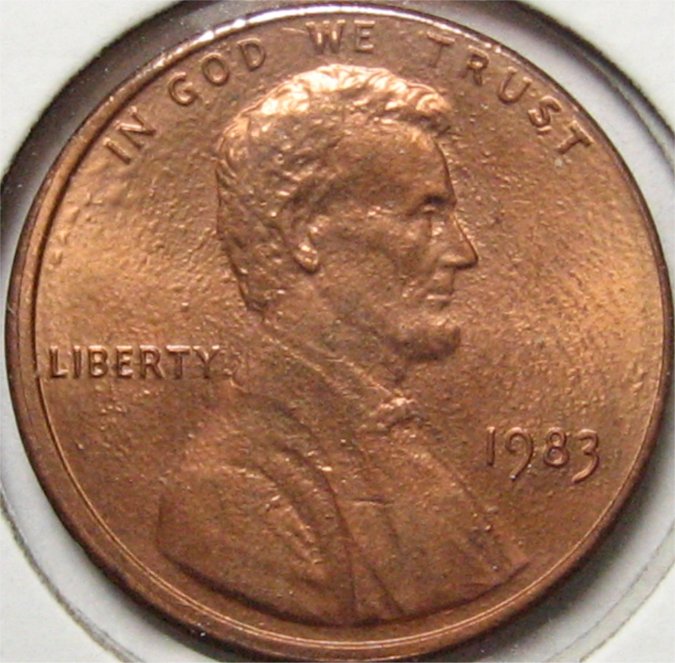 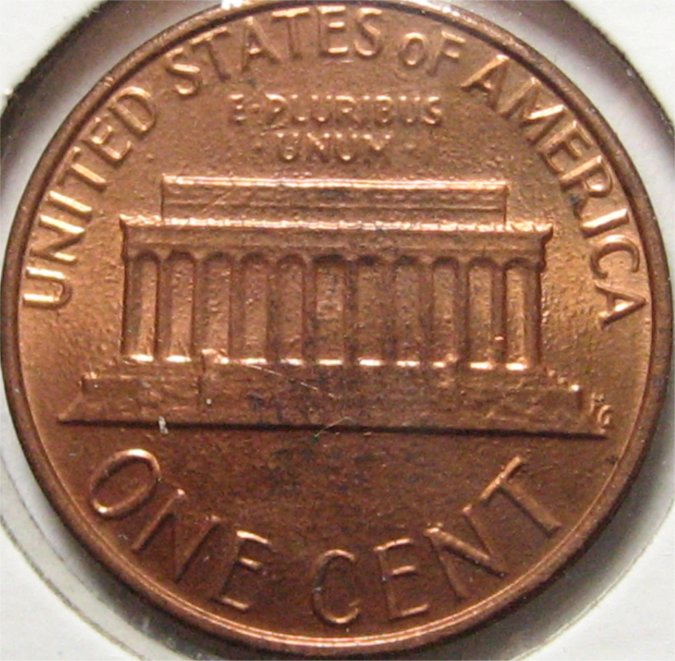 |
| |
Replies: 11 / Views: 3,647 |
|




 Posted 01/23/2021 3:14 pm





