PCGS - The
Barber half dollar enjoys popularity among collectors of both 19th-century and 20th-century type coinage, as the series designed by
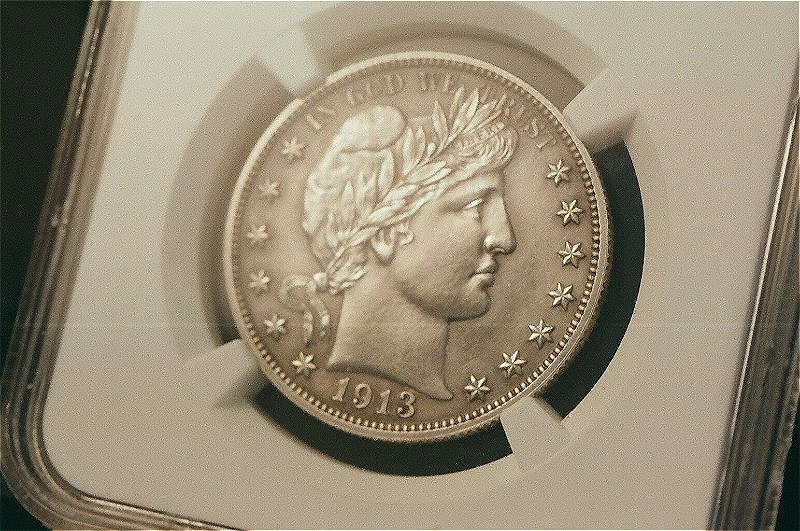
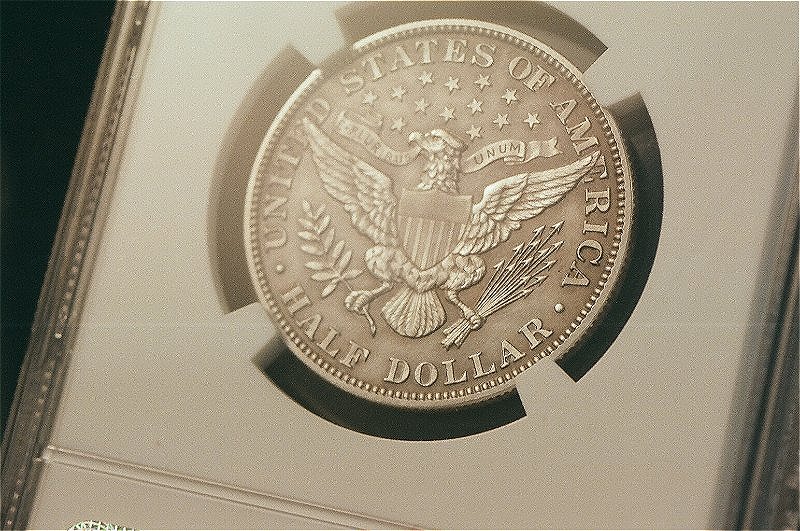
Charles Barber spanned from 1892 through 1915. Over the course of nearly a quarter century several dates were produced that are scarce on an absolute basis. Among these are the 19th-century dates of 1892-O, 1892-O Micro O, 1896-S, 1897-O, and 1897-S. There is also a trio of 20th century dates that pose challenges for collectors, and each of these rarities hail from the Philadelphia Mint and released during consecutive years at the end of the series' run. These three scarce Philly halves are the 1913, 1914, and 1915
Barber half dollars.
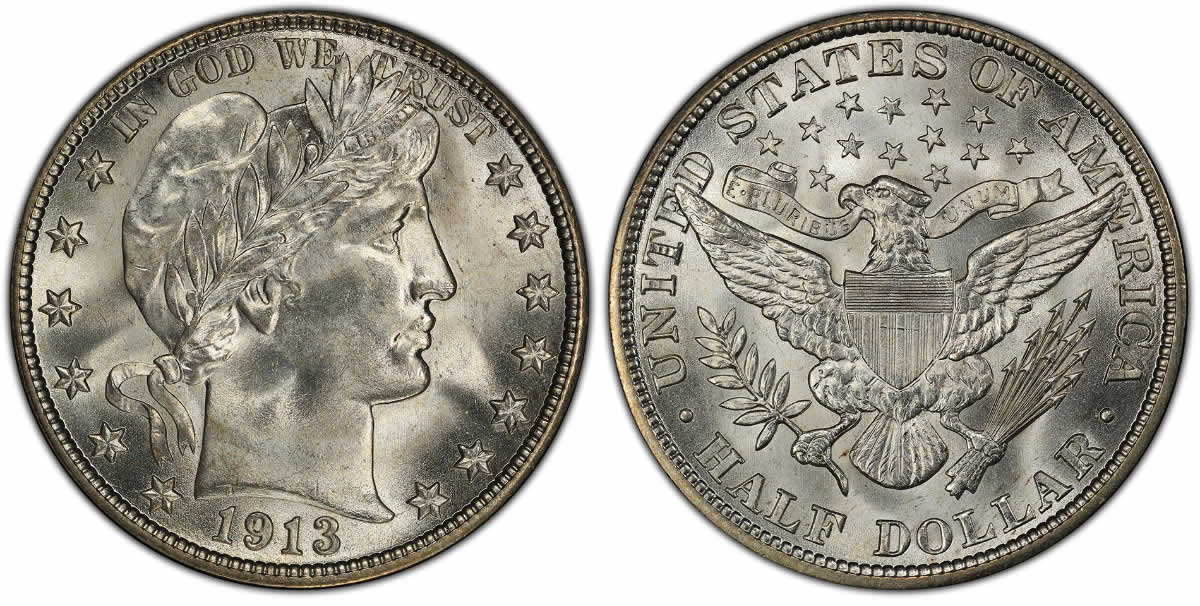 Barber Half Dollar, 1913 50C, PCGS MS66+. Click image to enlarge.
All three of these issues were struck to the tune of fewer than 200,000 pieces each, and this trinity of
Barber half dollar semi-keys also represents the three lowest mintages among the business strikes of the series. This may come as something of a surprise to some collectors who aren't necessarily acquainted with
Barber half dollars and assume that the scarcest issues might boast mintmarks symbolizing production at a branch facility, such as those in Denver ("D"), New Orleans ("O"), or San Francisco ("S").
Of course, this begs the question why the mintages of
Barber half dollars from the Philadelphia Mint plunged during the last three years of the series - a situation that remains essentially unexplained. However, minting duties shifted among the various United States Mint facilities from time to time, and Denver and San Francisco both churned out significantly higher numbers of halves during these same years that the Philly output was downright paltry on the 50-cent front. This very scenario goes to show how some of the toughest coins are often disregarded by collectors who may not necessarily associate rare 20th-century coins with origins from the Philadelphia Mint.
Yet, the 1913, 1914, and 1915
Barber half dollars are scarce across the grading spectrum, and examples are expensive even in the well-worn grade of G4. Only 188,000
Barber halves were made at the Philadelphia Mint in 1913, just 124,230 were produced in 1914 to become the lowest business-strike mintage of the series, and the series closed out in 1915 with a mere 138,000 strikes from the City of Brotherly Love. Delving ever-further into the numbers reveals PCGS estimates of only around 2,000 survivors for each of these dates, and that includes the circulated specimens.
The low survival figures speak to a number of factors, not the least of which is that few collectors thought to save these coins from the get-go. This may owe to the fact that not many numismatists were saving contemporary Philadelphia business-strike coinage in the mid-1910s, and those who did save coins from the Philadelphia Mint were often satisfied with the purchase of proofs, which were made there at that time. Many survivors that did last into the latter decades of the 20th century were likely melted when silver prices spiked in the late 1970s and early 1980s and numismatic premiums were much smaller on these particular Philly
Barber half dollars. Furthermore,
Barber half dollars were true workhorse coins during their time of production and saw extensive circulation. This is one major reason all dates in the series are conditionally scarce in grades of F12 or better and become relative rare in XF40 or higher, regardless of date.
Read the Entire Article Check out these certified coins on ebay
.






 Posted 05/11/2021 3:56 pm