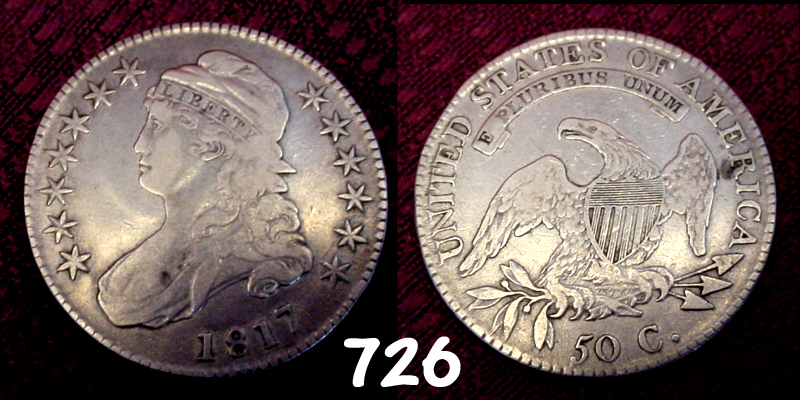
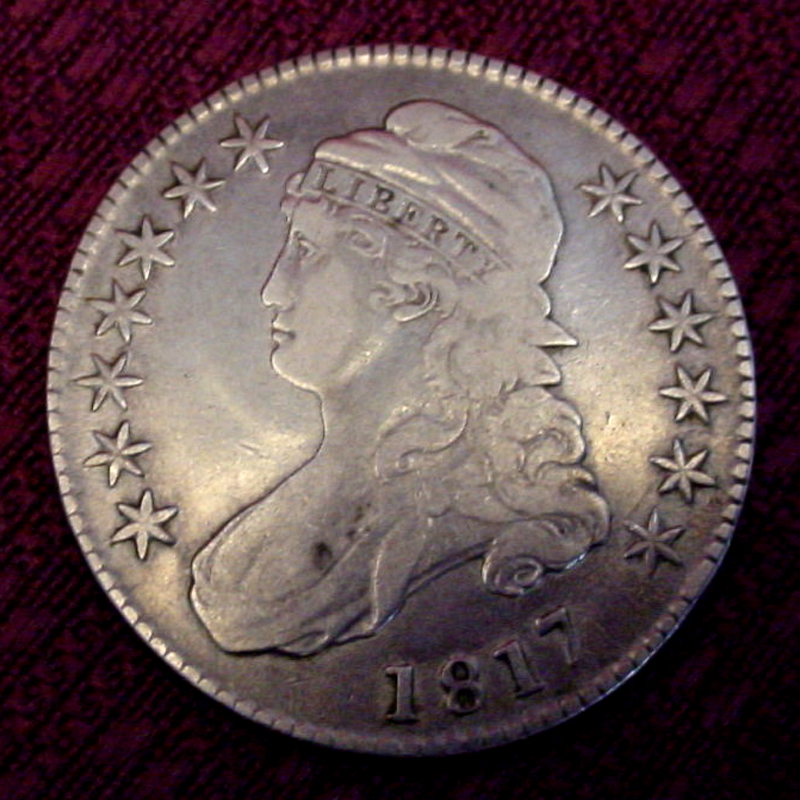
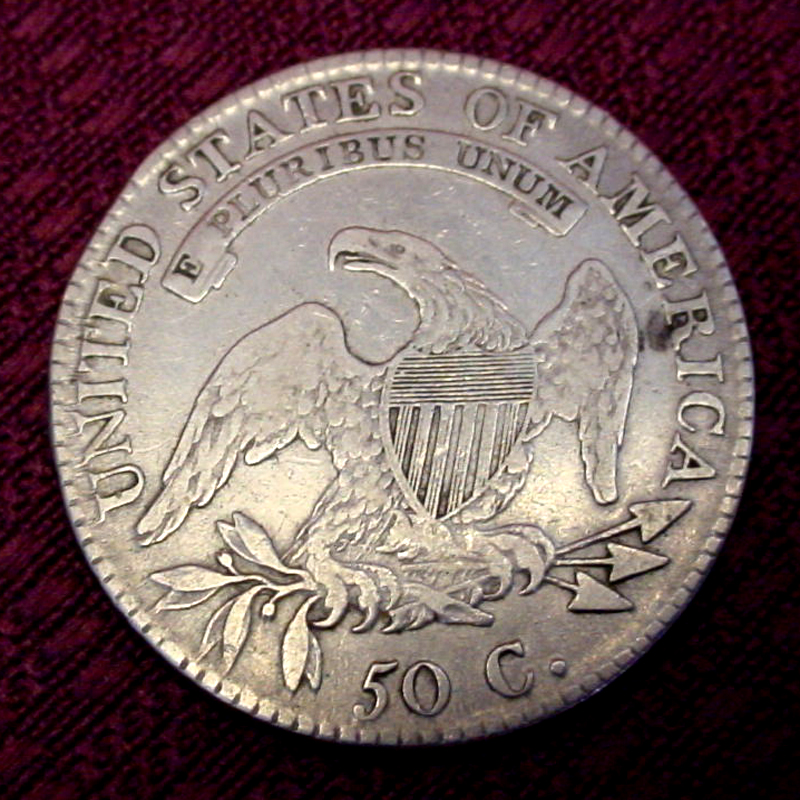
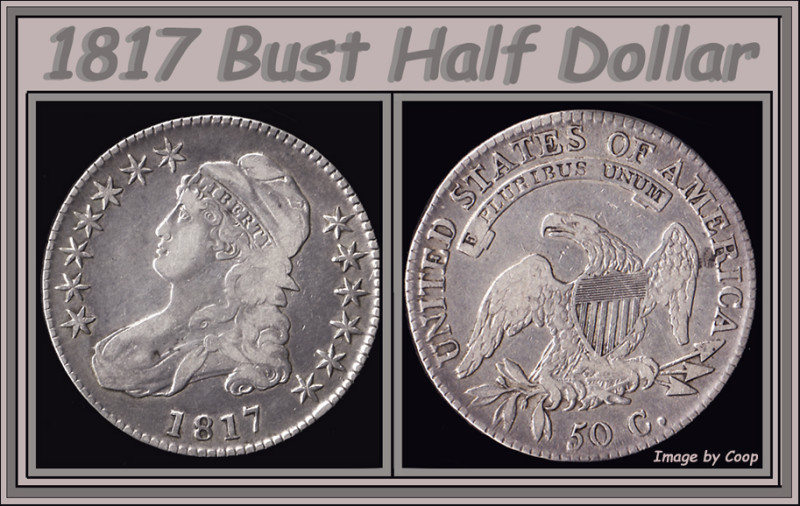
Quote: The two edgebumps at the bottom are the result of getting caught in the upsetting mill
I don't think so. The rim and denticles above the E in STATES look like they were displaced after it was struck. Very neat coin though- it looks like a nice straight clip.
The edge at the bumps is shaped like a 12-sided Canadian nickel-perfectly machined joined. I'll try and have some pics. You can see which direction that it went through the upsetting mill, just like the OP's '49 Linc.
You have to know about little things about these classic coins. Did you know they didn't use a collar on the strike unto 1836? I had a 1918 half dollar and tried to put into a half 2X2 holder. It wouldn't fit. I had to use a dollar one.
Quote: The edge at the bumps is shaped like a 12-sided Canadian nickel-perfectly machined joined. I'll try and have some pics. You can see which direction that it went through the upsetting mill, just like the OP's '49 Linc.
My point is that if the upset mill did change the shape of the edge and force the proto-rim deeper into the planchet, that part would be obliterated during the strike. It just couldn't change the shape of the denticles in that way.
Quote: Did you know they didn't use a collar on the strike unto 1836?
How was the edge lettering applied? Just milled before strike and allowed to expand a bit?
Perhaps they added the edge letters before/after the strike. If we had more of these coins to compare with in a fresh strike condition, we could probably figure that out? But I don't have access to that.
Ummmm, Steam-Powered coin presses were introduced in 1836; collars were used earlier, but they were "Open" until 1827/8 (the JR-1 Small Date 1828 Capped Bust Dimes are good examples of the closed-collar strike)
I will look for the documentation of the minting history to see how they do in that time. What I know is that in Europe in that time they use an rotation matrices for edge lettering after upset milling. I do not remember better when the collar was introduce. In one two days I will be able to say.
Even to day is used three different methods: collar, upset milling and edge lettering in same time and after milling lettering edge.
"...The five authors of Early United States Dimes: 1796-1837 believe that the classification of Capped Bust dimes as Large Diameter and Small Diameter varieties is incorrect. Instead, they believe the changes in diameter resulted from changes in minting equipment, specifically the collar, in the late 1820s. Prior to 1828, edge designs were applied to silver planchets in a separate process before striking (generally). Planchets were placed into a Castaing machine, which applied the reeding, lettered inscription or other edge design appropriate for the denomination and date. In order to not damage the edge design elements during striking, an open collar was used. The opening in the collar was larger than the planchet. During striking, the metal of the planchet spread slightly, but not to the limits of the open collar (as long as the planchet was centered properly on the anvil die). The introduction of the close collar, however, changed minting procedures. The open collar was replaced with a close, reeded or grooved collar with a smaller opening. The planchet spread during striking, with the metal of the edge flowing into the grooves inside the collar. The use of the close collar eliminated the need for the open collar and Castaing machine, since the designs for all three sides of the coin - obverse, reverse and edge - were generated at the moment of striking... although slight modifications were made when the close collar was introduced to replace the open collar about 1827-28."
When we put high closer view, we can see clear that the cracked planchet was detached before milling. The structure of the metal say everything. If was after milling the crack borders will not be round. This it is the physics and material proprieties and we have to accept.
Also the cut appears the is was cut through from the top (obv) to bottom (rev). Note the rolling fold on the bottom edge of the so called clipped area. Also the look of pinch marks on the top of the reverse design and the bottom of the obverse side. I remembered seeing a blanking strip, there they were cut in short on row sessions. Seems like on the introduction of the history channel, on "Modern Miracles": " The Making of Money." (Or something like that) I didn't see it on their site.
@silviosi: I'm a "striking junkie" of sorts... back-in-the-day Walter Breen and a bunch of us from EAC, etc would have dinners at the major conventions, and share all the things we cherried. THose days, it was pretty easy to cherrypick 'broadstruck' Draped Bust Half Cents (actually, they hadn't traveled through the upsetting mill)...
And yes, even if one applies the most rudimentary forms of Physical Laws to coin striking, then one should be easily able to figure-out if the coin was struck by error, or falls victim to PMD
Disclaimer: While a tremendous amount of effort goes into ensuring the accuracy of the information contained in this site, Coin Community assumes no liability for errors. Copyright 2005 - 2026 Coin Community Family- all rights reserved worldwide. Use of any images or content on this website without prior written permission of Coin Community or the original lender is strictly prohibited. Contact Us | Advertise Here | Privacy Policy / Terms of Use







 First Page


 Posted 04/04/2021 7:16 pm