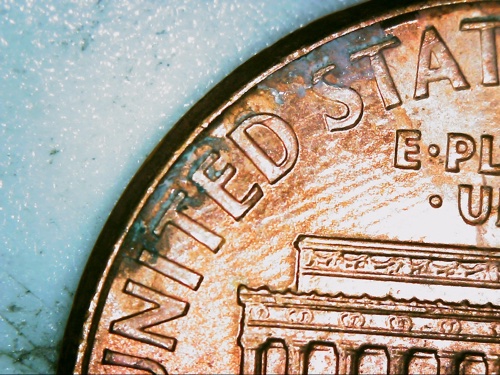
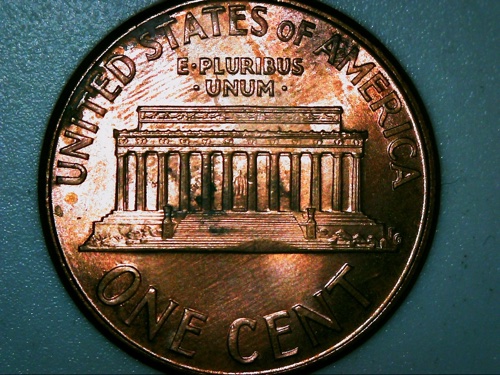
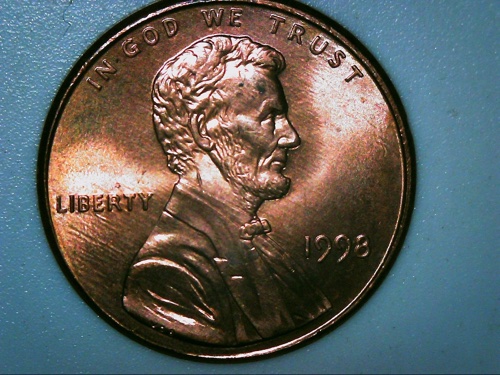
the coin is circulated. simply washing it off isn't going to hurt anything if that's uncomfortable, use distilled water and give it a soak and pat dry.
use a soft "hair" brush even, I mean it's unlikely you are going to take it down out of AU and it's not MS to begin with, it could just be some dried milkshake or old mold or something from someones car cupholder.
You can do acetone, but it's not going to do anything for toning or actual staining. it just breaks up stuff on the surface. It's a $5 bill really no matter what you do to it short of knocking it down below EF40. Still a $5 bill if it was MS64 in condition as far as raw sales are concerned. can get a graded MS65 for around $25, and that's not likely to have been worth the costs to grade it.
I'd just clean it up so it doesn't get any worse and put it in my collection. Don't go to verdicare, or the other "dip cleaners" until you've exhausted the 7 pH range of distilled water soak, and the solvents like Acetone.
DO NOT look for recommendations on the internet, I see everything from laundry detergent, to baking soda to Lemon juice, vinegar, salt.... no, just no, none of those recommendations should be trusted at all. Most of them are either acids or alkalis that will damage the surfaces, or even worse abrasives.
Neutral pH is the Key to finding something that will clean it up without etching. I'd start with as plain as it gets, some distilled water, (also it's good to use this as a rinse after acetone or you can let the acetone evaporate, I prefer to rinse.
If Distilled water don't work, and acetone don't work, then I guess the next step would be xylene. I like to start with distilled water, and honestly, I've never gone beyond it, it does good enough, but sometimes with glues/adhesives the acetone or xylene is necessary to break up the adhesive. I don't think Adhesive is the problem here. I'm actually hopeful it's simply minor mineral deposits from sitting in hard water until it dried that are relatively new, or possibly the milkshake, and no exposed zinc or actual corrosion under it beyond some discoloration int he affected area.










 Posted 04/13/2021 03:14 am