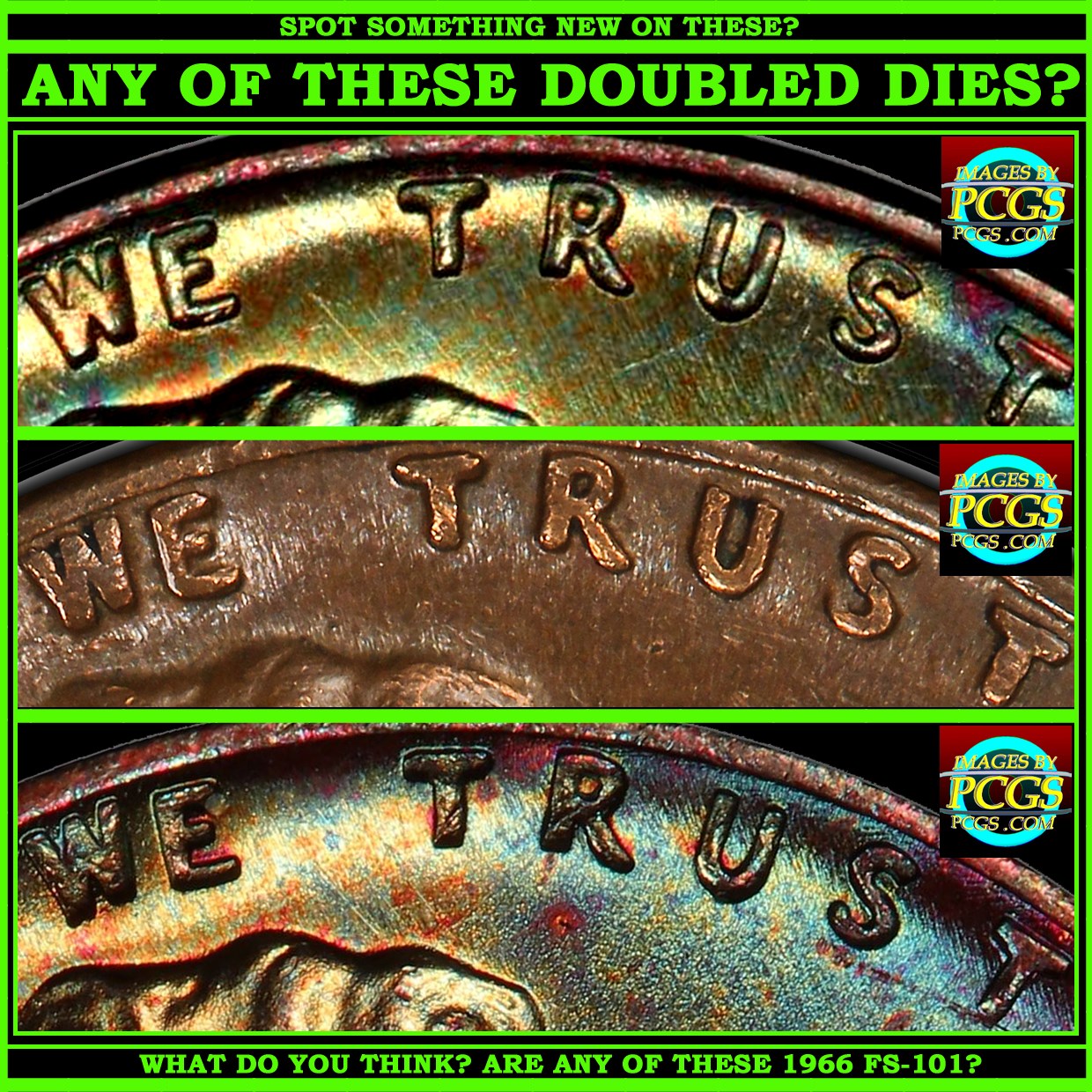
Hey folks! So I posted my 1966 penny earlier that I thought was a match, and @Earle42 recommended that I check out variety vista. I did, and I still am having a hard time seeing why the pics they provide ARE a DDO, and my coin is not.
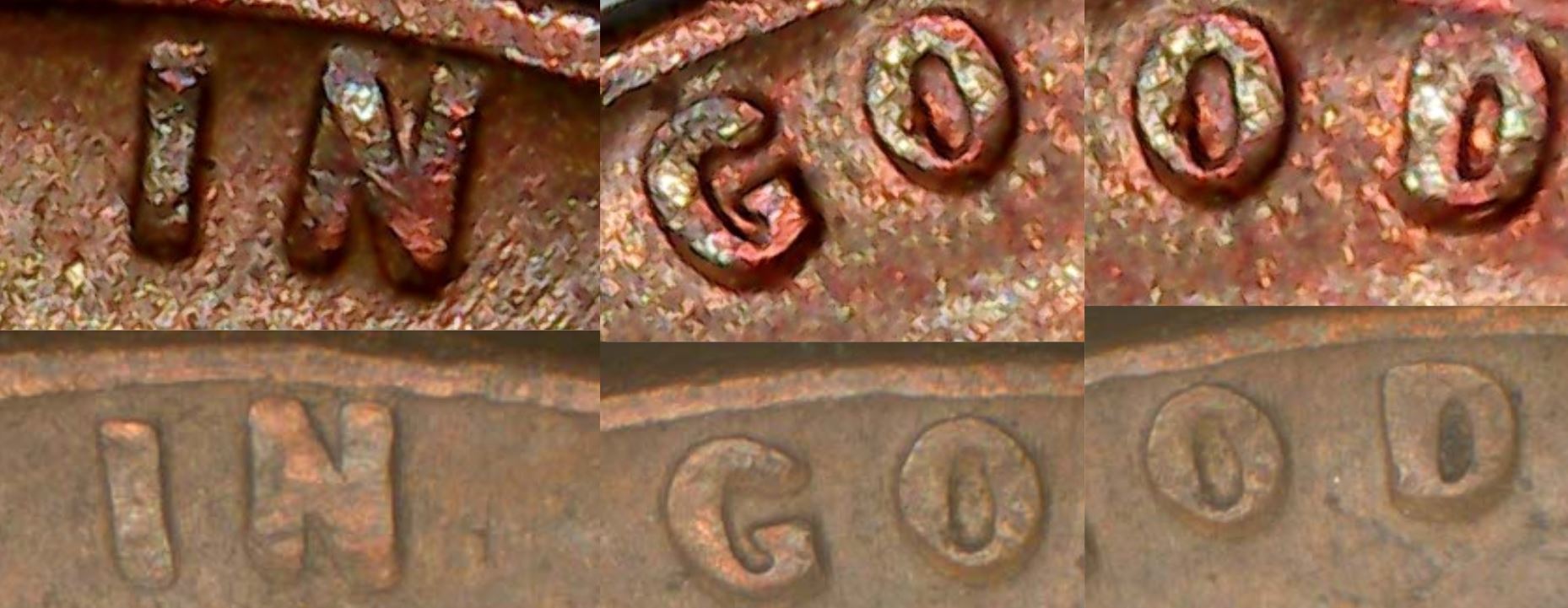
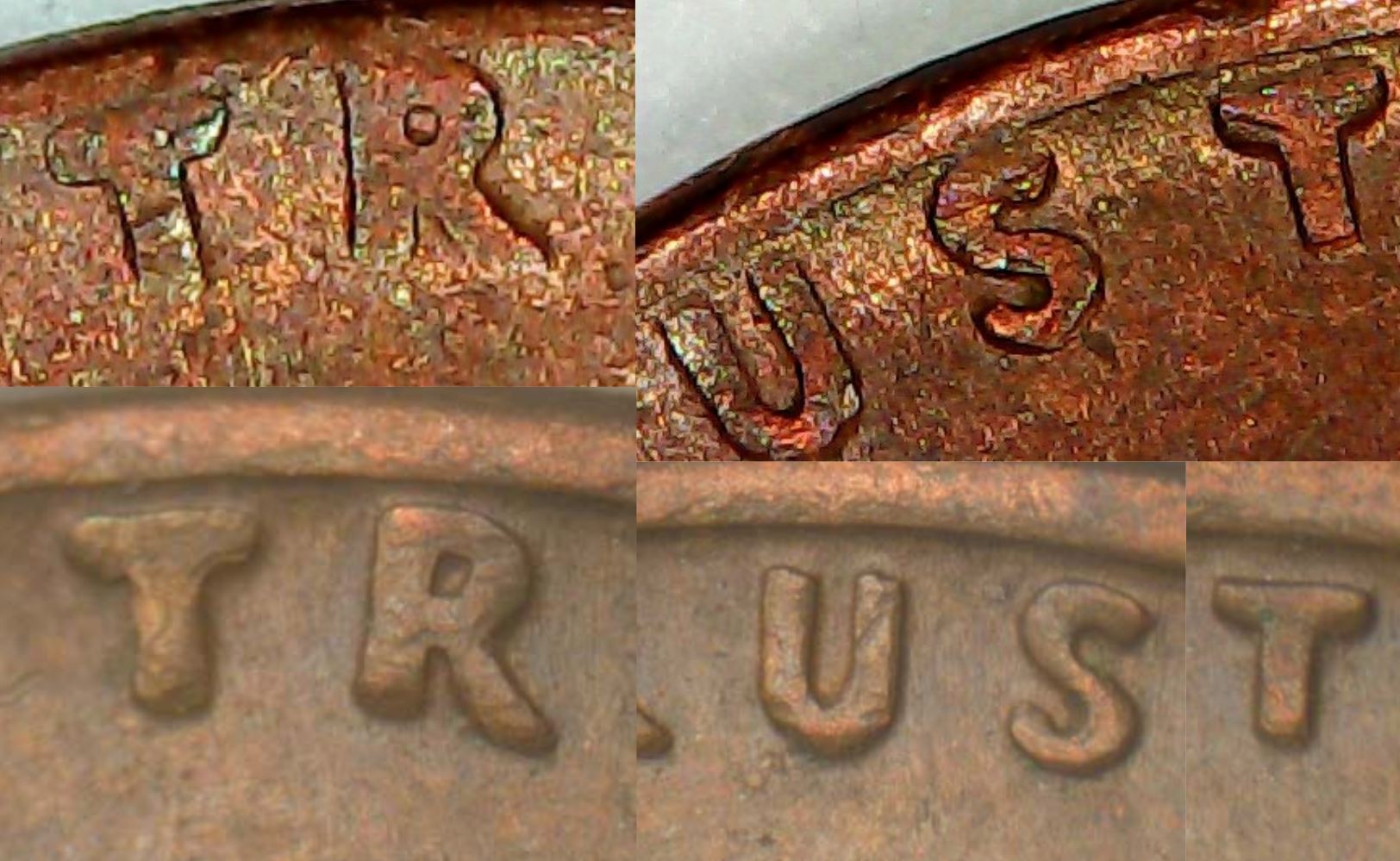
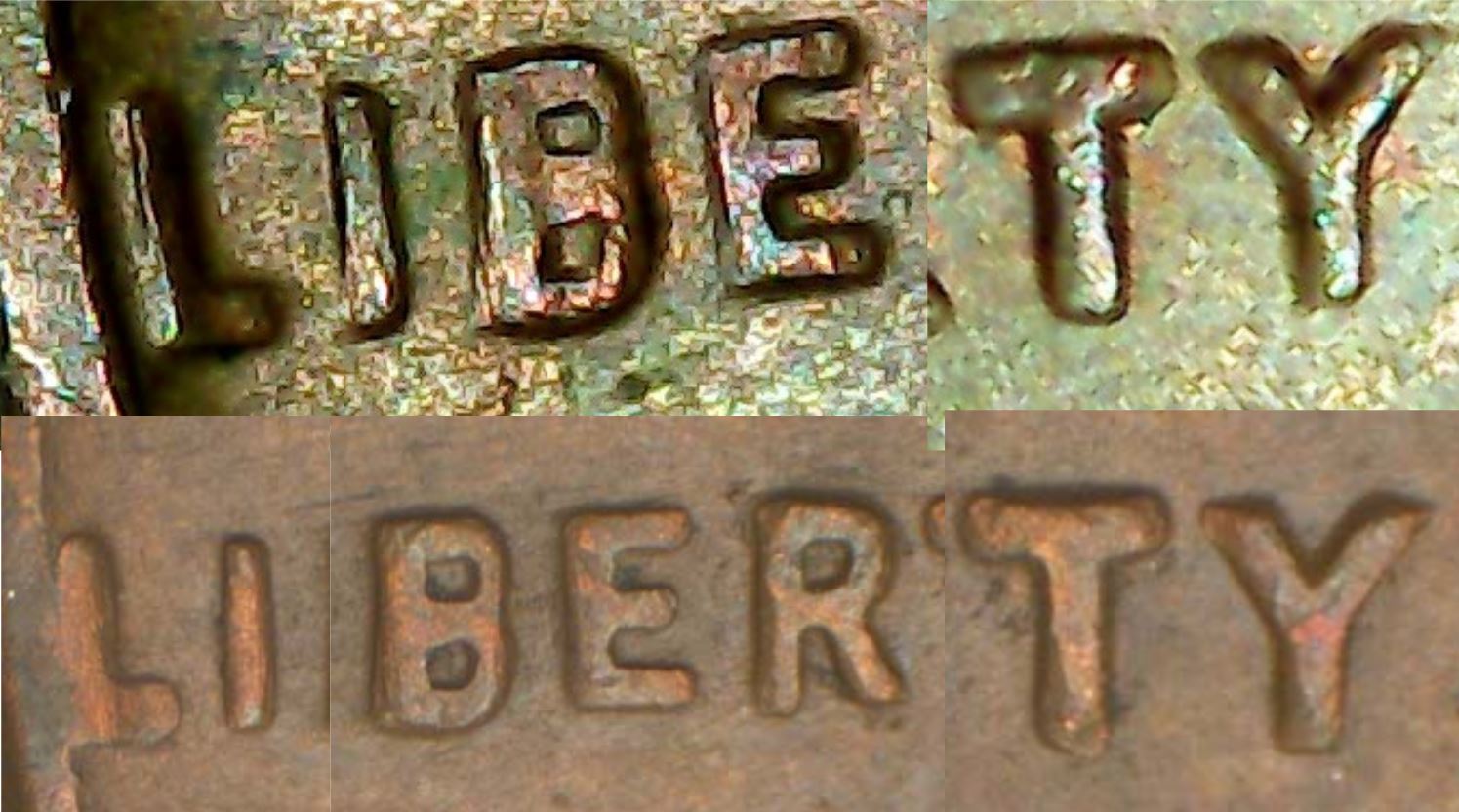
Does anyone have any ideas on how to spot the difference between " Die Deterioration" and a double die? My penny is the pix on top and the pics below are from variety vista.
http://goccf.com/t/397651#3403561 ^ Thanks, I did a quick search and I don't really see how it applies here, I'm not seeing the bubbles around the lettering. Do you think that's what's going on here based on my pictures?
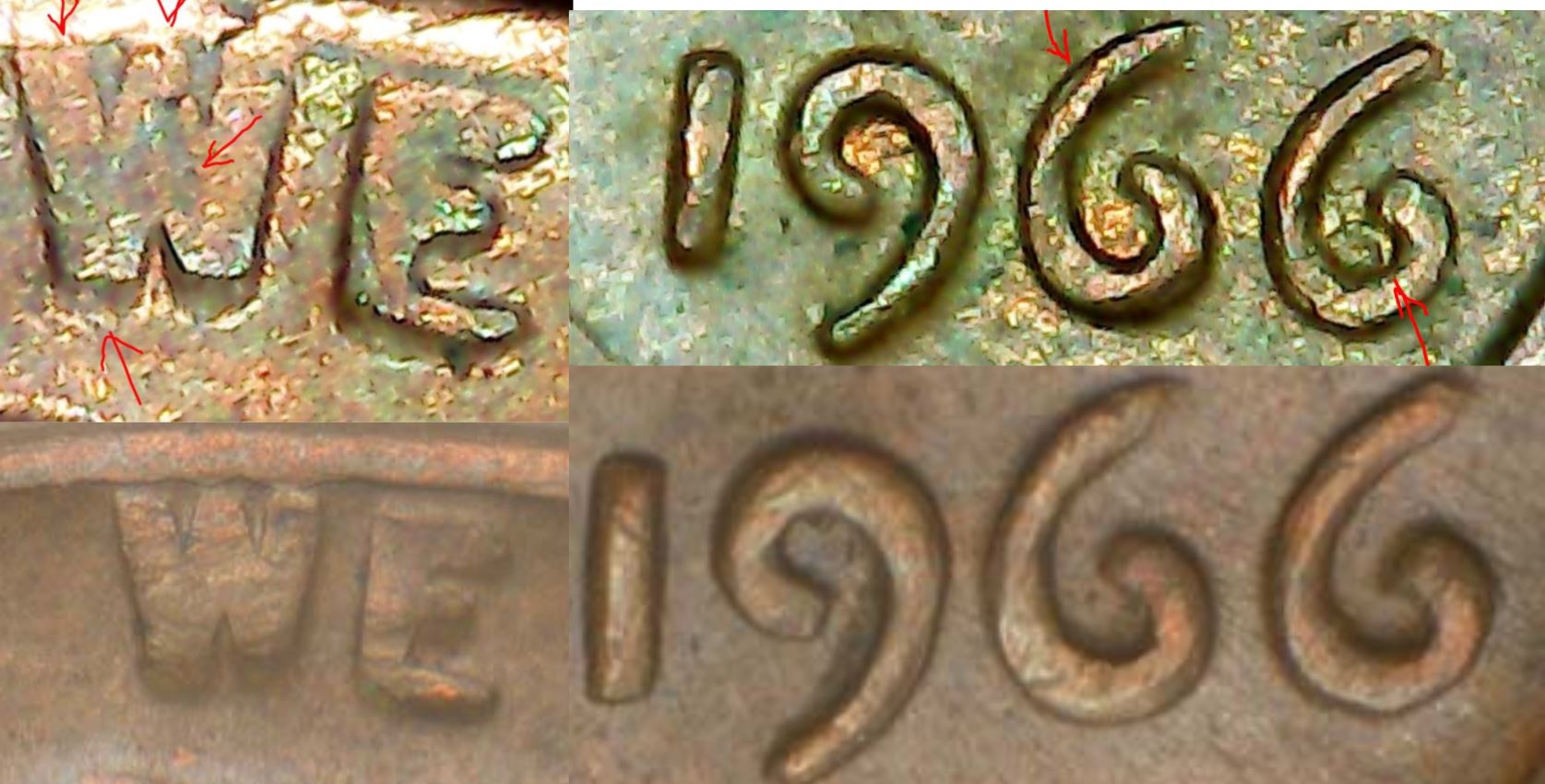
The doubling is most clear on the "W" in 'We" - would love to hear what you think!
@Earl42, thanks for the tip about variety vista! Here are some side-by-side pix of their example vs. my coin. I'm wondering how the doubling shown on their website is significantly different than mine. The doubling is most noticeable on the "W" in We.
I first learned about this variety from one of Blue Ridge Silver Hound's video; he talks about "weakening of the devices", which causes the elongated curves around the "6"'s and "9" on this coin - my penny appears to have that. Here's the link to his vid:
vBbiHJ0UwSk
If weakening of the devices the same thing as Die Deterioration, then it seems that is what characterizes this DDO, right?
Your coin certainly is a match for the Die Deterioration on the VV DDO-001. But you have to ignore all that to see the doubling, which is admittedly hard to do on this DDO. Look at the date for both yours and the DDO. On the DDO the upper curve is about 1.5 times the normal width of what it should be. Look at your coin and it appears normal. Same with the IN GOD, where you ignore all that up and down smearing from the DDD, and look at the width of the vertical portions of the devices. On the DDO, they appear wider than on your coin.
Anyway, it's about what you are looking for in the doubling, not all the other stuff going on. The early die stages for DDO-001 are pretty obvious, but the later die stages can be quite hard to recognize even on really sharp coins as there is a lot of DDD on them. But maybe just stare at the GOD in your side-by-sides, and see how much wider those devices are on the DDO.
^ Wow, thank you for that explanation!! You have a very high level of spatial intelligence - I, admittedly am a horrible visual learner - not a thing for someone who enjoys error coins haha. Very jealous you can see all of that.
Thanks again for the awesome explanation, I'll try to think in those terms moving forward when trying to discern whether I have a double die.
It can be useful as you start to work these things out to take a look at what class of DDO you are working on. For 1966 die 1, it is a class V with clockwise rotation. It is that rotation that widens the devices in certain places. Different classes will double in different ways, so reading up on how the classes affect the coin makes it a bit easier to know what to look for.
I'll give you one more example of how to put this in play. Tonight I've been going through rolls of uncirculated 1983 Lincoln cents. There are a bunch of class V DDOs, and they show up pretty well in the motto but I find them easiest to spot on the B of LIBERTY and also on the WE. But there are also a number of class VI (and II) DDOs that show up as thicker tails on the 9 and 3 and a bulge on the lower right of the 8. Then, there is a class VI doubled earlobe. So with all this going on, I can just look at the thickness toward the lower right of the date, the B of LIBERTY, the earlobe, and a quick glance at the GOD WE and know if I need to look closer or just move on. Sure, there are a number of other things one 1983, including lots of Cuds and clashes and whatnot, but I expect to see them when I scan the coin from the date to the B to the ear to the WE. Only takes a minute or two to go through an entire roll laid in an orderly fashion. Of course, you have to flip these over to look for the DDRs, but same thing.
Disclaimer: While a tremendous amount of effort goes into ensuring the accuracy of the information contained in this site, Coin Community assumes no liability for errors. Copyright 2005 - 2026 Coin Community Family- all rights reserved worldwide. Use of any images or content on this website without prior written permission of Coin Community or the original lender is strictly prohibited. Contact Us | Advertise Here | Privacy Policy / Terms of Use











 Posted 04/18/2021 12:43 am