| Author |
 Replies: 19 / Views: 3,940 Replies: 19 / Views: 3,940 |
|
Valued Member
United Kingdom
126 Posts |
Hi have a quite heavy Dragon Bracelet I thought was probably just a replica or not like the ones I seen valued at £300 so did some tests I seen on the Internet. It has a mark 925. I put bleach on a section and it went black. It does not respond to a Neodymium magnet but I understand a further test to see if it self induction from a moving magnet is probably beyond me.
If I immerse it in water like archimedes to establish volume then weigh it and calculate density is that ridiculous. I doubt my kitchen water measure will be accurate but my scales are 100th Gram. It might be to heavy so I have 10th gram one rated for 1KG. Jewelery shops are closed with virus so I just wanted to know if is realistic to test at home.
Sue
|
|
|
|
Rest in Peace
United States
18456 Posts |
If your bracelet says 925 then it's 92.5 % sterling Silver . No need to test unless you think the 925 stamp was faked .  |
|
Valued Member
 United Kingdom
126 Posts |
Thankyou. In truth the stamp is far easier to see with a magnifier so the pictures are probably no help. The stamp though readable 925 is quite badly hit. Its 7 inches long and weighs 1.6 Ounce. Sue 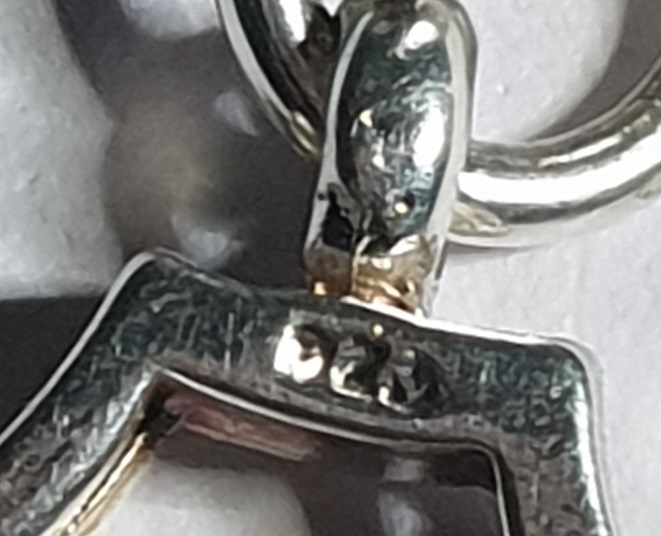 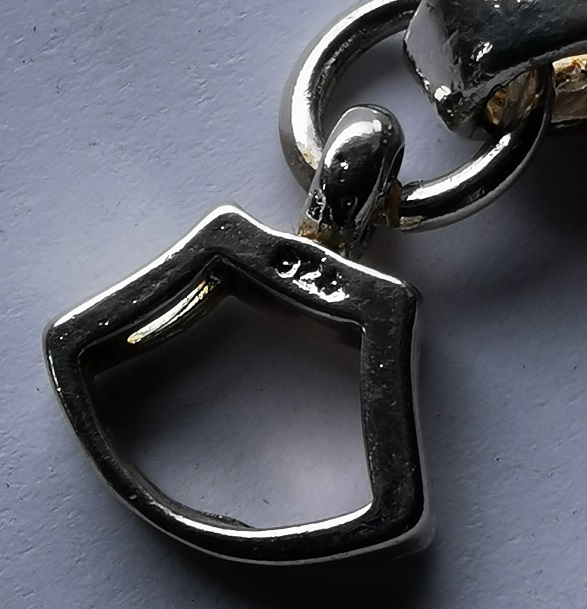 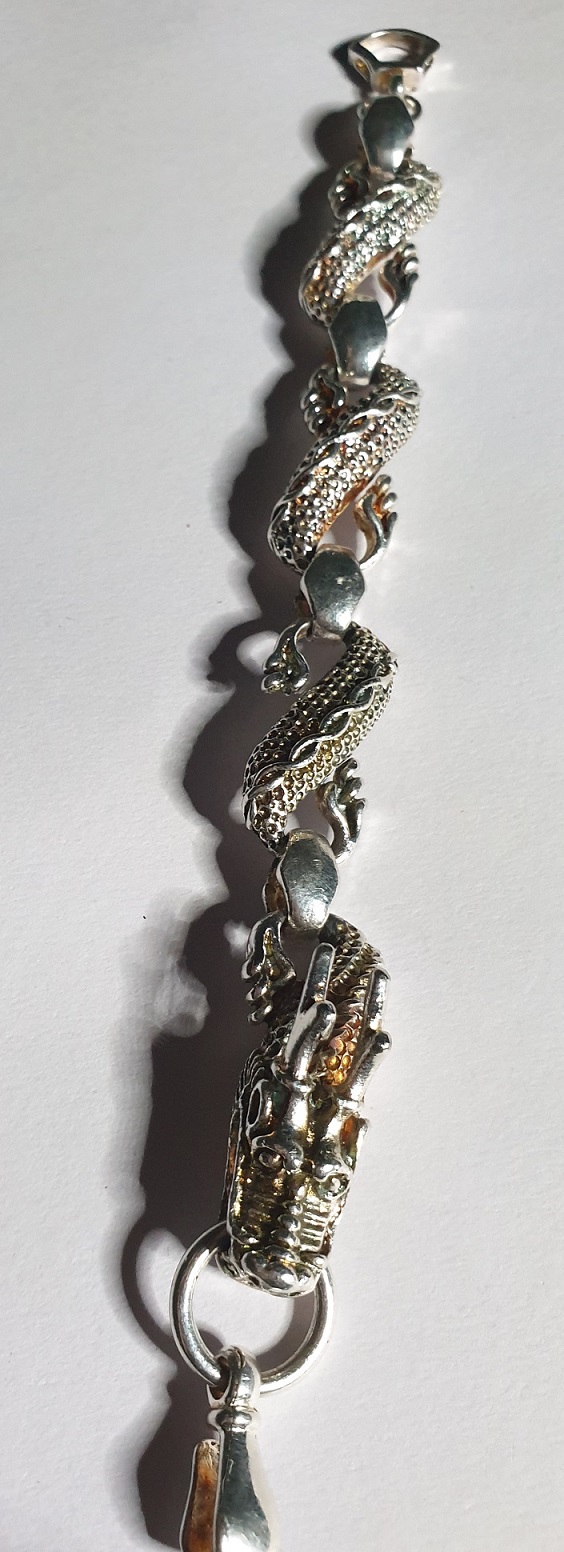 |
|
Pillar of the Community
United States
1427 Posts |
If you feel the want to test it. A simple way is ti push it into an ice cube, if it melts it like butter, it is silver.
|
|
Rest in Peace
United States
18456 Posts |
Interesting , I didn't know that .  |
|
Pillar of the Community
United States
2016 Posts |
ThatCoinDude beat me to it. I was going to suggest the ice cube test as well. I really doubt there is any reason to believe the jewelry isn't .925 sterling. Now if it were gold vs gold plated that might be more of a reason to investigate further.
|
|
Pillar of the Community
United States
4680 Posts |
Quote:
I really doubt there is any reason to believe the jewelry isn't .925 sterling. There are plenty of plated silver pieces out there with 925 stamped on them. Extremely easy to do. Another workaround for this being that they stamp the clasp 925, may ensure the clasp is 925, but not the entire piece. A shady scheme done by knockoffs, and let's not forget, clasps can easily be changed. That being said, so far odds are in your favor, and I'd give the ice cube test a try next as others pointed out. The only real definitive would be an XRF or silver test kit, but that's seems to be a bit overkill. |
|
Valued Member
United States
191 Posts |
I had never heard of the ice cube test prior to this string. Please, could someone provide a comprehensive description of how to perform the ice cube test? And how and why it works? Thanks
|
|
Pillar of the Community
United States
4963 Posts |
Silver is the most conductive metal there is. If in contact with something cold, a silver object will rapidly pump heat into it. I've found that if you hold a silver coin (like my Morgan dollar pocket piece  ) flat against your skin and put a bit of snow on it, it becomes freezing to the touch just about instantly. It's pretty cool. |
|
Valued Member
United States
143 Posts |
Thanks for the physics lesson here, everyone - ice cube testing is a really cool idea to make it happen cheaply :)
|
|
Valued Member
United States
191 Posts |
Thanks. I understand that silver is very conductive of heat. But I'm curious for more details. What is the specific procedure for the test? Say, for example, I have a silver quarter and a nickel. How do I perform the test for each coin? Meaning the procedure. By that I mean, for example, do I lay each on a table and put an ice cube on each? And what will be the observable difference that distinguishes the silver coin from the nickel coin?
But then, say, I only have one foreign coin of unknown composition. And then I perform the test. What will be the telltale that it is silver and not another metal?
|
|
Pillar of the Community
United States
4963 Posts |
Yeah, just setting them on a table with ice cubes on top is fine. The difference is in how quickly the ice melts. Try it with a silver quarter and a clad quarter to control the other variables; you should find that the ice on the silver coin melts faster.
|
|
Pillar of the Community
United States
2016 Posts |
Sue you also asked about performing a specific gravity test. That too would give you your answer but it takes more patience, time and accuracy along with a scale capable of reading to at least 100th of a gram. The other problem with this is how to suspend such an object in water without it touching the bottom and sides of the container. It can be a real pain with just a coin let alone this bracelet. If you decide to perform this test you should get a specific gravity result of 10.3 to 10.4 indicating sterling. I think the ice cube test is your best option or have a jeweler test it with xrf.
|
|
Valued Member
United Kingdom
126 Posts |
Thank you all for your help. Will try ice cube test and lest you know
|
|
Valued Member
United Kingdom
126 Posts |
Sue's husband. I get the thermal conduction inertia on metals. My last wedding ring I gave to my daughter as I walked out was Platinum. And I used to show her how it went from body temperature to cold ambient in literally a second or so after pulling it off my finger. It had low mass. Its stored energy was calculatable on its weight.
Sue did an ice cube test but I pointed out the metal would have to have energy to transfer to the ice cube. Example if I froze her silver with the ice cube the system is unity and I would not expect a visible effect as they approached ambient temperature together. The metal would have to be raised to a known temperature and exposed to the frozen water. Even then rate of change of temperature is far more important as determined thermal transfer. Frozen Rubber would take a while. The Silver she tested was at an unknown cold Scotland temperature against a known water in solid phase.
I did like watching a 2P coin next to it melting it's cube rapidly. Despite being a fraction of the dragons mass. The coin was flat on the same plate and able to heatsink into the plate.
I'm often wrong but that is a very difficult system of metallurgy. Probably backed up a post I seen from someone that clearly knows what He or She knows and never heard of it!
Grant
|
|
Valued Member
United Kingdom
126 Posts |
Mister T! Archimedes shouted Eureka! The objects position in a vessel of known initial volume at a known temperature do not depend on position. On the floor or against its sides will not alter displacement. Its just really a measurement issue. It only establishes volume and it is a amazing concept. Then weight. Sue can measure to 100th gram if she remembers to dry it. Density is then established. Dependng on what what planet she makes her measurements.
Given Earth's variation in Gravitation field I am no expert but I think precious metal is not weighed. Rather it's force in Newton's is determined. I have to tell her at some point scales are an illusion. Mass not weight.
Grant
|
| |
Replies: 19 / Views: 3,940 |









 Posted 04/29/2021 10:33 am


