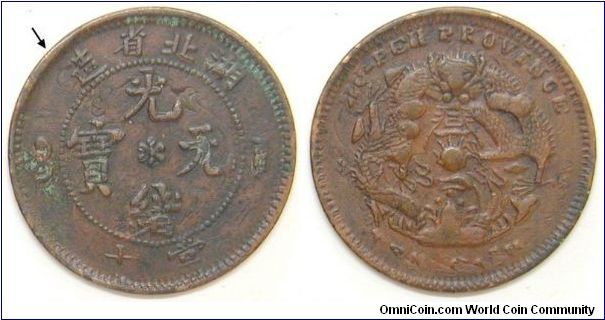
Sap, on the very top of the obverse, I'm sure you can see the Chinese characters. When it is read from the right to left, it reads "Chekiang Province". You can see the Chinese characters on wikipedia:
http://en.wikipedia.org/wiki/Chekia...lic_of_ChinaThis coin defies all the other four overstruck Chinese-Korean coins that I have. All the other coins are in medal alignment and there is no such mule present with my other coins.
Here are two examples:
Hupeh
Chekiang
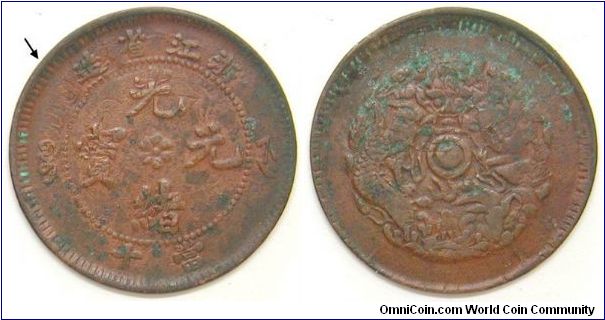
This coin also passes the Chekiang mintmark in my opinion:

I am sure that it is extremely difficult to misidentify it as a Hupeh mintmark as a Hupeh mintmark has a fanciful "J" character whereas Chekiang just seems like a semi-j and l character.
Illustrations of various mintmarks from the old days can be seen here:
http://www.sportstune.com/chinese/c...ntmarks.htmlThere apparently is a story about how these coins were actually imported from Korea as they were demonetized back in 1902 as the chon was introduced (or was it 1905 that the fun was officially demonetized?) Hence it is likely that these coins were just imported as scrap metal. What's even more funny is that it's said that "private" mints used such coins as planchets. The real trouble is understanding if these were legal tender or it could have been a massive counterfeit scam back in those days.
My partial coin collection
http://www.omnicoin.com/collection/gxseriesMy numismatics articles and collection:
http://www.gxseries.com/numis/numis_index.htmRegularly updated at least once a month.








 First Page


 Posted 01/04/2009 2:46 pm


 Keep us updated if you find out any more info. I'm going to add this coin to our gallery because it's so intriguing.


