| Author |
 Replies: 10 / Views: 1,613 Replies: 10 / Views: 1,613 |
|
|
Valued Member
United Kingdom
59 Posts |
This is a fascinating thread. One of my coins I recently purchased was advertised as a Lime denarius. I'll be honest I didnt think it was fake but I'll let the experts take a look below.   |
|
|
|
Moderator
 United States
34549 Posts |
@jay, best practice is to post different coins on different threads rather than piling onto someone else's. However, the conversation over there is informative, so here is a link to that thread for reference: http://goccf.com/t/402068#3437943"If you climb a good tree, you get a push."
-----Ghanaian proverb
"The danger we all now face is distinguishing between what is authentic and what is performed."
-----King Adz
|
|
Valued Member
 United Kingdom
59 Posts |
 Ah my bad. If I posting to discuss a specific coin then absolutely I have always started a new thread for such a discussion, both here and on other boards. However on other forums if the discussion was about a very specific type / style of coin / coins - in this case "Lime Denarius" - then multiple examples can be posted within the topic to allow for patterns, techniques, similarities to be observed and discussed, especially when it comes to ancient coins. Again apologies I didn't realise it works different on this board and I won't make the mistake again. Jay |
|
Pillar of the Community
United States
1122 Posts |
Better pics might help, it very well may be a Limes Denarius. I bought this Severus Alexander some years ago from our very own Louisville. Some have said it to be a limes, I would tend to agree, but the silver content in no doubt very high in this one - soooo I was never really sure. The style as well is a bit crude, so I'm still on the fence on this one. 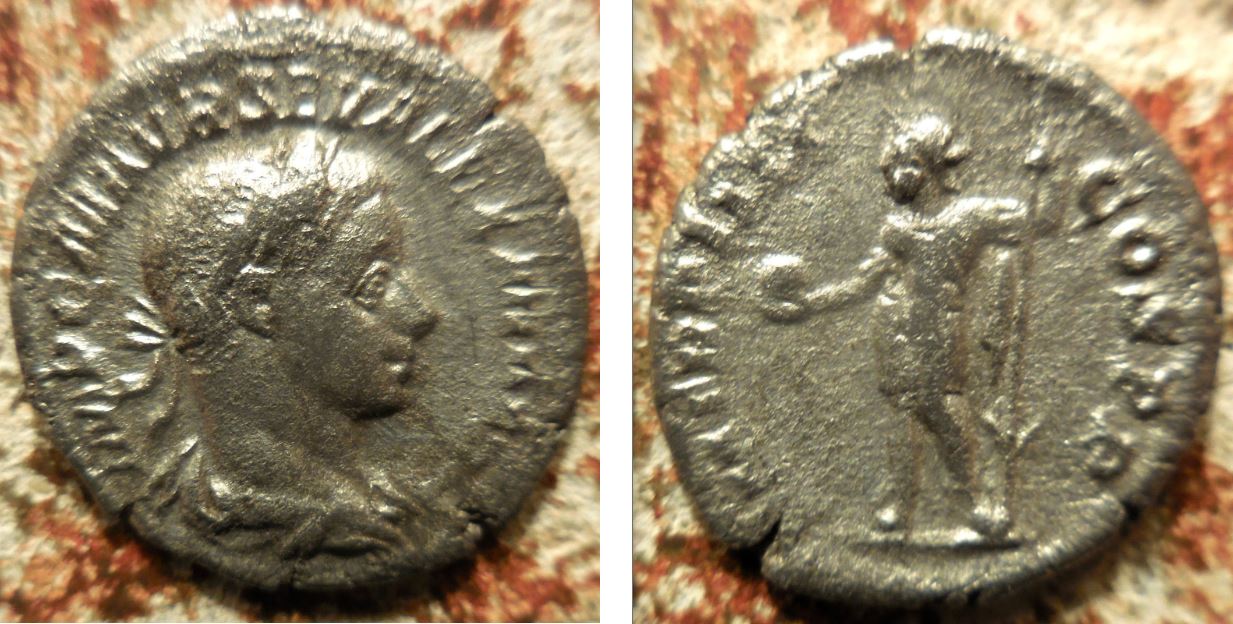 |
|
Pillar of the Community
United States
1554 Posts |
Not "lime" but Latin limes ("boundary"), referring to the system of border forts along the Rhine and Danube. The English word "limit" comes from the same Latin root. That said, the whole notion of a "limes" coinage fails to hold up to scrutiny imho. The so-called "limes denarii" are ancient cast counterfeits. Here is an article on a site in Yorkshire (nowhere near the limes) where false denarii are known to have been produced in the early 3rd century. Some hold on to notions of quasi-official "money of necessity" but if we apply Occam's Razor to the evidence available, the simplest explanation is simple counterfeiting. https://www.yorkshiremuseum.org.uk/...coin-moulds/Edited by Kushanshah
06/09/2021 9:13 pm
|
|
Moderator
United States
34549 Posts |
Quote:
Not "lime" but Latin limes That's my bad. Fixed now though.  "If you climb a good tree, you get a push."
-----Ghanaian proverb
"The danger we all now face is distinguishing between what is authentic and what is performed."
-----King Adz
|
|
CCF Advertiser
United States
1318 Posts |
OK so what is this one? It is not a bronze core of a fouree, it was probably never plated from the looks of it so it was made bronze and never looked silver. If it was a pure counterfeit how the heck could it have ever passed? So if this is ancient is it a decent case for such quasi-official money? Look at the weight of 3 grams. If that was a core from a plated coin it would weigh less I imagine. https://www.acsearch.info/search.html?id=5532195 |
|
Pillar of the Community
United States
1554 Posts |
The silver content of the official denarius fell well below 50% under the Severans. The denarius of Gordian III above is probably not much more than 40%. High-tin bronze, on the other hand, can appear silvery when new. Consider how difficult it can be to tell the difference today. It must have been difficult in the 3rd century as well.
|
|
CCF Advertiser
United States
1318 Posts |
So that link is an official denarius then.
And the known universe of such from this time is contemporary counterfeit or official. I do understand now....
|
|
Pillar of the Community
United States
1554 Posts |
I would say that the Septimius Severus denarius linked above is unofficial, as Nomos describes it. It's original color was likely better than you might expect.
There is always more to learn but my impression is that at present, scholars advocating for a "money of necessity" are in the minority.
|
|
CCF Advertiser
United States
1318 Posts |
So that coin I linked to is "unofficial" as Nomos says in your opinion. (But they give the explanation of ancient counterfeit or emergency money or limes denarii.) And the original color might have been better than I expect which implies looked more silver from the high tin content perhaps. And the "so-called "limes denarii" are ancient cast counterfeits". Plus "scholars advocating for a "money of necessity" are in the minority." So the coin I linked to is an ancient counterfeit coin, meant to deceive and if it did not the person making it was under pain of death as has been stated. Romans through the centuries did strange things, like using worn coins for legionary re-purposing and countermarking them TICA etc so they did have a need from time to time for extra types of currency. If a group had the dies for a silver coin but no silver someone might have perhaps gotten the idea to strike a few as long as that regional leader of that army at the time accepted it, but I think this matter closes as we can just not go back and find this out I suppose and without ancient sources stating for sure it was done it is all academic and was an interesting discussion.
Edited by louisvillekyshop
06/10/2021 07:52 am
|
| |
Replies: 10 / Views: 1,613 |
|









 Posted 06/09/2021 7:44 pm


