








 Posted 06/29/2021 01:06 am


Quoting from the Wikipedia article on the letter sigma:
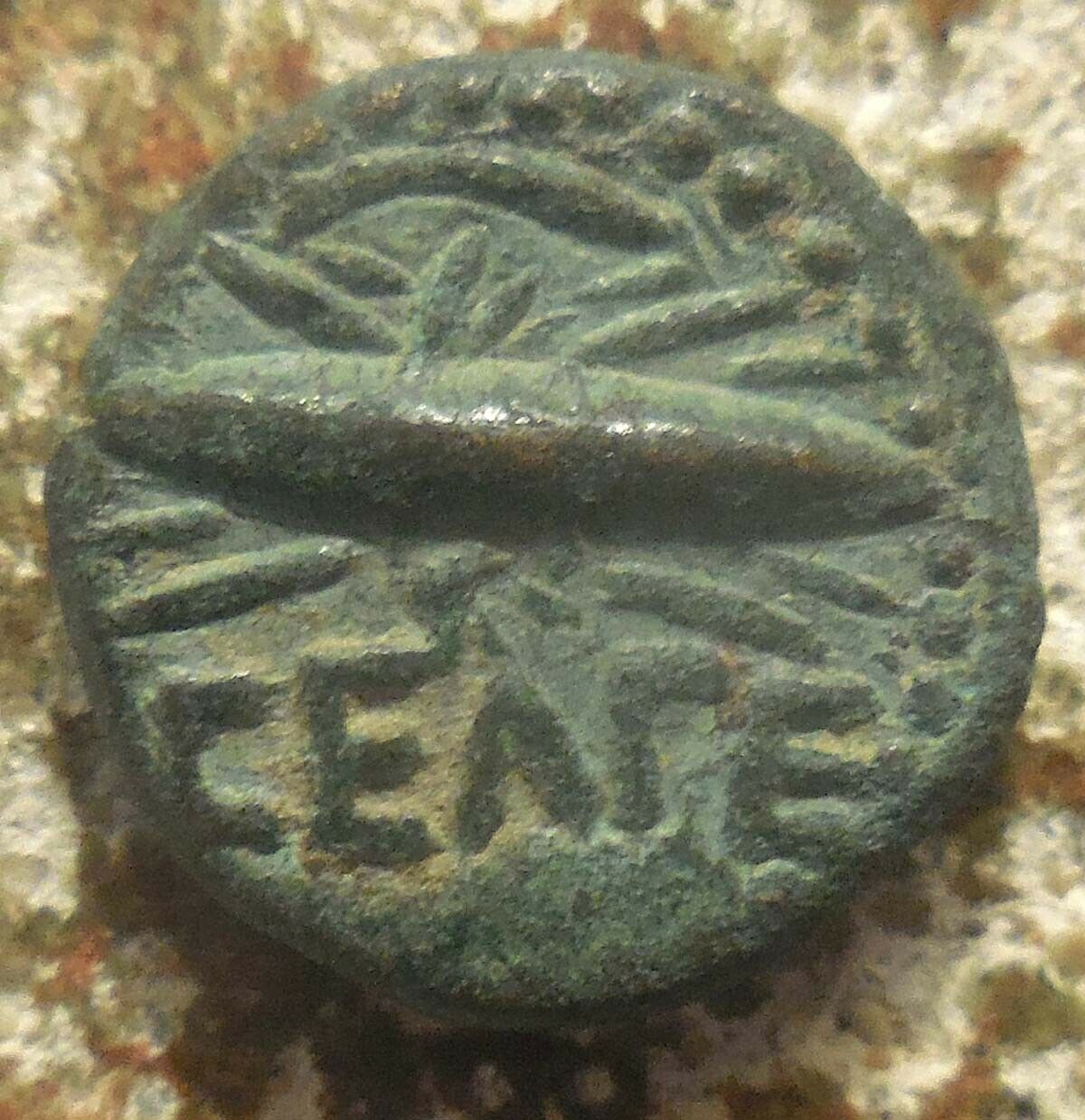
So a "lunate sigma" is appropriate for the period. I'm guessing the intent was a round-C shape. But when you carve letters onto metal or stone, making a right-angled C instead of a round C is easier.
Quote:
In handwritten Greek during the Hellenistic period (4th-3rd century BC), the epigraphic form of Σ was simplified into a C-like shape,[5] which has also been found on coins from the 4th century BC onward.[6] This became the universal standard form of sigma during late antiquity and the Middle Ages.
Today, it is known as lunate sigma (uppercase #1017;, lowercase #1010;), because of its crescent-like shape, and is still widely used in decorative typefaces in Greece, especially in religious and church contexts, as well as in some modern print editions of classical Greek texts.
In handwritten Greek during the Hellenistic period (4th-3rd century BC), the epigraphic form of Σ was simplified into a C-like shape,[5] which has also been found on coins from the 4th century BC onward.[6] This became the universal standard form of sigma during late antiquity and the Middle Ages.
Today, it is known as lunate sigma (uppercase #1017;, lowercase #1010;), because of its crescent-like shape, and is still widely used in decorative typefaces in Greece, especially in religious and church contexts, as well as in some modern print editions of classical Greek texts.
So a "lunate sigma" is appropriate for the period. I'm guessing the intent was a round-C shape. But when you carve letters onto metal or stone, making a right-angled C instead of a round C is easier.
Don't say "infinitely" when you mean "very"; otherwise, you'll have no word left when you want to talk about something really infinite. - C. S. Lewis


